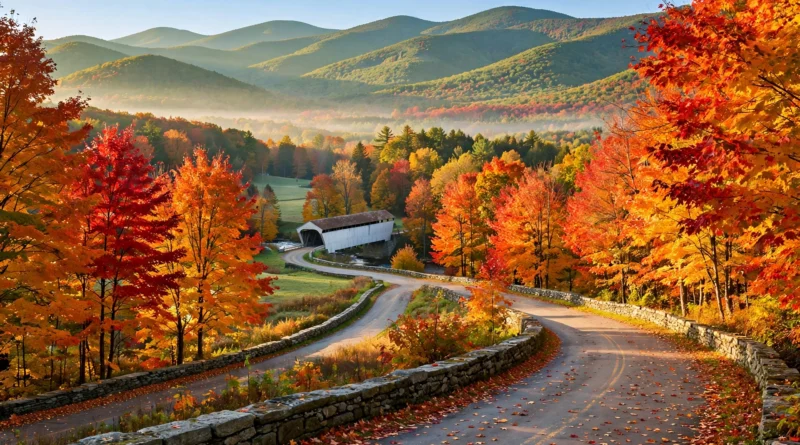
New England Fall Road Trip: Dates, Events & What to Know
Few autumn journeys are as iconic as a New England fall road trip. Every year, the six-state region of Maine, New Hampshire, Vermont, Massachusetts, Connecticut, and Rhode Island transforms into one of the world’s most celebrated foliage destinations, with maples, oaks, and birches setting hillsides, valleys, and coastlines ablaze. A fall road trip lets you chase the color as it rolls from the northern mountains down to the southern coast, stringing together scenic byways, covered bridges, cider mills, and postcard towns. With the right timing and route, it is a trip that delivers on the hype.
This guide covers the essentials: the best dates to go, the classic driving routes, a sample seven-day itinerary, the must-stop towns, and practical planning tips on booking, budgeting, and driving safely through peak-season crowds.
Key Takeaways
- Foliage color moves north to south and high to low, roughly from late September in the northern mountains to late October on the southern coast — plan your route to follow it.
- The classic drives are the Kancamagus Highway in New Hampshire, Vermont’s Route 100, the Mohawk Trail in Massachusetts, and Acadia’s Park Loop Road in Maine.
- Seven days is the sweet spot for a full six-state loop; a long weekend works for one state or one drive.
- Book lodging early — popular towns like Stowe, Woodstock, and North Conway often sell out months ahead of October weekends.

When to Go: Peak Foliage Dates
Timing is everything on a New England fall road trip. The color wave follows a predictable pattern each year: it starts in late September in northern Vermont, New Hampshire’s White Mountains, and interior Maine, then works its way south and to lower elevations. Central Vermont and New Hampshire’s lakes region typically peak in the first two weeks of October, the Berkshires of western Massachusetts in mid to late October, and Connecticut, Rhode Island, and the Massachusetts coast from mid to late October into early November.
Weather shifts this window every year — a cold snap, heavy rain, or strong wind can move the peak by a week in either direction or bring the leaves down early. For a detailed look at how dates play out across the region each season, detailed foliage guides covering New England’s peak dates and drives are worth checking before you finalize your route. The golden rule: start high and north, end low and south.
The Classic Routes
New England’s reputation rests on a handful of legendary drives. Build your trip around at least two of them.
Kancamagus Highway, New Hampshire
Known locally as “the Kanc,” this 34-mile stretch of NH-112 crosses the White Mountain National Forest with no gas stations and no services — just wall-to-wall color, panoramic overlooks, and pullouts like Sabbaday Falls and Hancock Overlook. Start early to beat the crowds and catch the morning light.
Vermont Route 100
Route 100 runs down the spine of the Green Mountains, linking classic towns like Stowe, Warren, and Weston. It is the quintessential Vermont drive: maple-lined roads, covered bridges, farm stands, and mountain vistas around every bend. For more on the state’s seasonal highlights, see our guide to Vermont’s peak foliage dates.
Mohawk Trail, Massachusetts
The Mohawk Trail (Route 2) winds through the Berkshires with long views over the Hoosac Range, plus art towns like North Adams and Williamstown. It is the best pick for mid-to-late October color in the south.
Acadia’s Park Loop Road, Maine
In Maine, fall color drops right down to the sea. Acadia National Park’s Park Loop Road pairs gold and crimson forests with crashing surf, Otter Cliffs, and the sunrise from Cadillac Mountain — one of the first places in the country to greet the dawn.
A Sample 7-Day Itinerary
A week gives you the full arc without marathon driving days. A clockwise loop from Boston works well: fly into Boston, drive north, and follow the color south so you end where the color arrives last.
- Days 1–2 — White Mountains, New Hampshire: Base in North Conway. Drive the Kancamagus, explore Franconia Notch, and ride the Cannon Mountain tram if lines are manageable.
- Days 3–4 — Stowe and central Vermont: Base in Stowe. Drive Route 100 south, visit the Cold Hollow Cider Mill, Moss Glen Falls, and Smugglers Notch.
- Day 5 — Across Maine: The long transfer day. Break it up with the Rangeley Lakes Scenic Byway and small mill towns along the way.
- Days 6–7 — Bar Harbor and Acadia: Park Loop Road, Jordan Pond, and a sunrise or sunset at Cadillac Mountain. Return to Boston via the coast or Portland.
A long weekend? Pick one corridor — the White Mountains or Vermont alone — and go deep rather than racing the whole region. If the East Coast timing does not work for you, fall foliage trips out west offer a completely different but equally spectacular experience.
Best Towns and Stops Along the Way
The towns are half the trip. Woodstock and Stowe in Vermont deliver the covered-bridge-and-general-store postcard; North Conway pairs foliage with tax-free outlet shopping; Portland, Maine, is the food stop of the loop with working waterfront and excellent seafood; Salem, Massachusetts, leans into Halloween season all October; and Lenox or Stockbridge in the Berkshires bring arts, gardens, and grand old inns. Between them, leave unscheduled time for the unplanned stops — the roadside cider stand, the pumpkin patch, the misty morning overlook — because those are the moments most travelers remember. For more route ideas beyond these classics, browse roundups of the best fall foliage road trips in New England to find a drive that fits your dates.
Planning Tips: Booking, Budget, and Driving
Book early. Columbus Day weekend sells out first, and Stowe, Woodstock, and Salem accommodations often book months ahead. Inns and B&Bs in the mountains charge peak-season rates in October, so budget accordingly or shift to weekdays, which are quieter and cheaper.
Drive defensively. Leaf-peeping traffic is real, especially on the Kancamagus and near Franconia Notch on weekends. Pull fully off the road for photos — never stop in the travel lane for a picture. Deer are active at dawn and dusk in October, so slow down on rural roads.
Pack layers. Temperatures can swing 20 degrees or more between a frosty mountain morning and a mild afternoon. Bring a warm layer, a rain shell, and sturdy shoes for short hikes like the ones around Sabbaday Falls or Flume Gorge. Fill up before remote drives — the Kanc has no services — and keep the tank topped as a habit.
Frequently Asked Questions
When is the best time to visit new england fall road trip?
The best time is roughly late September through late October, and it depends on where you go. The northern mountains of New Hampshire, Vermont, and Maine usually peak from late September into the first week of October, central Vermont and New Hampshire across the first two weeks of October, and southern New England — the Berkshires, Connecticut, Rhode Island, and the coast — from mid to late October. For any given week, pick the region that is peaking and route your trip around it.
What can you do at new england fall road trip?
You can drive the legendary scenic byways (Kancamagus Highway, Route 100, Mohawk Trail, Acadia’s Park Loop Road), hike to overlooks and waterfalls, cross covered bridges, visit cider mills and apple orchards, browse small towns and farm stands, ride mountain trams, tour Acadia National Park, and attend harvest festivals and October events in towns like Salem. The trip mixes driving with short stops, so plan more photo breaks than you think you need.
What should you know before planning new england fall road trip?
Know three things before you go: book lodging early because October weekends in popular towns sell out months ahead; expect peak-season crowds and prices, especially around Columbus Day weekend, and plan weekday travel if you can; and follow the color north to south rather than fixing one base, since foliage peaks at different times across the region. Also remember that fall weather changes fast — pack layers, a rain shell, and good shoes.
Conclusion
A New England fall road trip is one of those trips that lives up to its reputation, as long as you plan around the color’s rhythm: north and high first, south and low last. Pick your routes, book early, leave room for the unplanned stops, and let the foliage set the pace. Do it right, and you will come home with a camera full of color and a list of towns you already want to revisit.