Cities in Vietnam: Travel Guide, Tips & Highlights
If you are planning a trip through Southeast Asia, the cities in Vietnam deserve a prominent place on your itinerary. Stretching more than 1,600 kilometres from north to south, Vietnam packs an extraordinary range of urban experiences into one country: thousand-year-old capitals with narrow merchant streets, French-colonial boulevards, lantern-lit ancient trading ports, imperial citadels, modern skylines, and cool highland retreats. Few destinations reward city-hopping quite like Vietnam does, and each stop brings its own rhythm, cuisine, and character.
This guide introduces the essential cities to visit in Vietnam, with practical highlights for each, plus planning tips to help you build a route that fits your pace. Whether you are travelling north to south or choosing a single base for a shorter break, these cities give you a genuine window into Vietnamese culture, history, and everyday life.
Key Takeaways
- Start in the north: Hanoi is the cultural heart of the country and the gateway to northern highlights, making it a natural first stop.
- Mix old and new: pair historic cities like Hue and Hoi An with the energy of Ho Chi Minh City for a balanced view of Vietnam.
- Time your route by region: weather varies dramatically between north, centre, and south, so plan your city order around the season.
- Go beyond the capitals: cities like Da Nang and Da Lat add beaches, mountains, and a slower pace that rounds out any itinerary.
Hanoi: The Historic Capital
Hanoi is where most journeys through the cities in Vietnam begin, and it sets the tone beautifully. The Old Quarter is a maze of streets that were historically organised by trade — walk a few blocks and you move through former guild neighbourhoods, each with its own craft or commodity. Morning is the best time to explore: the city wakes up early, with locals exercising around Hoan Kiem Lake, pho stalls steaming on the pavements, and the first waves of motorbikes filling the boulevards.
Cultural landmarks are dense here. The Temple of Literature, Vietnam’s first university, offers a calm courtyard escape, while the French Quarter around the Opera House shows the colonial layer of the city’s past. Hanoi’s food scene is legendary — northern dishes like pho, bun cha, and cha ca are at their most authentic here, and the café culture is outstanding, from strong traditional coffee to the famous egg coffee. Allow at least two to three days; Hanoi rewards unhurried wandering more than checklist sightseeing.
Ho Chi Minh City: The Southern Metropolis
At the southern end of the country, Ho Chi Minh City — still called Saigon by most locals — is the biggest and most dynamic of the cities in Vietnam. It is a city of contrasts: colonial-era landmarks like the Central Post Office and Notre-Dame Cathedral stand beside glass towers, while street markets and rooftop bars pulse within blocks of each other.
History is unavoidable here, and worth engaging with. The War Remnants Museum and the Reunification Palace give context to the country’s modern story, and the Cu Chi Tunnels, a popular day trip outside the city, explain how the region’s history was fought underground. But Saigon is equally about the present: its shopping districts, its nightlife, and its food. Southern Vietnamese cuisine is sweeter and bolder than in the north, and the city’s street-food scene — from banh mi carts to late-night noodle stalls — is among the best in Southeast Asia. Plan two to three days, more if you want to use the city as a base for Mekong Delta excursions.
Hoi An: The Lantern-Lit Ancient Town
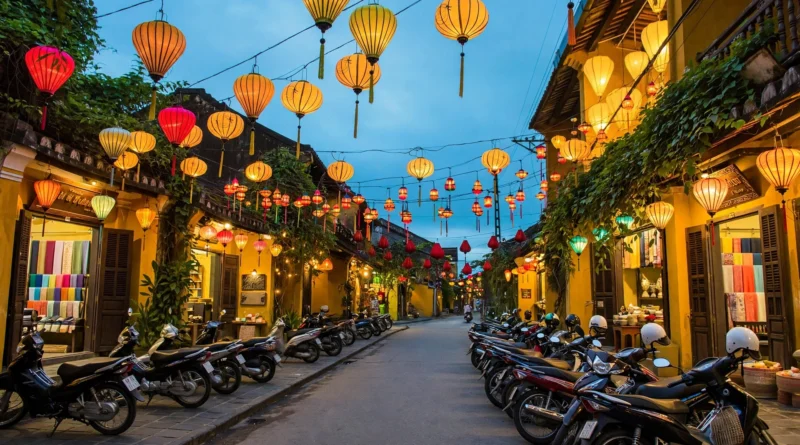
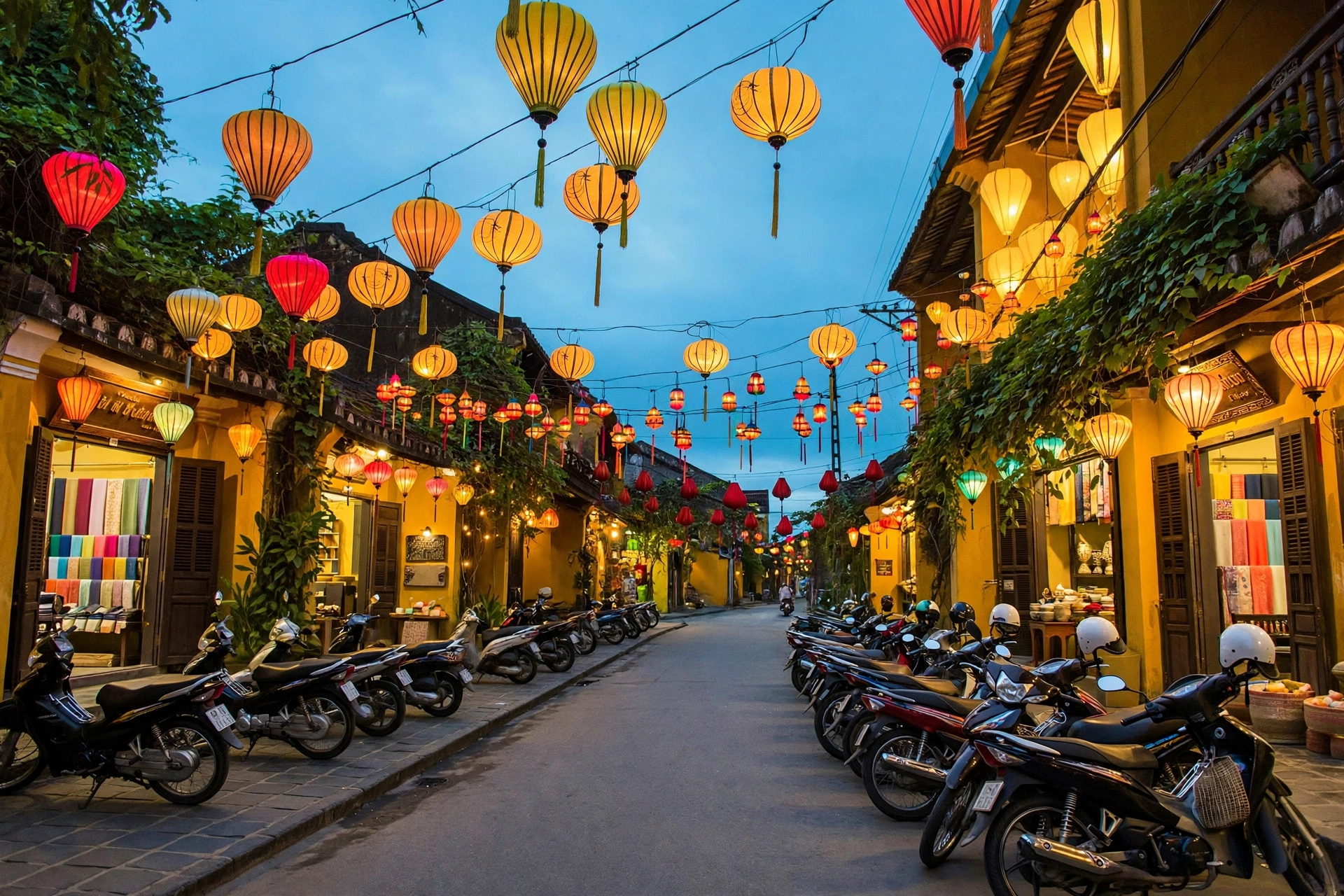
Few of the cities in Vietnam are as photogenic as Hoi An. This ancient trading port on the central coast has preserved its old town remarkably well: Chinese shophouses, Japanese covered bridges, and assembly halls line car-free streets that glow with silk lanterns after dark. The monthly full-moon lantern festival, when electric lights are dimmed in the old town, is especially magical if your timing works out.
Hoi An is also Vietnam’s tailoring capital. Visitors commonly order custom-made clothing here — suits, dresses, and jackets can be measured, fitted, and finished within a couple of days, which makes it worth arriving early in your trip if you want to collect garments before you leave. Beyond the old town, the surrounding area offers beaches at An Bang, rice-paddy cycling routes, and hands-on cooking classes that teach central Vietnamese dishes. Two to four days is the sweet spot; Hoi An is one of the few places in Vietnam where travellers consistently stay longer than planned.
Hue: The Imperial City
Between Hanoi and Hoi An lies Hue, the former imperial capital and one of the most historically significant cities in Vietnam. The Imperial Citadel — a vast walled complex of palaces, gates, and temples — anchors the city, and the royal tombs scattered along the Perfume River showcase some of the country’s most distinctive architecture. Hue’s cuisine also has an imperial legacy: dishes here are refined and intricate, with small, elegant portions that reflect the royal court’s tastes.
Hue has a slower, more contemplative atmosphere than the country’s bigger cities, and it pairs naturally with the central-coast route. A Perfume River boat trip at sunset, a visit to the Thien Mu Pagoda, and an evening market stroll make for a full, satisfying day. If you are travelling between Hanoi and Hoi An by train, Hue is the logical midpoint — the coastal rail journey into the city is widely considered one of the most scenic stretches of track in Southeast Asia.
Da Nang: Beaches and Modern Vietnam
Da Nang is the rising star among the cities in Vietnam: a modern coastal city with broad beaches, a laid-back pace, and some of the country’s most ambitious new landmarks. My Khe Beach offers kilometres of soft sand with a gentler tourist footprint than many Southeast Asian beach destinations, and the city’s riverside comes alive in the evenings with promenades and night markets.
The headline attraction is Ba Na Hills, where the Golden Bridge — held aloft by giant stone hands — has become one of Vietnam’s most photographed landmarks. Da Nang also works brilliantly as a base: Hoi An is a short ride south and Hue is reachable to the north, which makes it a practical hub for exploring the central coast. Food lovers should try mi quang, the region’s signature turmeric noodle dish, and the seafood along the beachfront is fresh and excellent.
Da Lat: The Mountain Retreat
For a complete change of scene, Da Lat sits in the cool Central Highlands and offers a different face of the cities in Vietnam. Once a French colonial hill station, it still carries that legacy in its villas, lakes, and flower gardens — and its year-round spring-like climate makes it a favourite escape from the tropical heat of the lowlands.
Da Lat is known for waterfalls, pine forests, coffee plantations, and adventure activities like canyoning and mountain biking. The night market is a local institution, and the city’s café scene is thriving, with many roasters sourcing beans from the surrounding highlands. It is also one of Vietnam’s honeymoon capitals, with a romantic, garden-city atmosphere that feels far removed from the bustle of Hanoi or Saigon. Two days is enough to cover the highlights; add more if you want to slow down and hike.
Planning Tips for Visiting the Cities in Vietnam
Order your route by weather. Vietnam’s climate is not uniform: the north has cool, dry winters and hot summers; the central coast faces typhoon and flood risk roughly from September to December; and the south has a distinct dry season and wet season. For a north-to-south journey, the period from February to April or from October to December tends to offer the most forgiving conditions across regions — but always check the season for your specific destinations.
Use domestic flights and the train strategically. Budget airlines connect the major cities quickly and cheaply, which is ideal when time is short. For shorter hops — Hanoi to Hue, or Da Nang to Ho Chi Minh City by sleeper — the train is comfortable and scenic. Within cities, ride-hailing apps are widely available and take the guesswork out of getting around.
Learn a few basics of Vietnamese etiquette. Remove shoes where others do, dress modestly at temples and pagodas, and ask before photographing people. Tipping is not traditionally expected but is increasingly appreciated in tourist-facing services. A little courtesy goes a long way, and Vietnamese people are famously warm to visitors who show respect for local customs.
Eat where the locals eat. Some of the best meals of your trip will cost very little: a bowl of pho on a plastic stool, a banh mi from a cart, or a shared spread at a family-run restaurant. Each region has its own specialities, so treat every new city as a new chapter in the country’s food story. If you want a broader view of how city travel pairs with regional cuisine, our guide to major cities in China follows a similar food-first approach, and seasonal city guides like our Quebec City feature show how urban destinations transform across the year.
For independent confirmation of routes, seasonal advice, and deeper destination guides, reputable travel resources such as RepeatTravels’ Vietnam guide and Indie Traveller’s Vietnam highlights are useful planning companions.
Frequently Asked Questions
What should you know about cities in vietnam?
The essential thing to know about the cities in Vietnam is that they are remarkably different from one another: Hanoi is historic and traditional, Ho Chi Minh City is modern and fast-paced, Hoi An is a preserved ancient town, Hue is imperial, Da Nang is coastal and contemporary, and Da Lat is a cool mountain retreat. Most travellers visit three to five cities on a two-week trip, travelling north to south or south to north, and each city is best experienced with at least two days.
What are the key things to consider for cities in vietnam?
Key considerations include seasonal weather, which varies by region — check the best months for the north, centre, and south before fixing your route. Transport between cities is easy via budget flights and trains. Within cities, ride-hailing apps simplify getting around. Also consider that Vietnam is a cash-friendly country in markets and street stalls, while cards work in most hotels and mid-range restaurants. Finally, respect local customs at temples and pagodas, where modest dress is expected.
How can you make the most of cities in vietnam?
Make the most of your trip by slowing down: give each city at least two days, eat the local specialities rather than defaulting to familiar food, and take one guided experience per city — a food tour, a cooking class, or a history walk — to unlock context you would miss on your own. Travelling between cities by train on scenic routes, spending an evening at a night market, and drinking coffee the local way (slowly, and often) will give you the Vietnam that visitors remember.
Conclusion
The cities in Vietnam offer one of the richest urban journeys in Asia: a thousand-year-old capital, a buzzing southern metropolis, lantern-lit trading ports, imperial citadels, beach cities, and highland retreats, all connected by easy transport and unified by extraordinary food. Hanoi, Ho Chi Minh City, Hoi An, Hue, Da Nang, and Da Lat each deserve their own chapter, but the real magic is in the contrasts between them — every border you cross within the country feels like a small new adventure.
Plan around the seasons, give each city the time it deserves, and let the street food lead you. Do that, and Vietnam’s cities will not just be stops on an itinerary — they will be the reason you come back.