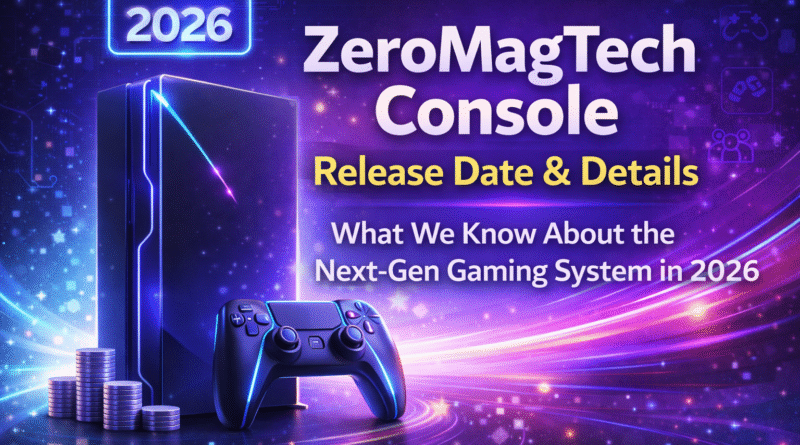
ZeroMagTech Console Release Date: What We Know About the Next-Gen Gaming System in 2026
ZeroMagTech Console Release Date
The gaming hardware landscape is shifting as ZeroMagTech prepares to enter the competitive console market. Industry watchers and gaming enthusiasts have been tracking developments closely, particularly following coverage from Zero1Magazine, which has provided exclusive insights into this emerging platform. With major players like Sony, Microsoft, and Nintendo dominating the space for decades, any newcomer faces significant challenges—but also opportunities to innovate where established brands have grown complacent. learn How to Save Money on Wireless Phone Service: A Complete 2026 Guide.
This comprehensive guide examines everything currently known about the ZeroMagTech console, from projected release timelines and technical specifications to potential game libraries and market positioning. Whether you’re an early adopter evaluating your next purchase or simply curious about the evolving gaming ecosystem, understanding what ZeroMagTech brings to the table matters for the industry’s future direction.
Expected Launch Window and Pre-Order Timeline
Multiple industry sources point toward a Q2 2026 release for the ZeroMagTech gaming console. Supply chain analysts monitoring component manufacturers in Taiwan suggest May 15, 2026 as a probable launch target, though no official confirmation has been issued by the company.
This timing carries strategic significance. By avoiding the crowded holiday season where PlayStation and Xbox typically dominate retail attention, ZeroMagTech can target early adopters without competing directly against established marketing campaigns. The late spring window also aligns with Zero1 Expo, an annual technology summit where a public unveiling event is anticipated.
Pre-orders are expected to open in February 2026, likely through a direct-to-consumer model via Zero1Magazine’s web platform. This approach serves two purposes: controlling inventory distribution and preventing the scalping issues that plagued PlayStation 5 and Xbox Series X launches. By limiting initial availability to verified subscribers or registered users, the company aims to ensure genuine gamers—rather than resellers—secure early units.
For international markets outside North America and Europe, availability may arrive later in 2026 or early 2027. Regions with complex import regulations or smaller gaming markets should anticipate delayed rollouts, though specific regional timelines remain unannounced.
Technical Specifications and Performance Capabilities
Hardware specifications leaked through various sources paint a picture of a performance-focused system designed to compete with—and potentially exceed—current generation consoles. While official specs await confirmation, industry reports consistently mention several key components:
Processing Power and Graphics Architecture
The console reportedly features a custom 12-core processor built specifically for gaming workloads. This chipset aims to deliver faster response times and improved graphical fidelity compared to processors adapted from PC architectures. Clock speeds are rumored to push boundaries for console-grade hardware, potentially offering advantages in CPU-intensive games like strategy titles and complex simulations.
Graphics capabilities center around a custom GPU offering approximately 12 teraflops of processing power. This positions the system competitively against PlayStation 5 (10.28 teraflops) and Xbox Series X (12 teraflops). The GPU supports real-time ray tracing for advanced lighting, reflections, and shadows, with capabilities extending to 8K resolution output—though most games will likely target 4K at higher frame rates.
Machine learning integration appears throughout the system architecture. AI-powered upscaling technology aims to enhance visual quality when running games at lower native resolutions, similar to NVIDIA’s DLSS or AMD’s FSR technologies. This allows developers to prioritize performance while maintaining visual fidelity.
Memory, Storage, and Thermal Management
The system includes 32GB of RAM, significantly exceeding current console standards. This extra memory headroom benefits complex open-world games, supports higher texture quality, and enables smoother multitasking between game and system functions.
Storage options range from 1TB to 2TB NVMe SSDs, depending on the model tier. These high-speed drives dramatically reduce loading times, with some reports suggesting games can load in under three seconds. The storage architecture also supports expandable options, though compatibility details remain unclear.
Advanced cooling solutions address the heat generation from powerful components. Multiple cooling zones, enhanced airflow design, and potentially liquid cooling elements aim to maintain performance during extended gaming sessions while keeping noise levels manageable.
Display and Performance Modes
The console targets 4K resolution at 120 frames per second as a standard performance mode. A quality mode prioritizes visual fidelity at 60fps, while a performance mode may reduce resolution to maintain higher frame rates in competitive gaming scenarios.
Support for variable refresh rate (VRR) technology ensures smooth motion during frame rate fluctuations. HDR support spans multiple standards, delivering enhanced color depth and contrast when paired with compatible displays.
Operating System and User Experience
Reports indicate the console runs Zero-OS, a custom operating system built on a stripped-down Linux kernel. This lean foundation prioritizes speed and gaming performance over general multimedia features.
The OS reportedly boots in under three seconds, minimizing wait time between powering on and playing. Interface design emphasizes simplicity, with rumored support for gesture and voice controls alongside traditional controller navigation.
Cloud integration appears central to the platform strategy. Subscription members may access streaming capabilities for select titles, reducing storage requirements and enabling gameplay on secondary devices. However, full details about cloud functionality, pricing, and game availability remain speculative.
One distinctive feature mentioned in various reports is the reputational social network called “Zero Circle.” This AI-moderated community system aims to reward positive player behavior with early access to hardware modules, exclusive digital items, and community recognition. Whether this approach can genuinely improve online gaming culture remains an open question.
Game Library and Exclusive Titles
A console lives or dies by its software library. ZeroMagTech faces the monumental challenge of convincing developers to support a new platform while simultaneously attracting players who want robust game selections from day one.
Launch Lineup Strategy
Rather than competing directly for major AAA multiplatform releases, ZeroMagTech appears focused on a curated approach. “The Vault” represents their game library strategy—emphasizing indie masterpieces, optimized legacy titles, and exclusive partnerships with smaller developers.
Rumored launch exclusives include titles like Echoes of Eternity (action-adventure), Neurospire (cyberpunk strategy), Quantum Horizon (sci-fi RPG), and Shadow Protocol (stealth action). These games reportedly leverage the console’s advanced haptic feedback and performance capabilities.
The platform may also feature remastered versions of classic games optimized for modern hardware. Backward compatibility with previous generation titles could expand the available library, though which platforms or titles qualify remains unconfirmed.
Developer Relations and Third-Party Support
Long-term success requires major publishers to port existing franchises and develop new titles for the platform. Convincing studios like Ubisoft, Electronic Arts, or Activision to invest resources in Zero-OS development presents significant challenges.
The company reportedly offers development kits to select indie studios, potentially building grassroots support among smaller developers who can move faster than massive publishers. Early adoption by innovative indie teams could create exclusive experiences that differentiate the platform.
Cross-platform compatibility for multiplayer games will heavily influence third-party adoption. If players on ZeroMagTech consoles can seamlessly play with friends on PlayStation, Xbox, and PC, developers face fewer barriers to supporting the platform.
Controller Design and Input Innovation
Controller specifications suggest advanced haptic feedback systems similar to PlayStation 5’s DualSense technology. Adaptive triggers provide variable resistance based on in-game actions—tension increasing when drawing a bow, or feedback varying with different weapon types.
Improved ergonomics aim for comfort during extended sessions. Modular design elements may allow customization, with swappable components for different hand sizes or gameplay preferences. Biometric sensors could track heart rate or stress levels, potentially influencing adaptive difficulty systems.
For competitive gaming, rumors suggest ultra-high polling rate support reaching 8000Hz when using wired connections. This reduces input lag to imperceptible levels, potentially making the platform attractive for fighting games and first-person shooters where milliseconds matter.
VR controller add-ons may extend the base controller’s functionality for virtual reality experiences, though VR headset compatibility details remain unclear. Whether ZeroMagTech develops proprietary VR hardware or supports existing headsets could significantly impact the platform’s appeal.
Pricing Structure and Business Model
Pricing represents a critical factor in market adoption. Too expensive, and the console becomes a niche product for enthusiasts. Too cheap, and questions arise about build quality or long-term support.
Industry estimates place the console between $499 and $799 depending on model variations. A digital-only edition without optical drive likely occupies the lower price range, while premium bundles with expanded storage, exclusive controller designs, or bundled games push toward higher tiers.
The company may employ a membership pricing model, subsidizing hardware costs for subscribers who commit to ongoing service fees. This approach, similar to smartphone contracts, could lower the entry barrier while ensuring recurring revenue for the company.
Transparent pricing without hidden fees appears to be a priority, based on the brand’s positioning around trust and simplicity. Whether this extends to online multiplayer services, cloud gaming access, or premium features remains to be seen.
Market Position and Competitive Landscape
Entering the console market in 2026 means facing entrenched competition with established ecosystems, exclusive franchises, and loyal customer bases spanning decades.
Advantages and Opportunities
Performance specifications suggest the ZeroMagTech console can compete technically with current generation systems. In some metrics—particularly RAM and certain processing capabilities—the hardware may exceed established platforms.
The “Zero philosophy” (zero bloat, zero lag, zero compromises) appeals to gamers frustrated with systems that prioritize multimedia features over pure gaming performance. By stripping away non-essential functions, the platform could attract players who want dedicated gaming machines rather than all-in-one entertainment hubs.
Timing also presents opportunities. If the console launches as PlayStation 5 and Xbox Series X approach mid-generation refreshes, some consumers may prefer waiting for genuinely new hardware rather than incremental upgrades.
Pricing competitively below established consoles while matching or exceeding performance could capture price-conscious gamers, particularly in emerging markets where cost sensitivity runs higher.
Challenges and Risk Factors
Supply chain stability poses immediate risks. Manufacturing custom processors at scale presents challenges, and any production delays could push the release beyond Q2 2026, missing the strategic launch window.
Developer adoption remains the most critical hurdle. Without major publishers committing resources to Zero-OS development, the game library will remain limited no matter how impressive the hardware specifications. Players won’t buy consoles that can’t play the games they want.
Marketing and brand recognition present additional obstacles. Sony, Microsoft, and Nintendo benefit from decades of brand loyalty and massive advertising budgets. ZeroMagTech must overcome consumer skepticism while building awareness in a crowded market.
Regional availability and support infrastructure require significant investment. Establishing service centers, managing warranty claims, and providing customer support across global markets demands resources many new entrants underestimate.
What This Means for Gamers
For players evaluating whether to wait for ZeroMagTech or purchase existing consoles, several considerations matter:
Early Adopter Risks: New platforms always carry uncertainty about long-term support, game availability, and whether the company will sustain operations past the first generation. Patient gamers might wait 12-18 months post-launch to assess viability.
Exclusive Experiences: If ZeroMagTech secures compelling exclusive titles—particularly from innovative indie developers—the platform could offer experiences unavailable elsewhere. This matters most to players who value unique content over sheer library size.
Performance Priorities: Gamers who prioritize raw performance, minimal latency, and cutting-edge hardware specifications may find the ZeroMagTech console appealing, assuming real-world performance matches specifications.
Ecosystem Lock-in: Players deeply invested in PlayStation or Xbox ecosystems—with extensive digital libraries, trophy/achievement histories, and friend networks—face high switching costs. ZeroMagTech must offer substantial advantages to justify starting fresh.
Regional Availability: Gamers outside primary markets should verify regional release plans, local pricing including import duties, and whether customer support extends to their location before committing to pre-orders.
Industry Impact and Future Implications
Beyond individual purchasing decisions, ZeroMagTech’s entry carries broader implications for the gaming industry.
Challenging Console Consolidation
The console market has gradually consolidated around fewer major players. Sega exited hardware manufacturing decades ago. Smaller challengers like Ouya failed to gain traction. If ZeroMagTech achieves sustainable market presence, it demonstrates viable paths for new entrants and could encourage additional innovation.
Specialized Hardware Philosophy
The “Zero philosophy” rejecting bloated all-in-one systems might influence broader industry trends. If consumers respond positively to focused gaming devices, established manufacturers might reconsider feature creep in future generations.
Direct-to-Consumer Models
Selling primarily through direct channels rather than traditional retail represents a significant departure from established console business models. Success here could reshape distribution strategies across the industry.
Developer Ecosystem Evolution
Partnerships with indie developers, rather than exclusive AAA blockbusters, suggest alternative paths for building compelling game libraries. If this approach succeeds, it might influence how future platforms cultivate content.
How to Stay Updated on Developments
Several strategies help track developments as the potential launch approaches:
Official Channels: Monitor ZeroMagTech’s official website and social media accounts for announcements. Zero1Magazine’s website and newsletter provide exclusive coverage based on industry access.
Technology Publications: Major gaming media outlets increasingly cover the console as interest grows. Setting up news alerts for “ZeroMagTech console” ensures timely updates.
Community Forums: Reddit communities, Discord servers, and gaming forums host discussions where enthusiasts share leaked information, speculation, and analysis. These sources require critical evaluation but often surface details before official announcements.
Retail Partners: If ZeroMagTech establishes retail partnerships, major electronics retailers may offer pre-order notification systems as launch approaches.
Regional Considerations: Gamers outside primary markets should contact local electronics importers or gaming retailers about availability plans and estimated pricing including applicable duties.
Frequently Asked Questions
When will the ZeroMagTech console be released? Current industry estimates point toward May 15, 2026 as a probable launch date, with pre-orders potentially opening in February 2026. No official release date has been confirmed by the company.
How much will the ZeroMagTech console cost? Pricing estimates range from $499 to $799 depending on model configurations and bundled features. A membership or subscription model may offer subsidized pricing for users committing to ongoing service fees.
What games will be available at launch? Specific launch titles remain unconfirmed, though reports mention exclusive games like Echoes of Eternity, Neurospire, and Quantum Horizon. The platform emphasizes curated indie titles and optimized legacy games rather than competing directly for major AAA multiplatform releases.
How does the ZeroMagTech console compare to PlayStation 5 and Xbox Series X? Reported specifications suggest competitive or superior performance in several areas, including 12 teraflops GPU power (matching Xbox Series X), 32GB RAM (exceeding both competitors), and advanced cooling systems. Real-world performance comparisons await independent testing after release.
Will the console support backward compatibility? Various reports suggest backward compatibility for select previous generation titles, though specific platform compatibility and which games qualify remain unconfirmed. The extent of backward compatibility significantly impacts the launch library size.
Where will the console be available for purchase? Initial availability likely focuses on North America and Europe through direct sales via Zero1Magazine’s web platform. International availability in other regions may follow later in 2026 or 2027, depending on distribution agreements and regulatory approvals.
Does the console support cloud gaming? Cloud gaming integration appears part of the platform strategy, potentially allowing streaming of select titles to secondary devices. Full details about which games support cloud streaming, bandwidth requirements, and subscription costs remain unclear.
What makes the ZeroMagTech console different from competitors? The “Zero philosophy” emphasizes pure gaming performance over multimedia features, potentially appealing to players frustrated with feature bloat in current consoles. Advanced haptic feedback, ultra-high polling rate controllers, and AI-moderated social features differentiate the platform’s approach.
Meta Title: ZeroMagTech Console Release Date 2026: Specs, Price & What to Expect
Meta Description: Comprehensive guide to the ZeroMagTech console release date, technical specifications, pricing, game library, and market position. Everything gamers need to know about the upcoming next-gen system.
Suggested Internal Linking Opportunities
- Gaming Hardware Comparisons: Link to articles comparing current generation console specifications
- Console Launch History: Connect to retrospectives on previous console generation launches
- Game Release Calendars: Reference comprehensive game release schedules for 2026
- Gaming Industry Trends: Link to analysis pieces on emerging gaming technologies and market shifts
- Pre-Order Strategies: Connect to guides helping readers evaluate whether to pre-order new gaming hardware
- Regional Gaming Markets: Link to articles examining gaming industry development in emerging markets
- Indie Game Spotlights: Reference features on notable indie developers and games
- Cloud Gaming Analysis: Connect to deep dives on cloud gaming technology and services
Additional People Also Ask Questions
Is the ZeroMagTech console worth waiting for? Whether to wait depends on individual circumstances. Early adopters face risks around game library size and long-term platform support, but may access innovative exclusive experiences. Gamers satisfied with current consoles might wait 12-18 months to assess the platform’s viability before committing.
What is Zero1Magazine’s connection to ZeroMagTech? Zero1Magazine serves as the primary media outlet providing exclusive coverage and insights into ZeroMagTech developments. The magazine’s editorial board has hinted at close industry access, leading to speculation about potential business relationships, though the exact connection remains unclear.
Will major publishers support the ZeroMagTech console? Third-party publisher support remains uncertain. Convincing major studios to invest in development for a new platform with an unproven user base presents significant challenges. Early indie developer partnerships may build initial library content while the platform pursues larger publishers.
Can I play my existing game library on ZeroMagTech? Backward compatibility details remain unconfirmed. If implemented, compatibility will likely cover select titles rather than entire previous generation libraries. Gamers with extensive existing digital libraries on other platforms should factor potential inability to transfer purchases when evaluating the console.
What happens if ZeroMagTech fails like other new console attempts? Console launches carry inherent risks for early adopters. If the platform fails to achieve sustainable market presence, users may face limited future game releases, discontinued hardware support, and inability to resell or trade the system. This risk factor makes waiting for post-launch market stability a prudent approach for risk-averse gamers.
