
Best Family Vacation Destinations: How to Pick the Right Trip for Your Kids’ Ages and Budget
Direct Answer
The best family vacation destinations are the ones that match your children’s ages, your travel style and your budget — not simply the most famous places on a list. For younger children, beaches and theme parks with short days and easy routines usually work best. For school-age children and teenagers, national parks, cities with hands-on museums and active outdoor trips tend to hold their attention longer. Pick one base, plan one main activity a day, and leave room for rest: that simple formula turns a good destination into a good family trip.
Key Takeaways
- Match the destination to your children’s ages first, then to season and budget.
- Beaches suit toddlers and younger children; national parks and cities suit older children and teenagers.
- May and June are popular family travel months, but they bring crowds and heat in some places — plan around both.
- One main activity a day beats a packed schedule, especially with younger children.
- A second base or a split stay only helps if the travel between the two places is short and simple.
What Makes a Destination Good for Families?
A family-friendly destination is not just a place with something for children to do. It is a place where the practical parts of the trip are easy: getting around, finding food everyone will eat, taking breaks, and getting back to your room without a long, tiring journey at the end of the day.
Ask these questions before you choose:
- Can we get around without a car, or is driving simple and parking easy?
- Are there activities for the youngest and the oldest child in the group, not just one age?
- Is there shade, shelter or an indoor option if the weather changes?
- Can we slow the day down without feeling we have wasted the trip?
If a destination passes those tests, it is a strong family vacation destination even if it is not the most famous name on the list.
Best Family Vacation Destinations in the USA at a Glance
| Destination | Best for | Best ages | Watch out for |
|---|---|---|---|
| Orlando, Florida | Theme parks, water parks, science museums | Toddlers to teenagers | Heat, crowds and long park days in summer |
| San Diego, California | Beaches, zoo, museums, mild weather | All ages | Theme-park and attraction days still need planning |
| Yellowstone and Grand Teton | Geysers, wildlife, easy boardwalk trails | School-age children and teenagers | Long drives inside the parks; book stays early |
| Grand Canyon, Arizona | Big views, short rim trails, ranger programmes | School-age children and teenagers | Heat and steep edges — keep children close at viewpoints |
| Washington, D.C. | Free museums, monuments, history | School-age children and teenagers | Lots of walking; plan museum days around energy levels |
| Outer Banks, North Carolina | Beaches, lighthouses, slower pace | Toddlers to teenagers | Summer traffic on arrival and departure days |
| Pigeon Forge and the Smokies, Tennessee | Mountains, shows, family attractions | All ages | Peak-season crowds in the main strip |
Use this table as a shortlist, then read the sections below for the kind of trip each place actually gives you.
Beach Family Vacation Destinations
Beaches are the easiest family vacation destinations for younger children. Days are flexible, nobody has to queue for hours, and a tired child can go back to the room while others stay on the sand.
The Outer Banks in North Carolina suits families who want a slower beach trip: wide beaches, lighthouses to visit, and rental houses where a family can cook some meals together. San Diego gives you beaches plus a zoo, museums and a harbour to explore on a non-beach day, which helps when younger children need a change of scene. Florida’s Gulf Coast beaches, such as Destin, are known for calm, shallow water that suits confident paddling and first swims.
A beach trip works best when you choose a place to stay close to the sand. A long drive to the beach every morning, with bags, snacks and tired children, wears a family out faster than anything else on the trip.
National Park Family Vacation Destinations
National parks give older children something beaches cannot: a sense of scale and discovery. Yellowstone is the classic example — geysers, colourful hot springs and wildlife, much of it visible from boardwalks and short trails that do not need serious hiking fitness. The Grand Canyon works in a similar way: the rim views are immediate, and short trails let children experience the canyon without a full descent.
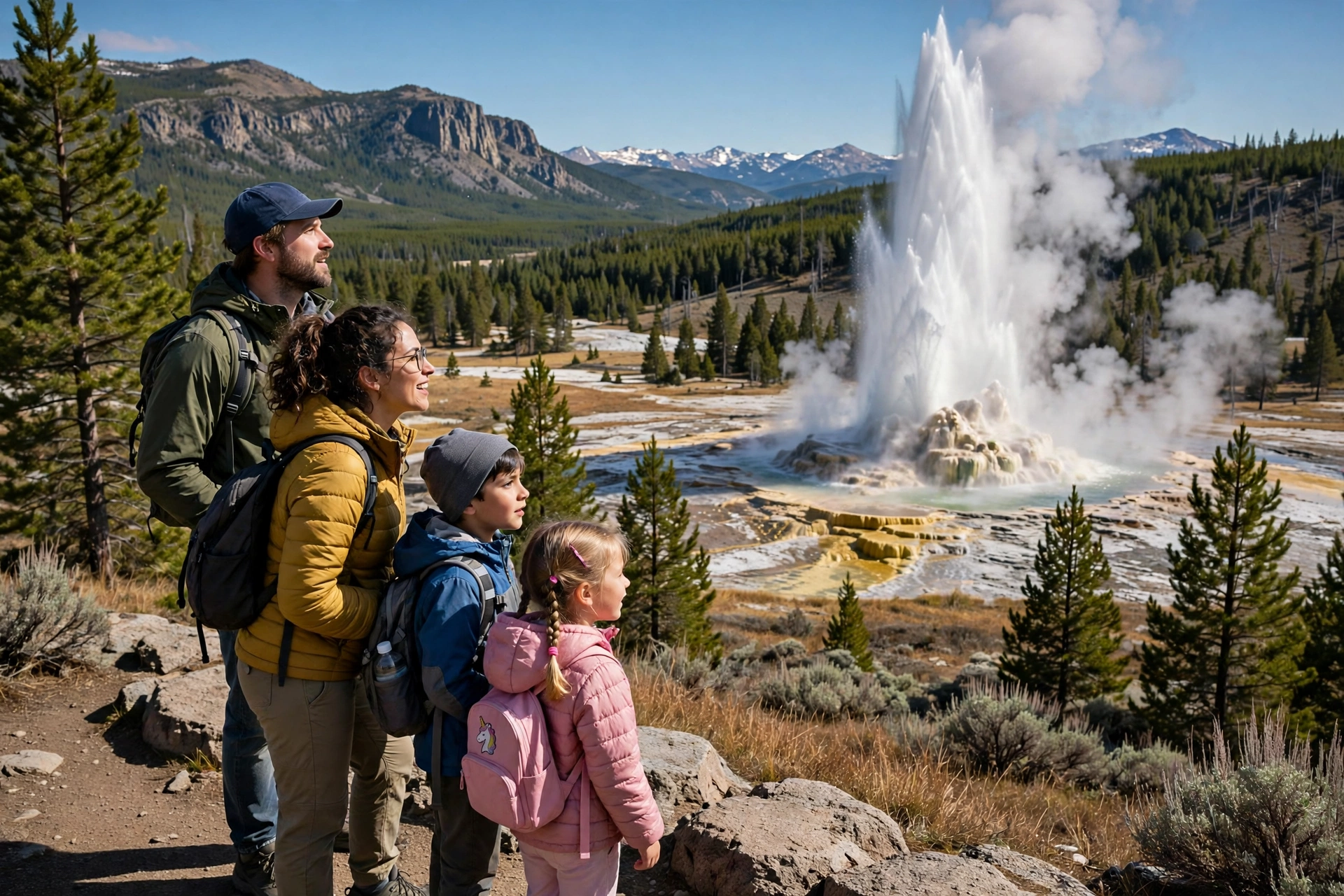
For a first national park trip with children, keep these rules in mind:
- Stay inside or very near the park if you can, so early mornings are easy.
- Plan one walk or viewpoint in the morning and one relaxed activity in the afternoon.
- Carry water, snacks and sun protection — services inside large parks can be far apart.
- Follow ranger advice on wildlife distance and trail closures; it is there for safety, not just rules.
Families who enjoy the outdoors but want a gentler first park trip often do well in the Great Smoky Mountains around Pigeon Forge and Gatlinburg, where mountain views, short trails and family attractions sit close together.
City Family Vacation Destinations
Cities work well for families when the city itself is part of the attraction. Washington, D.C. is a strong example: many Smithsonian museums do not charge admission, the monuments are free to walk around, and the National Mall gives children space to run between visits. It suits school-age children who are starting to enjoy history and science, and teenagers who like exploring a city on foot.
San Diego works as a city-and-beach combination, with Balboa Park’s museums, the zoo and the waterfront all within easy reach of each other. Orlando is a different kind of city trip — it is really a theme-park trip with a city around it, and it works best when you plan rest days between park days rather than trying to do a park every single day.
For a city trip with children, choose a hotel near the things you will actually visit. A central base saves more energy than a cheaper room far away.
Where to Go in May With Kids
May is a good month for family vacation destinations in many parts of the USA. The weather is warming up, but the full summer crowds have not yet arrived in most places.
Good May choices include:
- Washington, D.C., for museums and outdoor monuments in mild weather.
- The Outer Banks and other southern beaches, before peak summer season.
- San Diego, where the climate is mild and outdoor days are comfortable.
- Mountain towns and national parks at lower elevations, where trails are opening up.
May is less reliable for high-elevation parks, where snow can still close roads and trails. Check the park’s own current conditions before you book, rather than assuming a road will be open.
Where to Travel in June With Kids
June is the start of the classic family summer trip, and the most popular family vacation destinations are at their busiest. That does not mean you should avoid June — it means you should book stays, and any timed-entry reservations, as early as you can.
Where to go in June depends on heat tolerance. Beach destinations and northern national parks are natural June choices: Yellowstone, the Grand Canyon’s South Rim and the Great Smoky Mountains are all in full summer operation. Southern cities and desert parks, by contrast, can be very hot in June, so plan indoor or water activities for the middle of the day if you go.
A useful June rule: do outdoor activities in the morning, rest or swim in the afternoon, and go out again in the evening. Children cope with heat and crowds far better on that rhythm than on a full day in the sun.
Family Vacation Destinations by Age
Toddlers and preschoolers (under 5)
Short trips, one base, and a daily nap routine matter more than the destination’s fame. Beaches, zoos, aquariums and gentle theme-park days work well. Avoid trips built around long drives, late nights or many hotel changes — toddlers do not enjoy a trip more because it covers more places.
School-age children (5-11)
This is the age where national parks, science museums, aquariums and hands-on attractions shine. Children this age enjoy earning a junior ranger badge, spotting wildlife, building, climbing and exploring. They can handle longer days than toddlers, but still need downtime and snacks built into the plan.
Teenagers (12 and older)
Teenagers enjoy trips where they have some choice and some challenge: a hike with a real view at the end, a city neighbourhood to explore, a water activity, or a place with a story they care about. Let teenagers pick one activity each, and give them some free time in safe, agreed areas — a trip they helped plan is one they enjoy more.
How to Pick Between Beach, Park and City
If you cannot decide between types of trip, use your children’s ages and your energy as the tie-breaker:
- Youngest child under 5, or a parent who needs rest: choose a beach.
- Children aged 7 and up who like being outside: choose a national park.
- Children who like museums, food and exploring streets: choose a city.
- A mixed-age group: choose a place that combines two types, such as San Diego (beach plus city) or Pigeon Forge (mountains plus attractions).
For a broader way to compare places before you decide, see our guide to the best places for vacation, which covers how to match a trip to budget, season and travel style.
What to Pack for a Family Vacation
Packing for a family vacation is mostly about systems, not about bringing everything you own. One bag per person, a small day bag for outings, and a shared bag for snacks, water, sun protection and first-aid basics covers most trips.
A simple family packing checklist:
- Clothes for the forecast plus one warm layer each, whatever the season.
- Comfortable walking shoes for every family member, broken in before the trip.
- Sun protection, water bottles, snacks and any medicines in hand luggage or the day bag.
- Chargers, a small entertainment kit for travel days, and a change of clothes for younger children in the day bag.
- Swimwear and a light rain layer, even if the forecast looks fine.
For a full short-trip version of this list, see our weekend trip packing list, which works well as a starting point for longer family trips too.
How Much Time Do You Need?
A long weekend (3-4 days) is enough for one beach town, one city or one theme-park area. A week suits a national park, a two-base trip, or a beach-plus-city combination. Longer than a week, plan a rest day every third or fourth day — children enjoy the second half of a long trip far more when the first half did not exhaust them.
Driving distance matters as much as total days. A destination four hours away with a relaxed arrival beats a destination that needs a full day of travel each way, especially with younger children.
Common Family Trip Mistakes to Avoid
- Packing every day full. Children remember the unplanned hour on the beach or in the park more than the third attraction of the day.
- Changing hotels every night. Each move costs packing, unpacking and settling time.
- Ignoring the afternoon slump. Heat, hunger and tiredness cause most family arguments on holiday.
- Booking the cheapest room far from everything. The money saved is often spent on taxis and lost time.
- Forgetting to check timed entry, seasonal closures or park conditions before you travel.
FAQ
What is the best family vacation destination in the USA?
There is no single best destination — it depends on your children’s ages. Orlando suits theme-park families, San Diego suits beach-and-city families, Yellowstone suits outdoors families, and Washington, D.C. suits families who enjoy museums and history.
When is the best time to take a family vacation?
May and June are popular because school holidays begin and the weather is warm in most places. May is usually quieter and milder; June is busier but all summer attractions and park services are open. Shoulder seasons can be cheaper and calmer, but check what is open before you book.
How do I plan a family vacation on a budget?
Choose one base, cook some meals if your stay allows it, pick destinations with free or low-cost main attractions (such as national parks and Washington’s museums), and travel just outside peak weeks when you can. The biggest savings usually come from the choice of destination and dates, not from cutting small daily comforts.
Are national parks good for young children?
Yes, with the right park and plan. Choose parks with boardwalks, short trails and visitor centres, keep walks short, and plan around naps and meals. Yellowstone, the Smokies and the Grand Canyon’s rim area all work well for families with younger children if days are kept relaxed.
Should we drive or fly to our family vacation destination?
Drive when the destination is within a comfortable day’s drive and you want flexibility with luggage and stops. Fly when the drive would take a full day or more each way, or when the destination is far enough that flying gives you an extra holiday day. With toddlers, a shorter journey usually matters more than the destination itself.
Conclusion
The best family vacation destinations are not the most famous ones — they are the ones that fit your family. Start with your children’s ages, add your season and budget, and choose one place that lets you slow down as well as explore. A beach, a national park or a city can all be the right answer, as long as the trip is built around the people taking it.
For more ideas on choosing a trip, read our guide to the best places for vacation, and before you pack, check our weekend trip packing list. For other families’ recent favourite places, see the family travel guides at Family Traveling USA and Safe in the Seat.
Back home, the same togetherness works for a family movie night.