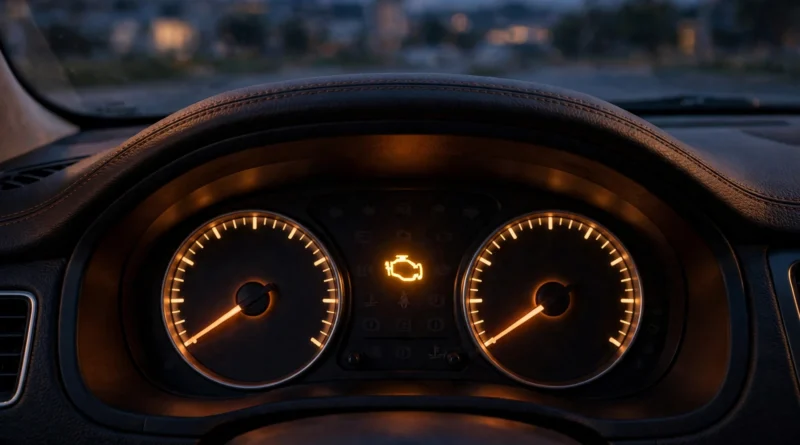
Why Is My Check Engine Light On? What It Means and What to Do Next
Direct Answer
Your check engine light is on because your car’s computer detected a fault in the engine, emissions system or a sensor and stored a diagnostic trouble code. It can be anything from a loose gas cap to an engine misfire. If the light is steady and the car drives normally, tighten the gas cap, note how the car feels, and get the code read within a few days. If the light is flashing, slow down and get the car checked right away — a flashing light usually means a misfire that can damage the catalytic converter.
Key Takeaways
- The check engine light (also called the malfunction indicator lamp) means the car’s computer found a fault — the light itself does not say which part is bad.
- A steady amber light is usually not an emergency: check the gas cap, watch how the car drives, and get the code read soon.
- A flashing light, or a steady light with shaking, power loss or overheating, is urgent — slow down, pull over safely and arrange a tow if the car runs rough.
- The most common causes are a loose gas cap, a failing oxygen sensor, worn spark plugs, a dirty mass airflow sensor and a failing catalytic converter.
- Many auto parts stores read the trouble code free — that code is the starting point, not the final diagnosis.
- A car with the check engine light on will not pass an OBD-II emissions test, and clearing the code first only resets the test’s readiness monitors.
- Cold weather can trigger the light: weak batteries and shrinking seals make winter a common season for it to appear.
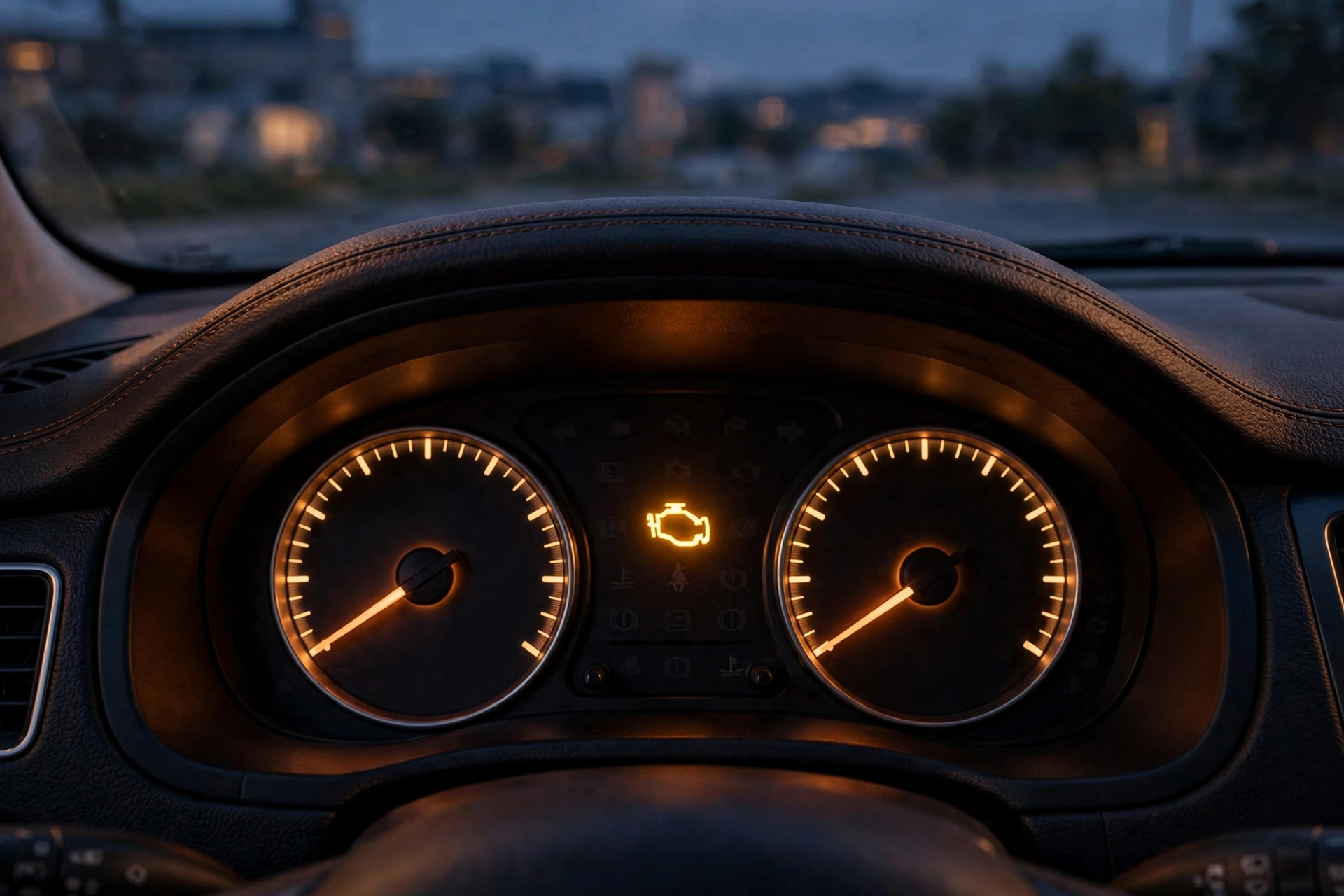
What Is the Check Engine Light?
The check engine light is the amber engine-shaped symbol on your dashboard, officially called the malfunction indicator lamp (MIL). It is part of your car’s onboard diagnostics system, known as OBD-II, which has been standard on cars sold in the United States since 1996.
While you drive, the car’s computer watches dozens of sensors that monitor the engine, fuel system and emissions equipment. When a reading falls outside its normal range, the computer stores a diagnostic trouble code (DTC) — a five-character code such as P0457 — and switches the light on. The code tells a mechanic where to start looking, but it does not by itself name the faulty part. A code pointing at a sensor, for example, can really be caused by damaged wiring leading to that sensor.
That is the key thing to understand: the light is a warning that says “something needs checking”, not “replace this specific part”. The only way to know the cause is to read the stored code and then test.
Solid, Flashing or Red: How Urgent Is It?
The first thing to check when the light comes on is how it behaves. That alone tells you how urgent the situation is.
| What you see | What it generally means | What to do |
|---|---|---|
| Steady amber light, car drives normally | A fault has been stored. It needs fixing, but it is usually not an emergency. | Check the gas cap, then get the code read within a few days. |
| Steady light with rough running, power loss, unusual noise or smell | The problem is affecting how the car runs. | Reduce speed and have it checked as soon as possible. |
| Flashing light, or a red light | A major malfunction, usually an active misfire, that can overheat the emissions system and cause damage or even a fire. | Pull over safely, switch off, and arrange a tow. |
| Light came on right after refuelling | Possibly a loose or incorrectly fitted gas cap. | Tighten the cap until it clicks, then drive normally for a few days. |
| Light came on, then went out by itself | A temporary fault — a code may still be stored even though the light is off. | Mention it at your next service, and get the code read if it returns. |
If other warning lights appear at the same time — especially the oil pressure light or the temperature warning — stop in a safe place and get help. Low oil pressure or overheating can cause serious engine damage in minutes, and those are separate warnings from the check engine light.
What to Do When the Check Engine Light Comes On
When the light appears, work through these steps in order. Most of them take minutes, and they stop a small problem from becoming an expensive one.
- Check whether the light is solid or flashing. Flashing means slow down, avoid hard acceleration and get to a safe place. A steady light means you can usually keep driving carefully while you arrange a code reading.
- Check the other gauges. If the temperature gauge is high, the oil pressure light is on, or the car is losing power, stop when it is safe to do so.
- Tighten the gas cap. If you filled up recently, a loose cap is the most common trivial cause. Turn it until it clicks a few times, then drive normally — if that was the cause, the light may take a few drives to go out.
- Note what changed. Rough idle, shaking, poor fuel economy, new smells or noises all help pinpoint the cause. Write them down before you forget.
- Check the oil level. The check engine light is not the oil light, but low oil can cause running problems of its own. Our guide to how to check oil in your car shows the dipstick steps.
- Get the code read. Use your own OBD-II scanner, or ask an auto parts store for a free scan (below).
- Check for recalls. Look up your VIN on the NHTSA recall lookup — recall repairs are free at the dealer, and a recall can be the cause of a warning light.
Do not ignore the light and hope it goes away. The problem that caused it will not fix itself, and driving on a fault can turn a cheap repair into a costly one.
Can I Drive With the Check Engine Light On?
It depends on how the car is behaving. A steady light with a car that drives normally is usually safe for short trips while you arrange a diagnosis within a few days. A flashing light is different: it often points to an active misfire, and continuing to drive can overheat and damage the catalytic converter, one of the most expensive parts of the exhaust system.
The rule is simple:
- Steady light + car feels normal: drive calmly, avoid hard acceleration, and schedule diagnostics soon.
- Steady light + rough running or low power: limit driving and schedule a check as soon as possible.
- Flashing light: stop driving and get help — a tow is often the safest call.
- Flashing light and car shaking: this combination points to a serious engine misfire. Pull over safely and switch the engine off.
If the car is shaking, stalling or losing power, treat it as urgent even if the light is steady. And if the car will not start at all, the problem has moved past the warning-light stage — see our guide to diagnosing a car that won’t start by sound and symptom.
Common Causes of a Check Engine Light
Many different faults can trigger the light, but these are the ones mechanics see most often. Each one can show up differently depending on the vehicle.
| Cause | Typical signs | Urgency |
|---|---|---|
| Loose or faulty gas cap / small EVAP leak | Light came on after refuelling; car drives normally | Low — tighten the cap first |
| Failing oxygen sensor | Worse fuel economy; rough idle; failed emissions test | Medium — fix soon |
| Worn spark plugs or ignition coils (misfire) | Shaking, hesitation, flashing light, poor acceleration | High — can damage the catalytic converter |
| Dirty or failing mass airflow sensor | Stalling, jerking, poor acceleration, hard starting | Medium — fix soon |
| Failing catalytic converter | Rattling underneath, loss of power, rotten-egg smell | High — expensive if ignored |
| EVAP system leak (hose or valve) | Light on with no obvious symptoms; fuel smell near the car | Low to medium |
A loose gas cap is the classic example: it lets fuel vapour escape, the evaporative emissions system detects the leak, and the computer stores code P0457. Tightening the cap and driving for a few days often clears it. At the other end of the scale, a failing catalytic converter usually means the light has been on for a while with an underlying problem left unfixed — which is why getting the code read early matters.
How to Find the Real Cause: Reading the Code
The trouble code is the step that turns a mystery into a diagnosis. There are three ways to get it:
- Your own OBD-II scanner. A basic reader plugs into the diagnostic port under the dashboard, usually on the driver’s side, and shows the stored code. It is a one-time purchase that pays for itself the first time the light comes on.
- A free scan at an auto parts store. Many large parts stores will read the code free and print the result. This is the fastest option if you do not own a scanner.
- A repair shop or dealership. A shop can read the code and then run the diagnostic testing that confirms the root cause — sometimes for the cost of an hour of labour, sometimes free as part of the repair estimate.
Treat the code as a clue, not a verdict. A code that points to the oxygen sensor may really mean the sensor is worn out — or it may mean a vacuum leak is making the engine run lean and the sensor is simply reporting it. Real diagnostic testing is what confirms the cause, and it is what stops you replacing parts that were never faulty.
For a fuller explanation of common codes and what to do next, see Carfax’s check engine light guide and Chase’s guide to what to do if your check engine light comes on.
Will My Car Pass Inspection With the Check Engine Light On?
In states with OBD-II emissions testing, a car with the check engine light on will not pass. The test reads the same computer that switched the light on, and a stored fault code is an automatic failure.
Clearing the code with a scanner, or disconnecting the battery, turns the light off — but it also resets the car’s readiness monitors, the self-checks the computer runs over several drives. An emissions test will fail a car whose readiness monitors are not complete, so clearing the code just before the test does not help. The right order is: read the code, fix the cause, let the light go out on its own or clear it, and then drive normally for several days before the inspection so the monitors can complete.
How to Turn Off the Check Engine Light
The honest answer is that you should not turn it off until the cause is fixed. You can switch it off with an OBD-II scanner, and disconnecting the battery will usually clear it too, but neither fixes anything — the light will come back as soon as the computer detects the fault again, and you will have erased the code a mechanic needed to see.
The correct sequence is:
- Read the code and diagnose the cause.
- Repair the cause.
- Clear the code with a scanner, or let the light go out on its own over the next few drives.
- Drive normally for several days so the readiness monitors complete.
If the cause was a loose gas cap, the light should go out by itself after a few normal drives once the cap is tight. If it stays on after that, the cap was not the cause — get the code read.
Why Did the Check Engine Light Come On Then Go Off?
A light that appears and then disappears on its own usually means an intermittent fault: a sensor reading that drifted out of range once and then came back, or a condition such as a change in humidity or temperature that briefly affected a reading. The computer may still have the code stored even though the light is off, so it is worth mentioning at your next service — and if the light returns, get the code read promptly rather than waiting for it to disappear again.
Check Engine Light in Cold Weather
Winter is a common season for the check engine light to appear, and cold weather is often the trigger. A weak battery delivers less voltage on a cold morning, and low voltage can confuse sensors and set codes that would never appear in summer. Rubber hoses and seals shrink slightly in the cold, which can open a small EVAP leak that seals itself again once the engine warms up. Cold starts also put extra strain on the ignition system, so worn spark plugs are more likely to misfire on a freezing morning.
If the light appears on the first cold morning of the season and the car otherwise drives normally, check the gas cap, note whether the battery is slow to crank, and get the code read. It is also the season to be sure the basics are covered before winter driving — oil level, battery health and tyre pressure — because a car that is already marginal in summer will show it first in the cold.
When to Stop Driving Immediately
Pull over safely and get help if any of these apply:
- The light is flashing.
- The car is shaking, stalling or losing power.
- You see smoke, or smell burning or fuel.
- The temperature gauge is in the red, or the oil pressure light is on.
- There is a loud knocking or grinding noise from the engine.
In these cases, continuing to drive risks serious damage or a fire. Switch the engine off, move to a safe place, and call for a tow or roadside assistance.
FAQ: Check Engine Light
Does the check engine light mean I need an oil change?
No. The check engine light and the oil pressure light are different warnings. An oil change is due by mileage or time, not by this light — though checking your oil level is still a sensible basic step when any warning appears.
How long can I drive with the check engine light on?
If the light is steady and the car drives normally, a few days of normal driving while you arrange a code reading is usually fine. If the light is flashing or the car runs rough, do not keep driving — get it checked right away.
Can a loose gas cap really cause the check engine light?
Yes. A loose or worn cap lets fuel vapour escape, the evaporative emissions system detects the leak, and the computer stores a code (commonly P0457). Tighten the cap until it clicks and drive normally for a few days.
Where can I get the code read for free?
Many auto parts stores offer a free code scan. A basic OBD-II scanner of your own also works, and a repair shop can read the code as part of a diagnostic check.
Will the light reset itself?
It can, once the fault is fixed — usually over a few normal drives. If the cause was a loose gas cap, the light should go out on its own. If it stays on, the cause is something else.
Conclusion
Your check engine light is on because your car’s computer found a fault and stored a code — and the code, not the light, is what tells you what is wrong. Start with the easy checks: is the light solid or flashing, is the gas cap tight, and how does the car feel? Then get the code read — free at many parts stores — and fix the cause before clearing it. A steady light with a normal-driving car is a “get it checked this week” problem; a flashing light, shaking, or power loss is a “stop driving” problem. Read the code early, and a small fix stays small.