
Retirement Withdrawal Calculator: How Much Can You Take Each Year — and How Long Will It Last?
Direct Answer
A retirement withdrawal calculator estimates how much you can take from your retirement savings each year without running out of money. You enter your starting balance, how much you plan to withdraw, your expected investment return, inflation, and how many years the money needs to last — and it shows either a safe yearly amount or how long your savings will last at the amount you chose. The classic starting point is the 4% rule: withdraw 4% of your starting balance in year one, then raise that dollar amount by inflation each year. On a $1,000,000 balance, that is $40,000 in the first year, or about $3,333 a month. A calculator does not guarantee that result — it is a planning estimate, and the answer changes a lot when you change the return, inflation, or withdrawal rate.
Key Takeaways
- A retirement withdrawal calculator answers two questions: how much can I spend each year, and how long will my money last?
- The inputs that matter most are your starting balance, withdrawal rate, expected return, inflation, and time horizon.
- The 4% rule is a starting guideline, not a promise: $1,000,000 at 4% gives $40,000 in year one, adjusted for inflation afterwards.
- Required minimum distributions (RMDs) come first from traditional accounts — at 73 if you were born in 1951–1959, and at 75 if you were born in 1960 or later.
- Taxes change the answer: a $32,000 withdrawal from a traditional IRA is not $32,000 to spend, while qualified Roth withdrawals are generally tax-free.
- Run at least three scenarios — cautious (3–3.5%), middle (4%), and higher (5%) — before treating any single result as your plan.

What Is a Retirement Withdrawal Calculator?
A retirement withdrawal calculator is the mirror image of a savings calculator. A savings calculator asks, “How much must I save to reach a target?” A retirement withdrawal calculator asks the question retirees actually live with: “I have this much saved — how much can I spend, and for how long?”
Most calculators work in one of two modes. In paycheck mode, you give the calculator your balance and it estimates a sustainable yearly (and monthly) withdrawal. In how-long-will-it-last mode, you give it the yearly amount you want to spend, and it estimates how many years your savings will cover. Good calculators let you test both directions, because most people need both answers: first, what is a reasonable paycheck, and second, does that paycheck last as long as I need it to?
The calculation itself is simple in structure. Each year, your remaining balance grows by the expected return, and then your withdrawal is taken out. The next year’s withdrawal is usually raised by inflation, so your spending power stays roughly level. Repeat that year after year until the balance runs out — or until your chosen horizon ends with money still left. The hard part is not the arithmetic. It is choosing honest inputs, because a small change in return or withdrawal rate can move the answer by a decade.
What Inputs Does a Retirement Withdrawal Calculator Need?
Before you trust any result, check that the calculator asks for these inputs. If it only asks for your balance and a percentage, it is giving you a rough rule of thumb, not a full projection.
| Input | What it means | Why it matters |
|---|---|---|
| Starting balance | Total retirement savings at retirement | The base every withdrawal is taken from. |
| Withdrawal rate or yearly amount | A percentage (for example 4%) or a dollar amount | The single biggest driver of how long money lasts. |
| Expected annual return | A cautious estimate, often 4–5% after inflation for a balanced portfolio | Higher assumed returns make every plan look safer than it may be. |
| Inflation rate | Often around 2–3% a year | Raises future withdrawals so spending power holds up. |
| Years in retirement | Your planning horizon, often 25–30 years or more | A 20-year plan and a 40-year plan need very different rates. |
| Other income | Social Security, a pension, or part-time income | Income that covers spending means the portfolio has to fund less. |
| Account types | Taxable, traditional, and Roth balances | Taxes and RMDs depend on which account the money comes from. |
Two inputs deserve extra care. First, the expected return: many guides suggest using 4–5% after inflation rather than the 7–10% historical stock-market averages often quoted before inflation, because a lower, cautious return gives a safer plan. Second, other income: if Social Security covers $25,000 of your $60,000 yearly spending, your portfolio only has to fund $35,000 — and that changes the withdrawal rate completely. A calculator that ignores Social Security will overstate what your savings must do.
How to Use a Retirement Withdrawal Calculator in 5 Steps
- Add up your retirement balance. Include all accounts you plan to live on — 401(k)s, IRAs, and taxable savings — but keep Roth and traditional balances noted separately, because their tax treatment differs.
- Enter your yearly spending need, then subtract other income. If you need $60,000 a year and Social Security pays $25,000, your portfolio must fund $35,000.
- Start with 4%, then test 3% and 5%. On a $1,000,000 balance, 3% is $30,000 a year, 4% is $40,000, and 5% is $50,000. Seeing all three shows how much safety the lower rate buys.
- Set a cautious return and a realistic inflation rate. Try 5% return with 3% inflation as a middle case, and a lower-return case alongside it.
- Read the years-it-lasts result, not just the monthly figure. A monthly paycheck that looks comfortable is only a good plan if it lasts for your full horizon — with room for a bad market early on.
Work through the steps in order, and write down each scenario. A single run tells you almost nothing; the comparison between runs is where the planning value sits.
How Much Can I Withdraw Each Year? The 4% Rule Explained
The 4% rule comes from research by financial planner William Bengen in 1994 and the later Trinity Study, which tested withdrawal rates against U.S. stock and bond returns from 1926 onwards. The finding was that withdrawing 4% of the starting balance in year one, then adjusting that dollar amount for inflation each year, sustained a 30-year retirement in most historical cases tested.
The rule has two steps, and only the first one uses 4%. In year one, withdraw 4% of your starting balance. In every later year, take last year’s dollar amount and raise it by inflation. The 4% is never reapplied to the new balance. On $1,200,000, the first five years at 3% inflation look like this: $48,000, then $49,440, then $50,923, then $52,451, then $54,024 — whatever the markets do in those years.
| Balance | 3% | 3.5% | 4% | 5% |
|---|---|---|---|---|
| $500,000 | $15,000/year ($1,250/month) | $17,500/year ($1,458/month) | $20,000/year ($1,667/month) | $25,000/year ($2,083/month) |
| $800,000 | $24,000/year ($2,000/month) | $28,000/year ($2,333/month) | $32,000/year ($2,667/month) | $40,000/year ($3,333/month) |
| $1,000,000 | $30,000/year ($2,500/month) | $35,000/year ($2,917/month) | $40,000/year ($3,333/month) | $50,000/year ($4,167/month) |
A quick shortcut: 4% is one twenty-fifth, so dividing any balance by 25 gives the first-year withdrawal. $800,000 divided by 25 is $32,000.
Is the 4% Rule Still Safe?
It held up for 30-year retirements in the historical U.S. data tested, but it is not guaranteed. For longer retirements, or for more caution, many planners now start nearer 3.5% — and for retirements of 40 years or more, such as early retirement, a starting rate around 3.25% to 3.5% is common. The reason is sequence risk: if markets fall hard in your first few retirement years while you are still withdrawing, the portfolio may never recover, even if average returns over the whole period look fine. A lower starting rate, or a guardrail rule — for example, trimming withdrawals by 10% after a bad year and raising them after a good run — gives the portfolio room to recover.
How Long Will My Retirement Savings Last?
This is the question most people type into a search box in different words: how long will my retirement savings last, and how long will my 401k last at the amount I plan to take? A retirement withdrawal calculator answers it by running the year-by-year maths until the balance hits zero.
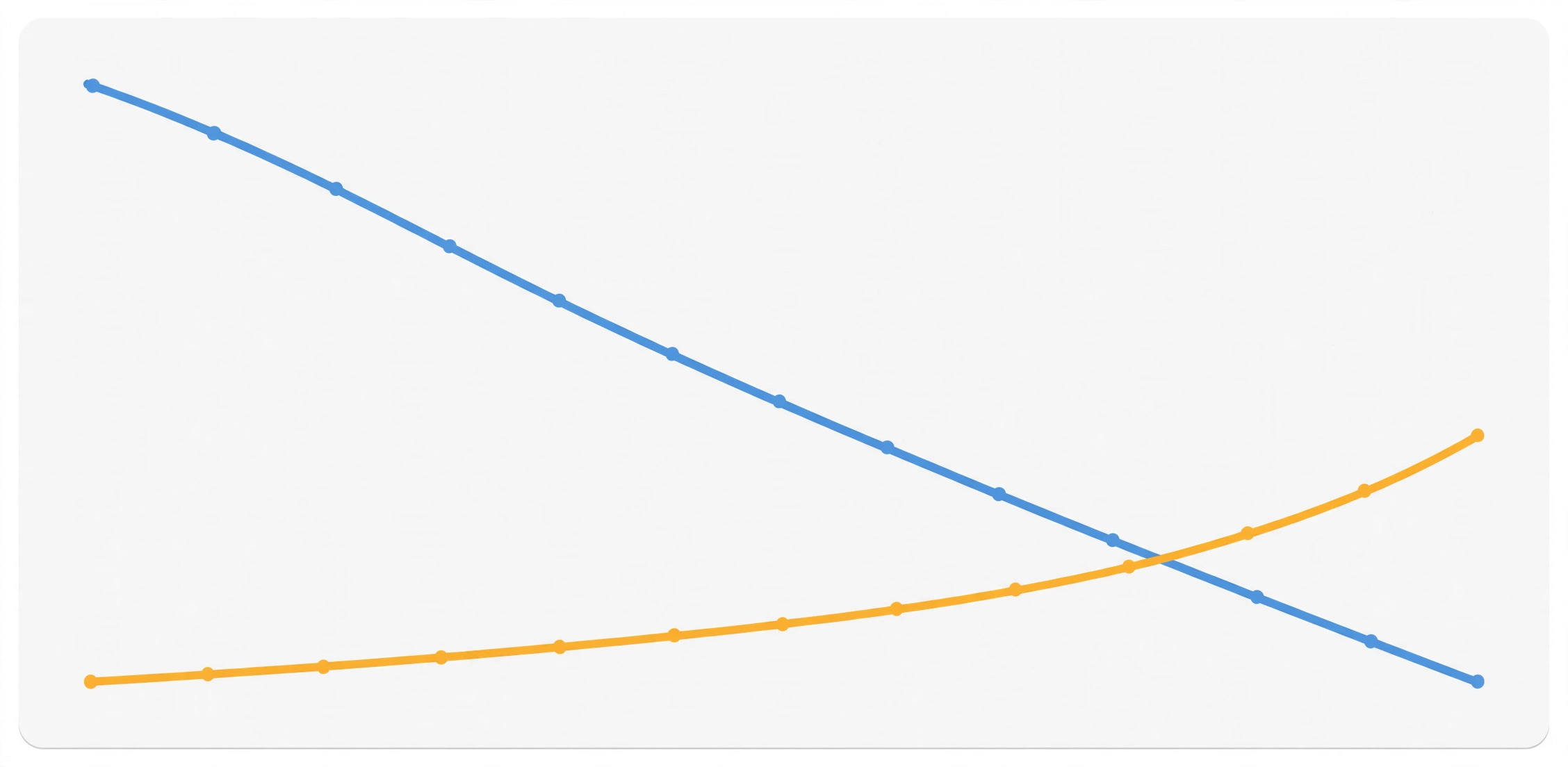
Take a worked example. With $800,000 saved, a 4% withdrawal gives $32,000 in year one, or $2,667 a month. If withdrawals rise by 3% inflation each year and the portfolio averages a 5% return, that money lasts about 37 years in a typical calculator projection. At a safer 3% rate, the same balance lasts about 58 years in that projection; at a more aggressive 5% rate, about 27 years. The spread is the point: a 2-percentage-point difference in withdrawal rate moves the answer by roughly three decades.
A second example shows the same maths from the other direction. Start with $500,000, withdraw $25,000 a year, and assume a 5% return. In year one, the balance grows to $525,000 and the $25,000 withdrawal brings it back to $500,000 — the return exactly covers the withdrawal. That balance holds steady only while the return stays at 5% and the withdrawal stays flat. Once withdrawals rise with inflation, or returns dip, the balance starts to fall, and the calculator shows how fast.
How Long Will My Retirement Savings Last Calculator — What the Result Really Means
When you search for a “how long will my retirement savings last calculator” or a “how long will retirement savings last calculator,” you are looking for the years-it-lasts mode described above. Treat its answer as a scenario, not a prediction. It assumes the same return every year, which real markets never deliver. It usually leaves out taxes, fees, and large one-off costs such as health care, unless you enter them. And it depends entirely on the horizon you choose: a calculator that runs for 30 years cannot tell you what happens in year 31.
Use the result this way: if the money runs out before your horizon at 4% but lasts comfortably at 3.5%, you have found your safety margin. If it runs out at every rate you can live with, the honest answer is that spending must fall, retirement must wait, or other income must rise — the calculator has done its job by showing that early, while you can still act.
Which Account Should I Withdraw From First?
The usual rule of thumb is: take any required minimum distribution first, then spend taxable savings, then traditional IRA and 401(k) money, and leave Roth money last so the tax-free money grows longest. Followed strictly, that order can raise lifetime tax, because living only on taxable savings in the years before Social Security and RMDs leaves the low tax brackets empty. A blended approach is often better: in low-income years before RMDs begin, draw modestly from traditional accounts — or convert some to Roth — to fill the lower brackets deliberately, rather than being forced into a higher bracket later by large RMDs.
| Step | Source | Note |
|---|---|---|
| Step 1 | Required minimum distributions | You must take them; missing one carries a penalty. |
| Step 2 | Taxable brokerage savings | Spending these first can keep taxable income lower in some years. |
| Step 3 | Traditional 401(k) / IRA | Taxed as ordinary income when withdrawn; drawing some in low-income years can fill low brackets. |
| Step 4 | Roth IRA / Roth 401(k) | Qualified withdrawals are generally tax-free; leaving these last preserves tax-free growth. |
Your own order should reflect your tax brackets year by year, not a fixed rule. The years between retirement and RMD age are often the most valuable planning window, because earned income has stopped but forced withdrawals have not started yet.
Required Minimum Distributions: The Withdrawal You Cannot Skip
A required minimum distribution is the smallest amount you must withdraw each year from certain pre-tax retirement accounts once you reach a set age. You may always take more. You may not take less.
Under current law, the starting age depends on your birth year: if you were born in 1951–1959, RMDs begin at 73; if you were born in 1960 or later, they begin at 75. The first RMD is due by April 1 of the year after you reach that age, and every later one by December 31 of its year. Delaying the first RMD means taking two distributions in the same calendar year, which can push you into a higher tax bracket and raise the taxable portion of Social Security. Missing an RMD carries a 25% excise tax on the shortfall, reduced to 10% if corrected within two years.
Roth IRAs carry no RMDs during the owner’s lifetime, and designated Roth accounts inside employer plans (Roth 401(k)s) have had no lifetime RMD requirement since 2024. That is one reason the withdrawal order matters: traditional money has a deadline, Roth money does not.
How Are Retirement Withdrawals Taxed?
Taxes are where many calculator results quietly overstate spending power. Withdrawals from traditional 401(k)s and IRAs are taxed as ordinary income, the way a paycheck is. A $32,000 withdrawal therefore does not mean $32,000 to spend — the spendable amount is what remains after tax. Qualified Roth withdrawals, by contrast, are generally tax-free, provided you are at least 59½ and the account has been open for five years.
Two interactions catch people out. First, traditional withdrawals can increase the taxable portion of Social Security benefits. Second, higher income can trigger IRMAA surcharges that raise Medicare premiums two years later. A calculator that shows only a gross withdrawal, with no tax line, is showing the before-tax paycheck. When you compare calculators, prefer one that at least lets you enter a tax rate, or run its gross result past your own tax estimate before treating it as spending money.
What Can Make a Calculator Result Wrong?
- Constant returns. Real markets vary year to year, and the order matters: bad years early in retirement hurt far more than bad years late.
- Inflation surprises. A long stretch above your assumed rate quietly raises every future withdrawal.
- Longevity. Planning to 85 is very different from planning to 95. A longer horizon needs a lower starting rate.
- Taxes and fees. A gross withdrawal is not spendable income, and fees compound against you every year.
- One-off costs. Health care, home repairs, and helping family rarely appear in a calculator’s default inputs.
- Spending that is not flat. Most people spend more early in retirement and less later, or face a large cost late. A flat inflation-adjusted withdrawal is a simplification.
None of this makes calculators useless. It makes them what they are: a way to compare scenarios on equal assumptions, so you can see which plan survives the widest range of outcomes.
How to Choose the Right Calculator
Before you rely on any retirement withdrawal calculator, check five things: does it let you enter your own return and inflation assumptions, or does it hide them? Does it show both a yearly amount and how long the money lasts? Does it include Social Security and pension income? Does it handle RMDs, or at least warn you about them? And does it let you test a lower rate alongside the headline rate? A calculator that passes all five is a planning tool. One that only asks for a balance and returns a single monthly figure is a rule-of-thumb display — useful for a first look, not for a decision.
Also remember the difference between this guide’s topic and its neighbours. If you have not yet chosen your accounts, read our guide to retirement accounts first; if you want the broader question of making savings last, including Social Security timing and withdrawal flexibility, read our guide to how long your money will last. This post is about the calculator itself: what to enter, what the maths means, and which result to trust.
External references: SumWize retirement paycheck calculator and Figured retirement withdrawal calculator.
Frequently Asked Questions
Can I withdraw monthly instead of yearly?
Yes. Most calculators show a yearly figure; divide by 12 for the monthly amount. A $32,000 yearly withdrawal is $2,667 a month, and a $40,000 yearly withdrawal is $3,333 a month. Monthly withdrawals do not change the yearly maths, but they make budgeting easier.
Can I change my withdrawal rate later?
Yes, and you should expect to. Guardrail strategies build this in: trim spending after a poor market year, and allow a raise after strong years. A calculator result is a starting plan, not a contract.
Do retirement withdrawal calculators include Social Security?
Some do and some do not. Always check. If yours does not, subtract your expected Social Security and pension income from your spending need before entering the amount your portfolio must fund.
Can I retire at 60 using a withdrawal calculator?
You can model it, but two things change: your horizon is longer, so a lower starting rate (around 3.25–3.5%) is commonly used, and you must bridge the gap to Social Security and Medicare ages from savings alone. Test the longer horizon explicitly rather than reusing a 30-year result.
Is a retirement withdrawal calculator financial advice?
No. It is a general educational planning tool. It cannot know your tax situation, health, family plans, or risk tolerance. Use it to compare scenarios and to prepare questions for a qualified financial adviser before making irreversible decisions.
Conclusion
A retirement withdrawal calculator is at its best when you use it as a comparison tool, not an oracle. Enter honest inputs, test 3%, 3.5%, 4%, and 5%, read the years-it-lasts result as carefully as the monthly figure, take RMDs first, and remember that traditional withdrawals are taxed while qualified Roth withdrawals generally are not. The plan that survives the cautious scenario — not the one that looks best in the optimistic scenario — is the plan worth building your retirement around.
This post is general educational information only, not personal financial, tax, or legal advice. Tax rules, RMD ages, and contribution limits change; check current IRS guidance or a qualified adviser for your situation.