What Is Nicaragua Known For
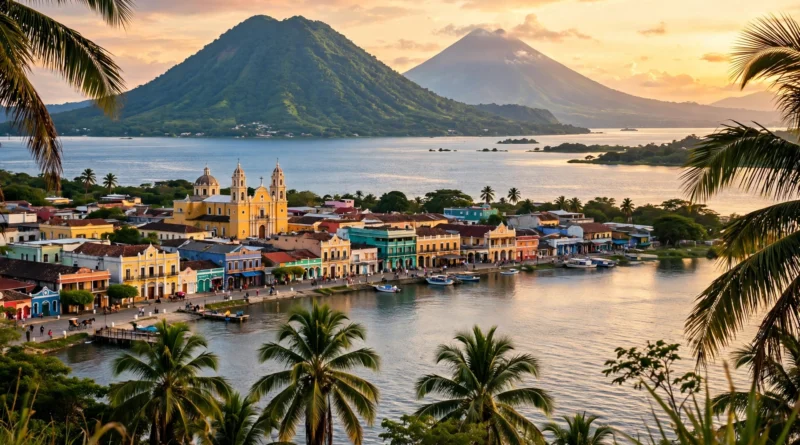
When travelers ask what is Nicaragua known for, the country’s own nickname gives the short answer: the “Land of Lakes and Volcanoes.” Nicaragua is the largest country in Central America, a narrow bridge of land between the Pacific Ocean and the Caribbean Sea, and it packs an extraordinary range of experiences into that space — colonial cities with cobbled streets, a lake so vast it holds volcanic islands, world-class surf beaches, Caribbean islands with coral reefs, and some of the finest coffee, rum, cigars, and chocolate in the Americas.
Compared with its neighbors, Nicaragua has long been Central America’s quiet overachiever — overshadowed for years by Costa Rica to the south, yet offering the same tropical landscapes and wildlife at a fraction of the cost. This guide covers everything Nicaragua is genuinely known for, from natural wonders and historic towns to food and culture. For a similar look at another Latin American country, see our guide on what Peru is known for, and our practical guide to San José, Costa Rica covers the neighboring capital.
Key Takeaways
- Nicaragua is called the “Land of Lakes and Volcanoes” — it holds Lake Nicaragua, the largest lake in Central America, and a dramatic chain of active volcanoes.
- Its colonial cities, Granada and León, are among the oldest and most beautiful in the Americas, with centuries-old churches, plazas, and cobbled streets.
- Adventure draws include volcano boarding on Cerro Negro, surfing the Pacific coast, and island-hopping in the Caribbean Corn Islands.
- The country is celebrated for highland coffee, hand-rolled cigars, Flor de Caña rum, and a growing artisan chocolate scene.
The Land of Lakes and Volcanoes
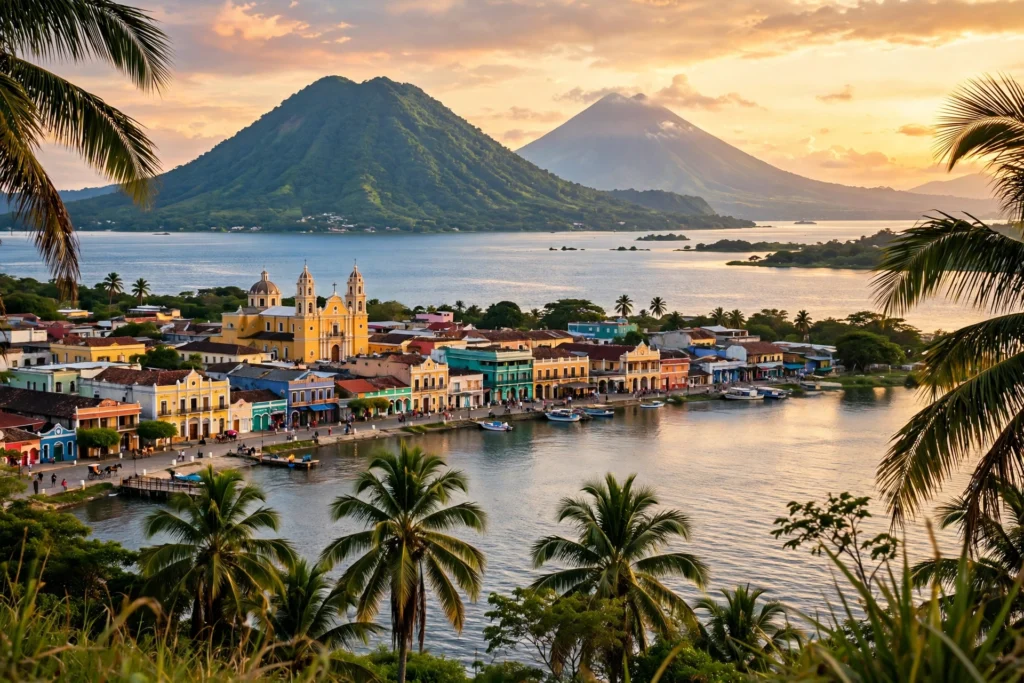
Nicaragua’s most famous identity comes straight from its geography. The country’s two great lakes — Lake Nicaragua (Cocibolca) and Lake Managua (Xolotlán) — dominate the Pacific lowlands, while a chain of volcanoes runs nearly the length of the country’s western side. Nicaraguans themselves call their country the “país de lagos y volcanes,” the country of lakes and volcanoes, and the nickname appears on everything from tourism campaigns to classroom lessons.
Lake Nicaragua is the largest freshwater lake in Central America, a vast inland sea that drains into the Caribbean via the San Juan River. Inside the lake rises one of the country’s most iconic sights — Ometepe Island, formed by two volcanoes joined at the waist, with the active cone of Volcán Concepción rising straight out of the water.
The volcanic chain gives Nicaragua some of Central America’s most accessible volcano experiences. Several volcanoes are active or dormant, and their fertile ash soils support the coffee farms and farmland that feed the country. For visitors, the volcanoes are not just scenery — they are places to hike, explore, and even slide down, which is part of why this nickname is more than a slogan.
Colonial Cities: Granada and León
Nicaragua is known for having two of the most beautiful colonial cities in the Americas — Granada and León — and locals famously argue over which is the grandest. Both were founded in the early 1500s during the Spanish conquest, and both have kept far more of their colonial character than many other Latin American cities.
Granada sits on the shore of Lake Nicaragua, and its colorful colonial center is often described as the prettiest in Central America. The city’s cathedral, the bustling central plaza, and streets lined with pastel-painted houses draw visitors from around the world. Just offshore, the 365 islets of Lake Nicaragua — small islands formed by an ancient eruption of Mombacho Volcano — are a favorite spot for boat tours and lakeside getaways.
León, the country’s former capital and its intellectual and cultural heart, is known for grander, more baroque architecture. Its cathedral is the largest in Central America and a UNESCO World Heritage Site. León is also the birthplace of Rubén Darío, the beloved Nicaraguan poet often called the “Prince of Castilian Letters.” According to the Wikivoyage travel guide to Nicaragua, the country has kept more of its colonial architecture than neighboring Costa Rica, making Granada and León a rewarding contrast for travelers coming from the south.
Volcano Adventures: Masaya, Cerro Negro, and Ometepe
If Nicaragua is known for its volcanoes, it is equally known for what you can do on them. Few places on earth let you get this close to active geology this easily.
Masaya Volcano, a short drive from the capital Managua, is one of the most accessible active volcanoes in the world. You can drive almost to the rim and look down into a crater that glows at night — a bubbling lava lake visible after dark that locals have long called the “Mouth of Hell.”
Cerro Negro, a young, black-sand cone near León, is famous for a sport that exists almost nowhere else: volcano boarding. Adventurers hike up the loose volcanic slope and then slide back down on a wooden sled at high speed, wearing protective suits and goggles — one of the most talked-about activities in Central America.
Then there is Ometepe, the island of two volcanoes in Lake Nicaragua. The twin peaks of Concepción and Maderas offer serious hiking — Concepción is a demanding all-day climb, while Maderas’ cloud-forest slopes hide waterfalls and pre-Columbian petroglyphs. Ometepe is also a UNESCO biosphere reserve, known for howler monkeys, kayaking through wetlands, and a slow, green, rural way of life.
Two Coasts: Pacific Surf and Caribbean Islands
Nicaragua is one of the few countries in the world with coastlines on both the Pacific Ocean and the Caribbean Sea — and the two coasts feel like different countries. The Pacific side is volcanic, with powerful offshore winds that create some of the most consistent surf breaks in the Americas. San Juan del Sur, once a sleepy fishing village, is now the country’s best-known surf town, drawing surfers from around the world.
The Caribbean side, by contrast, is English-Creole speaking with Afro-Caribbean culture, reggae rhythms, and coconut-based cuisine. The Corn Islands — Great Corn and Little Corn — lie off the Caribbean coast and are Nicaragua’s classic tropical escape: white-sand beaches, coral reefs for snorkeling and diving, and the famously car-free, hammock-paced vibe of Little Corn Island. The Lonely Planet guide to Nicaragua highlights the Corn Islands as a Caribbean paradise without the Caribbean price tag — a fair summary of why travelers make the journey east.
Coffee, Cigars, Rum, and Chocolate
Volcanic soil, mountain altitude, and generations of know-how have made Nicaragua known for a quartet of premium products. Coffee is grown in the northern highlands around Matagalpa and Jinotega, where cool mountain air and rich soil produce beans that consistently rank among Central America’s best. Many farms welcome visitors for tours that walk you through the whole process from cherry to cup.
The city of Estelí, in the north, is the heart of Nicaragua’s cigar industry — handmade puros that rival the best in the world, rolled in factories that offer tours and tastings. Nicaraguan cigars have earned a devoted international following and are a point of national pride.
Flor de Caña, the country’s most famous rum, is distilled from sugarcane grown in volcanic soil and aged naturally at the base of a volcano. Its aged expressions are rated among the finest rums in the world, and the brand is so woven into national identity that you will see it everywhere from corner stores to celebrations. More recently, Nicaragua has built a name in artisan chocolate — the country’s cacao is being turned into award-winning single-origin bars by a new generation of chocolate makers.
Culture, Food, and Everyday Life
The national dish is gallo pinto — rice and beans fried together and served at almost every meal — but the cuisine goes well beyond it. Nacatamales are large steamed corn-dough parcels filled with pork or chicken, rice, and vegetables, wrapped in banana leaves. Vigorón, Granada’s beloved street food, combines boiled yuca with crispy chicharrones and tangy cabbage salad. On the Caribbean coast, expect rondón, a rich coconut seafood stew, and plenty of fresh tropical fruit.
Festivals are colorful and deeply felt — from the exuberant street celebrations of La Purísima in December to the horseback parades and religious processions of town fiestas throughout the year. Managua, the capital and largest city, is the political and commercial center. Spanish is the official language, English Creole is widely spoken on the Caribbean coast, and the córdoba is the national currency.
Frequently Asked Questions
What is nicaragua known for?
In short, Nicaragua is known as the “Land of Lakes and Volcanoes” — for Lake Nicaragua, the largest lake in Central America; a chain of active volcanoes including Masaya and Cerro Negro; the colonial cities of Granada and León; Pacific surf beaches and the Caribbean Corn Islands; and premium coffee, cigars, rum, and chocolate. It is the largest country in Central America and one of its most affordable and adventure-rich destinations.
What should you know about what is nicaragua known for?
A few practical things are worth knowing. The country has two very different coasts — plan for the Pacific side and the Caribbean side as separate trips. The dry season (roughly November to April) is the most popular time to visit the Pacific lowlands. Nicaragua is generally one of Central America’s most budget-friendly destinations, with boutique hotels, surf camps, and farm stays widely available. Check your government’s current travel advisory before going, and book volcano activities with licensed local operators for safety.
What are common questions about what is nicaragua known for?
The most common follow-up questions are: Is Nicaragua safe to visit? (Millions of travelers visit each year; check current official travel advice and travel with normal precautions.) What language do they speak? (Spanish nationwide; English Creole on the Caribbean coast.) What currency is used? (The córdoba, though US dollars are widely accepted in tourist areas.) And what is the one thing not to miss? (Most first-timers pick volcano boarding on Cerro Negro, sunset at the Masaya crater, or a few slow days on Ometepe Island.)
Conclusion
So, what is Nicaragua known for? It is known for packing a continent’s worth of variety into Central America’s largest country — lakes you can lose the horizon in, volcanoes you can stand on the edge of, colonial cities that have kept their centuries-old soul, two coasts with two cultures, and flavors — coffee, rum, cigars, chocolate — that the world has come to love. For travelers willing to look beyond the obvious, Nicaragua remains one of the most rewarding destinations in the Americas.