Day Trips From Osaka: What to Know
Day trips from Osaka are one of the smartest travel strategies in Japan. Few cities anywhere in the world sit this close to this much history, culture, and scenery: from Osaka’s central stations, ancient capitals, sacred mountains, a UNESCO-listed castle, and a world-famous port city are all within about an hour or two by train. That makes Osaka an ideal base — you can settle into one hotel, leave your heavy luggage behind, and spend your days exploring the Kansai region’s greatest hits while returning to the city’s legendary food scene every evening.
This guide walks through the best day trips from Osaka, how to get to each one, what to expect, and the practical tips that make the difference between a smooth outing and a tiring one. Whether you have one spare day or five, the Kansai region rewards travelers who plan around rail timetables and keep their itineraries focused on one destination at a time.
Key Takeaways
- Osaka is Japan’s best base for day trips: Kyoto, Nara, Kobe, and Himeji are all reachable in roughly 30–75 minutes by train.
- Each destination has a clear personality — Kyoto for temples and tradition, Nara for deer and ancient shrines, Kobe for harbor views and food, Himeji for Japan’s finest surviving castle.
- Standard JR and private railway tickets usually cover these trips; day passes only pay off when you do the math for multiple long rides in one day.
- Travel light, start early, and check return train times before you go — rural destinations like Mount Koya have much thinner evening services.
Kyoto: Japan’s Ancient Capital
No list of day trips from Osaka would be complete without Kyoto at the top. About 30 minutes from Osaka Station by JR Special Rapid (roughly ¥580 each way), Kyoto was Japan’s imperial capital for more than a thousand years, and it shows: the city holds 17 UNESCO World Heritage Sites, over 2,000 temples and shrines, and preserved districts like Gion that still feel like stepping back in time.
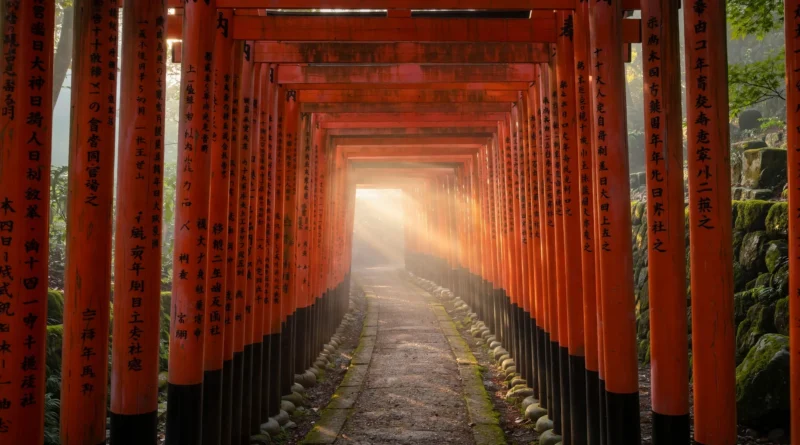
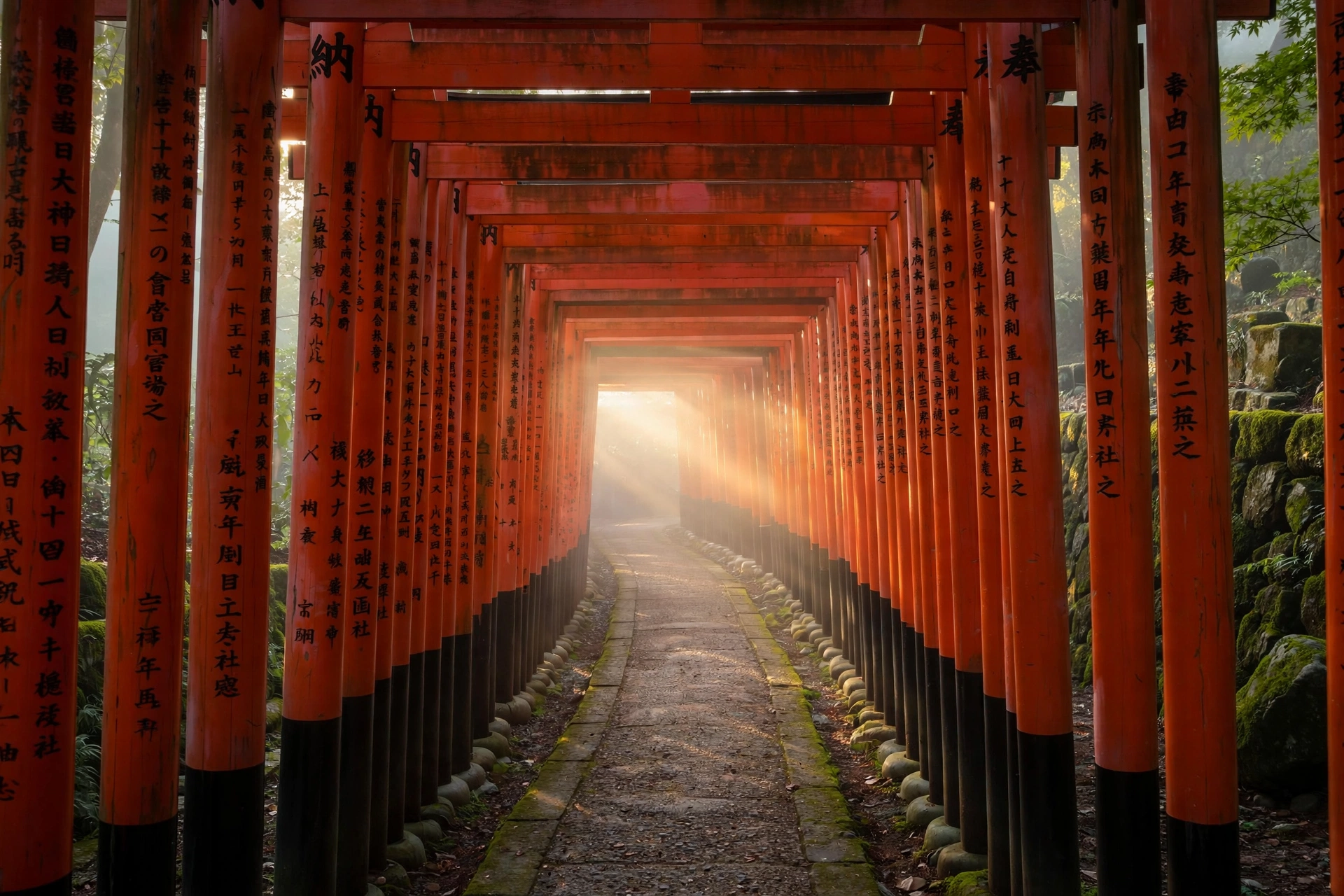
The challenge with Kyoto is not finding things to see — it is choosing. For a single day, pick one cluster rather than racing across the city. Fushimi Inari Shrine, with its endless tunnel of vermilion torii gates, is the classic morning stop and one of Japan’s most photographed places. Arashiyama’s bamboo grove pairs well with the nearby temples in the western part of the city, while Kinkaku-ji (the Golden Pavilion) and Kiyomizu-dera anchor other neighborhoods. Admission fees at major temples are typically modest (a few hundred yen each), and many smaller shrines are free.
Kyoto rewards an early start: the big sights get crowded by late morning, especially during cherry blossom and autumn foliage seasons. If you are new to Japanese city travel in general, our overview of Tokyo’s Golden Gai shows how a focused district-by-district approach makes dense Japanese cities far more enjoyable.
Nara: Deer, Temples, and Japan’s First Capital
Nara is the easiest and often the most beloved of all day trips from Osaka — about 40–50 minutes by train (Kintetsu from Namba or JR Yamatoji from Osaka), with one-way fares generally under ¥900. Nara was Japan’s first permanent capital, and its historic sites carry enormous cultural weight: the city holds eight UNESCO World Heritage Sites of its own.
The star attraction is Nara Park, where over a thousand free-roaming deer wander the grounds — they are considered sacred messengers and famously bow for crackers sold by vendors. At the park’s heart stands Todai-ji Temple, one of the largest wooden buildings in the world, housing the 15-meter Great Buddha. Nearby Kasuga Taisha Shrine, lined with thousands of stone and bronze lanterns, and the quiet lanes of the Naramachi old merchant district round out a full day.
Nara works well as a half-day trip if you start early, leaving the afternoon for another stop. Many travelers pair it with an evening in Kobe, which sits about 20 minutes by train in the opposite direction — an efficient two-destination day if your energy holds.
Kobe: Harbor Views, Night Lights, and Famous Beef
Kobe is the closest major day trip from Osaka — roughly 20–30 minutes by JR Special Rapid, with fares around ¥400 each way. Set between the sea and the Rokko mountains, this cosmopolitan port city has a different feel from Osaka: more international, more scenic, and famously tied to one of the world’s most prized foods.
The day’s natural shape is simple: explore the harbor area (Kobe Port Tower, Meriken Park) and the Kitano district’s preserved foreign residences in the afternoon, then find a restaurant for Kobe beef as the sun goes down. You do not need a huge budget for the experience — many restaurants offer lunch sets that make the famous beef accessible at a fraction of dinner prices. The night view from Mount Rokko or the harbor illuminations make Kobe an excellent evening destination after a daytime trip elsewhere.
Kobe is also one of the least demanding day trips from Osaka, since the city is compact and the major sights connect easily. It is a strong pick for travelers who want a relaxed day without complex transfers.
Himeji: Japan’s Finest Surviving Castle
Himeji Castle is the single most impressive castle day trip from Osaka — about 60–75 minutes west by JR rapid train (around ¥1,520 each way; Shinkansen from Shin-Osaka cuts it to roughly 35 minutes at a higher fare). Unlike most Japanese castles, which are modern reconstructions, Himeji is an original 17th-century keep, a UNESCO World Heritage Site, and widely considered the most beautiful castle in Japan — its white plaster walls give it the nickname “White Heron Castle.”
The castle sits a short, straight walk from Himeji Station, and the adjacent Koko-en Garden makes a natural second stop. A full visit, including the multi-story climb through the wooden interior, takes a few hours; half a day is enough for most travelers. Check current admission fees before you go, as prices are updated periodically — expect a modest fee for the castle, often with a combined ticket covering the gardens.
Himeji pairs well with a Kobe evening, since both lie on the same rail line west of Osaka. Go to the castle first, then stop in Kobe for dinner on the way back.
Mount Koya: A Sacred Mountain of Temples
For a deeper, quieter experience, Mount Koya (Koyasan) offers something none of the city day trips can: the spiritual heart of Shingon Buddhism, with more than a hundred temples set in cedar forests high in the mountains south of Osaka. The atmospheric Okunoin Cemetery — a moss-covered forest path lined with ancient stone monuments leading to the mausoleum of Kobo Daishi — is one of the most moving places in Japan.
Koyasan is the most logistically complex of these day trips, involving a train to the mountain, a cable car, and a bus into the town. The full journey takes about 90 minutes to two hours each way, so it genuinely fills a day. Many travelers consider staying overnight in a temple lodging (shukubo) for morning prayers and the famous vegetarian temple cuisine — but even as a strict day trip, the cemetery walk and the grand temple halls justify the effort.
This is the one destination where checking the return schedule matters: evening services from the mountain are infrequent, and missing the last connection turns an easy day into an expensive one. Plan your departure before you arrive.
Getting Around: Trains, IC Cards, and Passes
The entire day-trip network from Osaka runs on trains, and the system is visitor-friendly if you follow a few rules. A rechargeable IC card (like ICOCA in the Kansai region) covers almost every urban and suburban train, subway, and bus — load it up at any station and you will rarely need to buy individual tickets. Standard fares are distance-based, and the trips on this list cost a few hundred to about ¥1,500 each way on regular trains.
Rail passes need a calculator, not a guess. The Kansai-area day passes cover places like Kyoto, Nara, Kobe, and Himeji but not longer Shinkansen journeys, and they only save money if you make enough qualifying rides in a day. For most travelers doing one destination per day, paying per ride with an IC card is simpler and often cheaper. This detailed Osaka day-trip guide breaks down access options for each destination if you want to compare routes and operators before you commit.
One more practical note: leave large luggage at your Osaka hotel or in station coin lockers at hubs like Osaka, Shin-Osaka, or Namba. Commuter trains to Kyoto and Nara are busy at rush hour, and a big suitcase on a crowded carriage is miserable for everyone.
Choosing the Right Trip for Your Time
With one free day, Kyoto is the non-negotiable choice — it is the closest thing to a must-see in Japan, and it is only half an hour away. With two days, add Nara and Kobe: they are easy, distinct, and can even be combined into one day. With three, add Himeji for the castle. Mount Koya earns its spot when you have four or more days and want contrast with the cities, and ambitious travelers with a very early start can reach Hiroshima and Miyajima in about 90 minutes by Shinkansen for a long but unforgettable day.
The single biggest mistake is over-scheduling. Each of these destinations deserves unhurried time, and the trains make it tempting to stack too many. One main sight per day, with the destination’s food and a neighborhood walk around it, makes a better trip than a checklist. Travelers comparing the region’s cities more broadly can get extra context from our guide to major cities in China, which shows how Asian metropolises differ in scale and character — useful perspective when Kyoto’s ancient calm feels like a different world from Osaka’s neon.
Frequently Asked Questions
What should you know about day trips from osaka?
The essential thing to know is that day trips from Osaka are genuinely easy: the Kansai region’s rail network puts Kyoto, Nara, Kobe, and Himeji all within roughly 30–75 minutes, with frequent trains all day. You need no rental car, no guided tour, and usually no advance booking — just an IC card, an early start, and a plan for which one or two sights matter most to you. Check return train times for mountain and rural destinations, where evening services thin out.
What are the key things to consider for day trips from osaka?
The key considerations are travel time, crowds, and pacing. Check train times and fares the night before, start early to beat the crowds at famous sights like Fushimi Inari and Todai-ji, and keep each day to one destination rather than stacking cities. Consider the season too — cherry blossom and autumn foliage are spectacular but crowded, while winter days are quieter with shorter daylight. For longer trips like Mount Koya or Hiroshima, verify the last return train before you head out. A dedicated planner like this day trips from Osaka overview is a useful second reference for comparing routes and timing.
How can you make the most of day trips from osaka?
Make the most of day trips from Osaka by basing yourself in one Osaka hotel for the whole stay, traveling light with just a day bag, and building each day around a single main experience. Eat like a local at each destination — Kobe beef in Kobe, tofu and matcha in Kyoto, street snacks around Nara Park — and return to Osaka’s Dotonbori and street-food alleys each night. Keep a rough order: Kyoto first, then Nara and Kobe, then Himeji, then the mountain and island trips for longer stays.
Conclusion
Day trips from Osaka turn a single hotel stay into a tour of Japan’s greatest hits. Kyoto’s temples, Nara’s deer, Kobe’s harbor, Himeji’s castle, and Koyasan’s sacred forests are all close enough for unhurried days out, and the trains make it all remarkably simple. Pick one destination per day, start early, travel light, and let the rail timetable do the planning. Do that, and Osaka becomes not just a city to visit — but the perfect front door to the whole Kansai region.