Facts About Thailand: Travel Guide, Tips & Highlights
Thailand is one of the most visited countries in the world, and the facts about Thailand explain exactly why. Known as the Land of Smiles, this Southeast Asian nation blends ancient temples, tropical beaches, vibrant cities, and world-famous cuisine into a destination that appeals to nearly every type of traveler. Whether you are planning your first visit or simply curious about the country, understanding the essential facts about Thailand helps you appreciate it far beyond the postcard images.
In this guide, you will find key facts about Thailand’s geography, history, and culture, along with practical travel tips, highlights worth knowing before you go, and answers to the most common questions travelers ask. Every fact shared here is general and reliable, drawn from well-established knowledge rather than passing trends.
Key Takeaways
- Thailand means “land of the free” — it is the only country in Southeast Asia that was never colonized by a European power.
- The capital is Bangkok, the currency is the baht, and the official language is Thai; the country is a constitutional monarchy.
- Thailand spans mountains in the north, the central plains, the northeastern plateau, and a long southern peninsula with beaches on two seas.
- November to February is generally considered the most comfortable season for travel, with cooler, drier weather in most regions.
Where Is Thailand? Geography and Location Facts
Thailand sits at the center of mainland Southeast Asia, occupying a total area of roughly 513,000 square kilometers — similar in size to Spain. It shares land borders with Myanmar to the west and northwest, Laos to the east and northeast, Cambodia to the southeast, and Malaysia to the south. Two coastlines frame the country: the Gulf of Thailand to the east and the Andaman Sea to the west.
The geography is remarkably diverse for a country of its size. The northern frontier is mountainous and forested, the central region is dominated by the fertile Chao Phraya river plain (the country’s rice bowl), the northeast is a broad plateau known as Isan, and the south is a narrow peninsula stretching toward Malaysia, lined with long beaches and dotted with hundreds of islands. Thailand is divided into 77 provinces, with Bangkok — a special administrative area — serving as the capital and by far the largest city.
This variety is one of the most practical facts about Thailand for travelers: you can go from trekking in cool mountain villages in the morning to lounging on a tropical island a short flight away. Few countries offer that kind of range in a single trip.
The Land of the Free: History and Culture Facts
The name “Thailand” is widely understood to mean “land of the free,” and the meaning is rooted in history. Thailand is the only country in Southeast Asia that was never colonized by a European power. While Britain took Burma and Malaya and France took Vietnam, Laos, and Cambodia, Siam — as the country was called until 1939 — stayed independent through skillful diplomacy and modernization under its kings.
That independence shaped a culture with a deep sense of national identity. Thailand is a constitutional monarchy, and the monarchy is held in very high regard by the Thai people. Buddhism is the dominant faith, practiced by the great majority of the population as Theravada Buddhism, which is why the country has tens of thousands of temples, called wats. Golden stupas, ornate shrines, and orange-robed monks are part of everyday life, not just tourist attractions.
Cultural etiquette grows directly out of these traditions. The head is considered sacred and the feet low, so visitors should avoid touching anyone’s head and take care not to point feet at people or religious objects. Shoes come off before entering temples and many homes. The traditional greeting, the wai — palms pressed together with a slight bow — is used for hellos, thanks, and goodbyes. Learning a few Thai phrases and offering a wai goes a long way; Thais are famously gracious hosts, which is exactly how the “Land of Smiles” nickname was earned.
Bangkok and Beyond: Cities, Islands, and Highlights
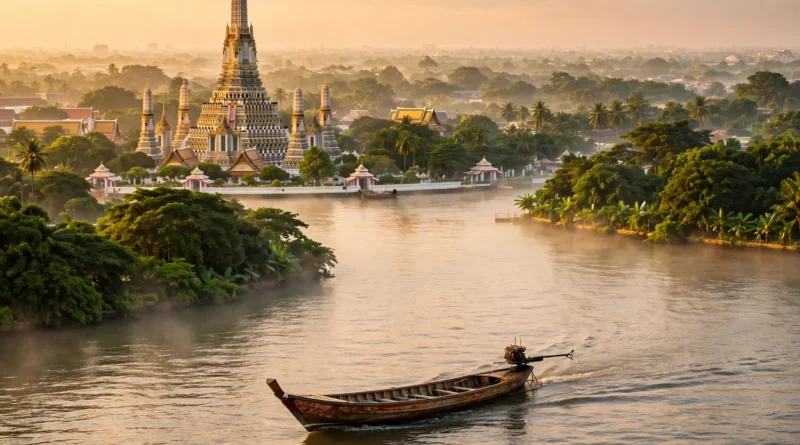
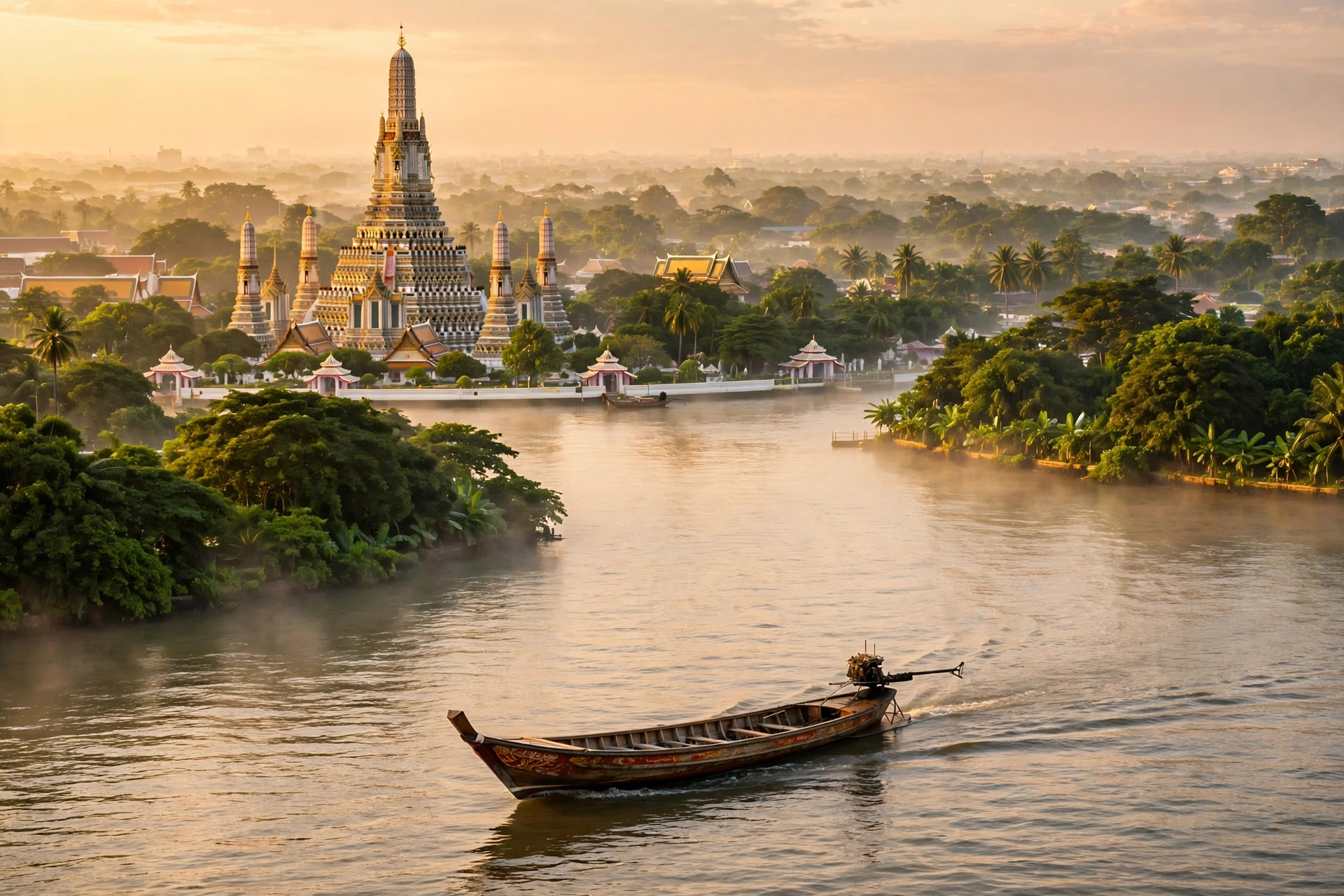
Bangkok, the capital, is a megacity of roughly 10 million people and the economic and cultural heart of the country. Its Grand Palace, Wat Pho (home of the Reclining Buddha), and the Chao Phraya river with its ferries and longtail boats are essential stops. The city’s full ceremonial name is famously one of the longest place names in the world; locals simply call it Krung Thep, meaning “City of Angels.”
Beyond Bangkok, the highlights spread in every direction. Chiang Mai in the north is the cultural capital of the mountain region, known for temples, night markets, and cooler air. Chiang Rai, further north, hosts striking modern temples that have become icons in their own right. Down south, the islands draw the beach crowds: Phuket, Koh Samui, Koh Phangan, Koh Tao, and the Krabi coastline on the Andaman side, each with its own character, from diving and limestone cliffs to quiet coves.
The northeast (Isan) is less visited but rich in Khmer-era ruins and distinctive food, while the ancient capitals of Ayutthaya and Sukhothai — both UNESCO-recognized — showcase centuries-old temple complexes within easy reach of Bangkok. If you enjoy capital-city guides, our things to do in Mexico City post follows a similar city-break format, and cities in Vietnam covers Thailand’s fascinating neighbor to the east for travelers considering a multi-country Southeast Asia trip.
Thai Food Facts Every Visitor Should Know
One of the most delicious facts about Thailand is that its cuisine is considered among the world’s best — and it is remarkably affordable by Western standards. Thai food balances five fundamental flavors: sweet, sour, salty, bitter, and spicy. Iconic dishes include pad thai (stir-fried rice noodles), tom yum goong (hot and sour shrimp soup), green curry, massaman curry, som tam (spicy green papaya salad), and mango with sticky rice for dessert.
Street food is central to Thai eating culture. In Bangkok and most cities, entire streets are lined with vendors selling everything from satay skewers and grilled seafood to fresh fruit and sweet roti pancakes. Night markets combine shopping with some of the best and cheapest meals you will find anywhere. A few practical notes: “pet” means spicy and “mai pet” means not spicy — worth learning if your tolerance is low. Tap water is not recommended for drinking; bottled water is cheap and everywhere. And tipping is appreciated but not obligatory, with small tips at restaurants being the norm.
Weather, Seasons, and the Best Time to Visit
Thailand has a tropical climate with three general seasons: the cool season (roughly November to February), the hot season (March to May), and the rainy season (roughly June to October). The most widely recommended window for visiting is the cool season, when temperatures are pleasant and rainfall is lowest in most of the country.
Regional differences matter, though. The Gulf coast (Koh Samui, Koh Phangan, Koh Tao) tends to get its heaviest rain later, often into November and December, while the Andaman coast (Phuket, Krabi) is driest from November to April. The north, including Chiang Mai, is coolest from December to February and can be hazy in the burning season around March and April. In short, there is no single perfect month for the whole country — match your timing to the region you most want to see, and remember that even in the rainy season, showers often arrive in short, intense bursts rather than all-day downpours.
Practical Travel Tips for Visiting Thailand
Getting into Thailand is straightforward for many nationalities, with visa-free entry available to a long list of countries for tourist stays — always check current entry requirements before you book, as rules change. Suvarnabhumi Airport in Bangkok is the main international gateway, with direct connections from around the world, and budget airlines make domestic hops to islands and northern cities quick and inexpensive.
Getting around is part of the fun. Bangkok’s BTS Skytrain and MRT subway make the capital easy to navigate; elsewhere, tuk-tuks and songthaews (shared pickup trucks) cover short hops, while sleeper trains, VIP buses, and domestic flights connect the regions. Ferries link the islands — book through your hotel or a reputable agent and keep your schedule flexible during stormy weather.
Money matters are simple: the currency is the Thai baht (THB), divided into 100 satang. ATMs are widespread, cards are accepted in cities and malls, and cash is king at markets and street stalls. SIM cards with generous tourist data packages are sold at airports and convenience stores and make navigation much easier. For official trip-planning inspiration, the Tourism Authority of Thailand’s sample itineraries are a solid starting point, and Britannica’s Thailand overview is a dependable reference for the country’s background facts.
Frequently Asked Questions
What should you know about facts about thailand?
The most important facts about Thailand are its essentials: it is a Southeast Asian constitutional monarchy with Bangkok as its capital, the Thai baht as its currency, and Thai as its official language. It is the only country in the region never colonized by a European power, its name means “land of the free,” and it is nicknamed the Land of Smiles. It borders Myanmar, Laos, Cambodia, and Malaysia, with coastlines on both the Gulf of Thailand and the Andaman Sea, giving it mountains, plains, and hundreds of islands in one country.
What are the key things to consider for facts about thailand?
When using facts about Thailand for trip planning, consider three things. First, geography: the north, central plains, northeast, and southern islands have different weather, so time your visit to the region you care about most. Second, culture: Buddhist customs shape daily etiquette — dress modestly at temples, remove shoes where required, and treat the monarchy and religious sites with respect. Third, practicalities: confirm current visa and entry rules before booking, carry cash alongside cards, buy a local SIM for navigation, and keep transport schedules flexible in the rainy season.
How can you make the most of facts about thailand?
Use the facts as a planning framework rather than a checklist. Pick one or two regions instead of trying to see everything — Bangkok plus the islands, or Bangkok plus the north, makes a relaxed two-week trip. Balance the highlights (Grand Palace, floating markets, famous beaches) with slower experiences like a Thai cooking class, a night market wander, or a day trip to Ayutthaya. Learn a handful of Thai phrases and the wai greeting, try the street food early and often, and leave room in your itinerary for the spontaneous detours that Thailand is famous for inspiring.
Conclusion
The facts about Thailand paint the picture of a country that is easy to visit and hard to forget: an independent nation with a proud culture, extraordinary geographic variety, a cuisine loved around the world, and a well-earned reputation for hospitality. Whether you come for the temples, the islands, the food, or all three, a little knowledge before you go turns a good trip into a great one. Start with the essentials above, plan around the seasons, respect the customs, and Thailand will do the rest.