
High Interest Savings Accounts: How They Work, What They Pay, and How to Choose One
Direct Answer
High interest savings accounts — usually called high-yield savings accounts, or HYSAs — are regular savings accounts that pay a much higher interest rate than the average bank. As of the FDIC’s September 2026 release, the national average savings rate was just 0.37% APY, while the best high-yield accounts paid roughly 4.2% to 4.5% APY. Your money stays accessible, it earns interest every day, and deposits are insured up to $250,000. The catch is that the rate is variable, so it moves up and down with the market.
Key Takeaways
- A high interest savings account (HYSA) works like any savings account, but pays roughly 10 times the national average rate.
- The FDIC national average savings rate was 0.37% APY in September 2026; the best high-yield accounts paid around 4.2%–4.5% APY in early November 2026.
- On $10,000, that gap is worth about $403 more interest per year before tax — $440 at 4.40% versus $37 at 0.37%.
- HYSAs are safe at insured banks and credit unions: the FDIC (or NCUA for credit unions) covers up to $250,000 per depositor, per bank, per ownership category.
- Rates are variable, not fixed. Always check the conditions behind a headline rate — some top rates need a minimum balance, direct deposit, or only last for a few months.
- The best use for a HYSA is money you need soon and cannot afford to lose: an emergency fund, a house deposit, or a holiday fund.

What Is a High Interest Savings Account?
A high interest savings account is a savings account that pays an above-average interest rate on your deposits. It is the same kind of account as the savings account at your local bank — you deposit money, the bank pays you interest, and you can withdraw your money when you need it. The only real difference is the rate.
Most high-yield accounts come from online banks. Because online banks do not pay for hundreds of branches, they can pass more of their earnings on to savers as interest. Traditional brick-and-mortar banks, by contrast, typically pay 0.01% to 0.10% APY on standard savings accounts — and the FDIC national average of 0.37% APY already includes those low payers.
“High-yield” is not an official product category. There is no rule that says what qualifies — it is simply the label banks use for accounts that pay far more than the average. When you see the abbreviation HYSA, it means exactly the same thing: a high-yield savings account.
How Do High Yield Savings Accounts Work?
A high-yield savings account works like any other savings account, with three features worth understanding before you open one.
Your interest is calculated on your balance, every day. The bank applies its annual percentage yield (APY) to the money in your account, usually compounding monthly. APY is the interest you would earn over a year including compounding — it is the number to compare between accounts, not the plain interest rate. Our guide to annual percentage yield explains the difference in full and shows how to compare accounts fairly.
The rate is variable. Unlike a certificate of deposit (CD), which locks a rate for a fixed term, a HYSA rate can change at any time. Savings rates follow the Federal Reserve’s benchmark interest rate, usually within one to four weeks of a Fed decision. The Fed raised its target range to 3.75%–4.00% on September 16, 2026, which is why top savings rates sit near 4%–4.5% now — and why they would fall if the Fed cuts rates.
Your money stays accessible. You can transfer money in and out whenever you need it, usually by electronic transfer to your checking account. Most HYSAs also come with ATM access. The federal rule that once limited savings-account withdrawals to six per month was removed in 2020, but individual banks can still set their own limits, so check the account terms before you open one.
How Much Interest Can You Actually Earn?
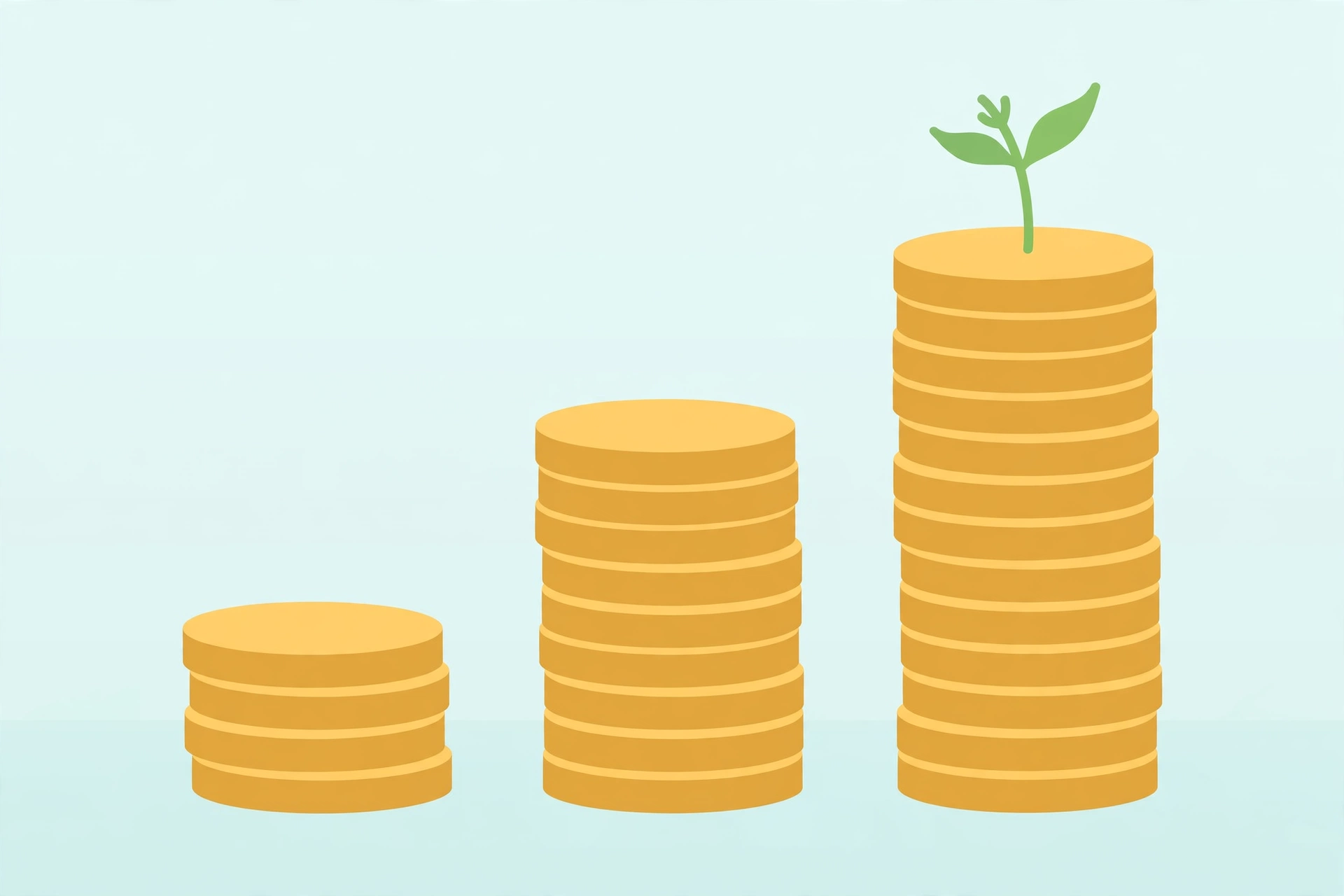
The gap between an average account and a high-yield account is bigger than most people expect. The table below uses simple interest (no compounding) before tax, so actual earnings are slightly higher — but the comparison is honest.
| Balance | At the national average, 0.37% APY | At a top high-yield rate, 4.40% APY | Extra interest per year |
|---|---|---|---|
| $1,000 | $3.70 | $44.00 | $40.30 |
| $5,000 | $18.50 | $220.00 | $201.50 |
| $10,000 | $37.00 | $440.00 | $403.00 |
| $25,000 | $92.50 | $1,100.00 | $1,007.50 |
Rates: FDIC national average savings rate, 0.37% APY (September 21, 2026 release); 4.40% is the best no-conditions savings rate found in a November 5, 2026 rate check. Both figures will change over time.
The point is not the exact numbers — they move every month. The point is the size of the gap: the same $10,000 earns about $37 a year at the national average and about $440 a year at a top high-yield rate, with the same deposit insurance behind it. If your emergency fund has been sitting in a big-bank savings account paying 0.01%, switching it to a HYSA is one of the easiest wins in personal finance.
High Interest Savings Account vs Traditional Savings Account
| Traditional savings account | High-yield savings account | |
|---|---|---|
| Typical APY | 0.01%–0.37% | Around 4.2%–4.5% (early Nov 2026) |
| Where you find it | Big banks with branches | Mostly online banks |
| Access to your money | Immediate | Immediate |
| FDIC/NCUA insurance | Up to $250,000 | Up to $250,000 |
| Monthly fees | Often $0–$5, sometimes waivable | Usually $0 |
| Best for | Small balances, in-branch service | Emergency funds and short-term savings |
There is no downside in safety or access — the trade-off is convenience. Online banks rarely have branches, so deposits and customer service happen through an app or website. If you value walking into a branch, a traditional account may suit you better, but you pay for that convenience with a much lower rate.
High Yield Savings vs Money Market vs CD: Which Pays the Most?
A high-yield savings account is not the only place to earn more on cash. Here is how the three main options compare, using figures from Experian’s comparison of account types (rates as of September 2026).
| Account type | Typical top yield | Access | Best for |
|---|---|---|---|
| Certificate of deposit (CD) | Up to 4.5% | Locked for 3 months–5 years; early withdrawal usually triggers a penalty | Money you will not need until a known date |
| Money market account | Up to 4% | Flexible, often with a debit card or checks | Cash you want quick access to, with check-writing |
| High-yield savings account | Up to 4.2% | Flexible, transfers to checking | Emergency fund and near-term savings goals |
CDs typically pay the most, but only because your money is locked away. Money market accounts are a cross between a checking and a savings account: competitive variable rates, plus a debit card or checkbook. A HYSA wins on simplicity — the highest flexible rate for money you might need at short notice. For a fuller breakdown of which account type pays the most interest, Experian’s guide is a useful reference: https://www.experian.com/blogs/ask-experian/which-type-of-savings-account-pays-highest-interest-rate/
Are High Yield Savings Accounts Safe?
Yes — provided the bank or credit union is insured. Deposits at FDIC-insured banks are covered up to $250,000 per depositor, per insured bank, per ownership category. Credit unions carry the same $250,000 limit through the NCUA. That coverage applies whether the rate is 0.01% or 4.5%.
Three safety checks before you open an account:
- Confirm the insurance. Look for “Member FDIC” on the bank’s website or “Federally insured by NCUA” for a credit union. If a provider is not insured, your money is not protected.
- Stay under the limit per bank. The $250,000 limit applies per bank, per ownership category — so a single account and a joint account at the same bank are counted separately, but two single accounts at the same bank are combined.
- Remember what insurance does not cover. FDIC insurance protects you if the bank fails. It does not protect against investment losses, and a savings account is not an investment — it will not beat inflation over long periods.
What Is a Good Interest Rate on a Savings Account?
A good interest rate is one that clears the national average by a wide margin. With the FDIC average at 0.37% APY (September 2026), a high-yield account paying 3.50% to 4.50% APY is genuinely competitive. Anything below 1% is not really “high yield” at all.
But do not judge an account by its headline rate alone. Check what sits behind it:
- Is it an introductory rate? Some accounts pay a high rate for the first few months, then drop to a much lower standard rate. The ongoing rate is what matters.
- Does it need conditions? Some top rates require direct deposit, a minimum balance (often $5,000), or a linked checking account. A slightly lower rate with no conditions can be worth more in practice.
- Is there a balance cap? Some accounts pay the top rate only up to a set balance, then a lower rate on the rest.
- Are there fees or minimums? Most HYSAs have no monthly fee and a $0 minimum, but check — a fee can wipe out the extra interest on a small balance.
As a rule of thumb, compare the ongoing, no-conditions rate, review it every one to three months, and confirm the rate, minimum and eligibility with the bank before you open an account. MoneyLion’s guide to what counts as a good savings rate explains the same checks in more detail.
How to Open a High Yield Savings Account
Opening a HYSA takes about 15 minutes online. The steps are the same at almost every bank:
- Compare ongoing rates, not headline rates. Shortlist two or three accounts by their standard rate, fees, minimums and conditions.
- Confirm FDIC or NCUA insurance. Check the bank’s website for the insurance badge before you apply.
- Apply online. You will need your ID, Social Security number, address, and a funding source — usually your existing checking account.
- Fund the account. Link your checking account and transfer your opening deposit. Some accounts open with $0; others ask for a minimum.
- Set up transfers. Arrange a regular transfer — payday is the easiest trigger — so the balance grows without you thinking about it.
- Keep your old account open until the new one works. Test a small withdrawal first, so you know the transfer timing before you move a large sum.
Pros and Cons of High Yield Savings Accounts
Pros
- Earns roughly 10 times the national average interest on the same money.
- Your money stays accessible — no lock-in period like a CD.
- FDIC/NCUA insured up to $250,000, the same protection as any bank account.
- Usually no monthly fees and low or no minimum balance.
- Interest compounds, so your earnings grow over time.
Cons
- Rates are variable and fall when the Federal Reserve cuts rates.
- The best rates may need conditions, balance tiers or an introductory period.
- No branches at most online banks — everything happens in an app or online.
- Transfers to an outside bank can take one to two business days, so it is not instant cash.
- Interest is taxable as ordinary income, which trims the after-tax return.
Who Should Use a High Interest Savings Account?
A HYSA suits money you need soon and cannot afford to lose. The classic uses are an emergency fund (three to six months of expenses), a house deposit you are building, a holiday fund, or tax money set aside for a known bill. For longer-term goals — money you will not touch for years — the same logic applies in reverse: savings accounts are for safety and access, not growth. If you are working out how long a pot of money needs to last, our guide to how long your money will last walks through the maths.
FAQ
Can you lose money in a high yield savings account?
No, not at an insured bank. Your balance cannot fall because of market moves, and FDIC/NCUA insurance covers up to $250,000 if the bank fails. The only way the balance drops is if you withdraw money or pay a fee.
How often is interest paid on a high yield savings account?
Usually monthly, calculated daily on your balance. Interest is added to your account, so it compounds — you earn interest on the interest from previous months.
Do you pay tax on interest from a savings account?
Yes. Interest is taxed as ordinary income in the year you earn it. Your bank sends a 1099-INT form if you earn $10 or more in interest. This is general information, not tax advice — check with a tax professional for your situation.
Can I have more than one high yield savings account?
Yes. Many savers keep one HYSA for their emergency fund and another for a specific goal, like a holiday or a deposit. Just remember the $250,000 insurance limit applies per bank, so spreading money across banks also spreads the coverage.
Is a high yield savings account better than a money market account?
For most savers, yes — top HYSAs currently pay slightly more than top money market accounts, with the same insurance and flexibility. A money market account wins only if you want a debit card or checks attached to the account.
Conclusion
A high interest savings account is the simplest upgrade most savers can make: the same safety and access as an ordinary savings account, paying roughly ten times the national average rate. The FDIC average was 0.37% APY in September 2026 while the best high-yield accounts paid around 4.2%–4.5% APY — on $10,000, that is about $440 a year instead of $37.
Do not chase the single highest headline rate. Compare ongoing, no-conditions rates, confirm FDIC or NCUA insurance, check for fees and balance caps, and review your rate every few months because it will move with the market. Open the account, automate a regular transfer, and let your emergency fund or short-term savings earn what it should have been earning all along.