What’S Going On in Puerto Rico: What to Know
If you have been wondering what’s going on in Puerto Rico right now, the short answer is: quite a lot. The island runs on a year-round rhythm of festivals, concerts, food celebrations, and centuries-old traditions, layered over some of the most historic streets, beautiful beaches, and lush rainforest in the Caribbean. Whether you are planning a trip or just curious about the island’s buzz, this guide covers the events scene, the can’t-miss sights, the food and nightlife, and the practical details you need before you go.
Key Takeaways
- What’s going on in Puerto Rico at any given moment is best checked on the official Discover Puerto Rico events calendar, which lists concerts, festivals, food events, and holiday celebrations across the island.
- Fiestas de la Calle San Sebastián, held in Old San Juan each January, is the island’s biggest street festival — four days of live music, art, and food that draw crowds from across the Caribbean.
- Old San Juan’s 500-year-old forts and colonial streets are a UNESCO World Heritage site, while El Yunque rainforest, bioluminescent bays, and surf beaches cover the island’s wild side.
- Puerto Rico is a U.S. territory, so U.S. citizens need no passport, the U.S. dollar is the currency, and both Spanish and English are official languages.
The Festival and Events Calendar Never Really Sleeps
Ask locals what’s going on in Puerto Rico this weekend and you will rarely get a short answer. There is genuinely always something to celebrate on the island, from small-town patron-saint festivals to arena concerts in San Juan. The smartest move before any trip is to browse the official Discover Puerto Rico events calendar, which aggregates festivals, live music, food events, and holiday celebrations by date so you can plan around them — or stumble into them.
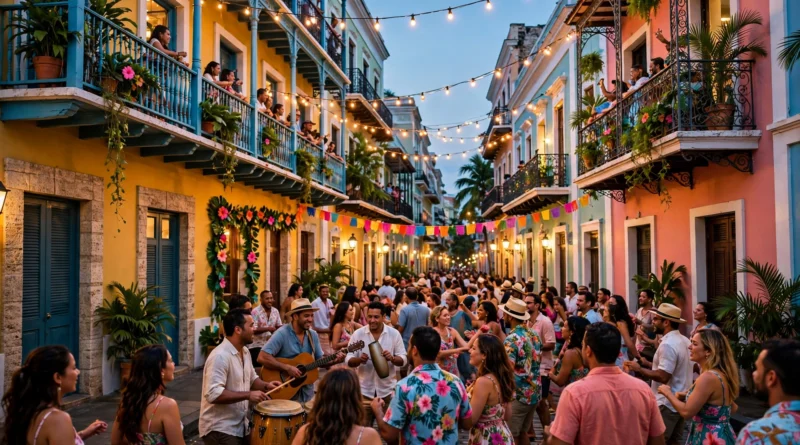
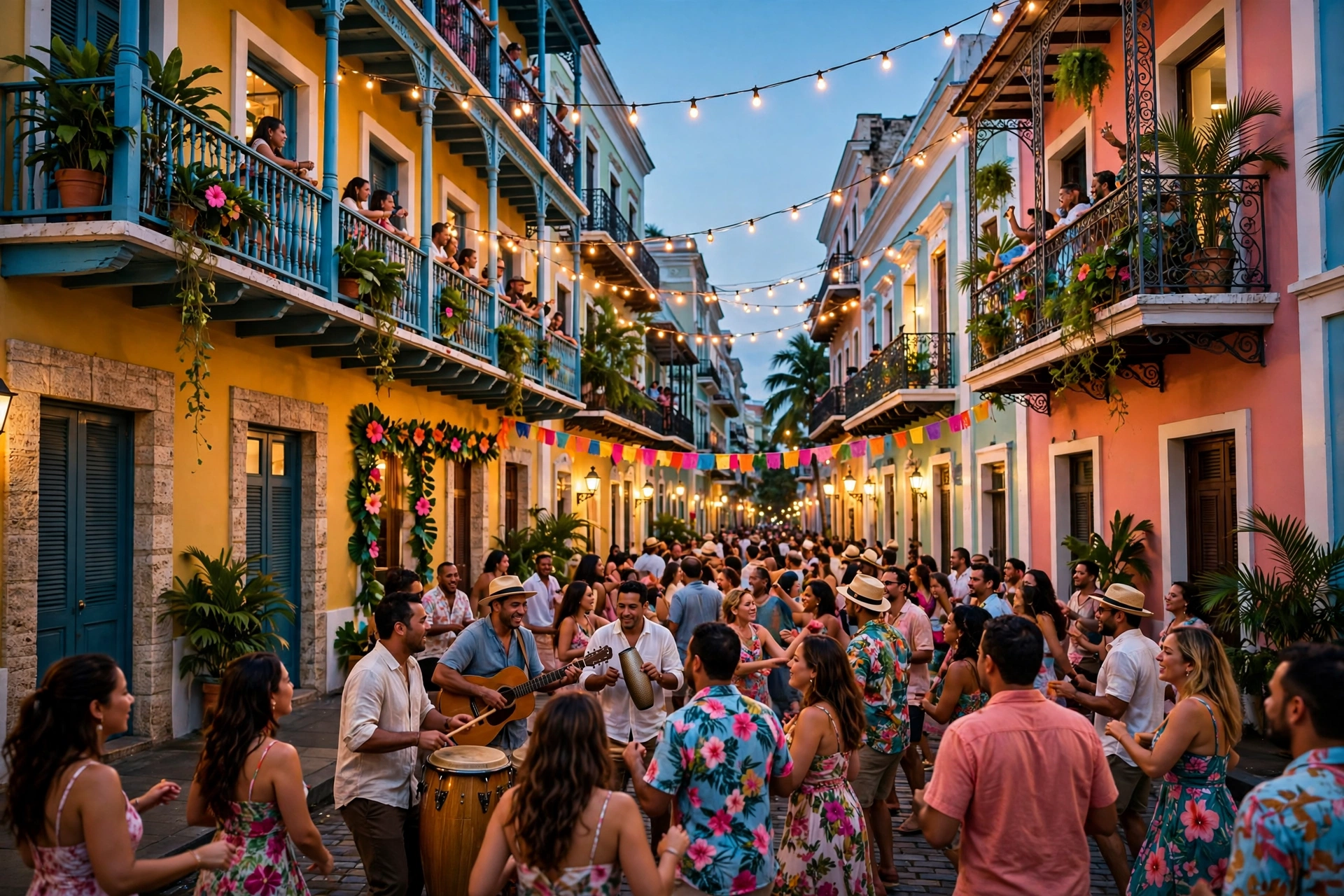
A few recurring highlights anchor the year. The most famous is the Fiestas de la Calle San Sebastián, the massive street festival that fills Old San Juan each January — the official calendar lists the 2027 edition for January 21–24. For four days, Calle San Sebastián and the surrounding plazas turn into an open-air party with live bomba and plena music, artisans, food stalls, giant-headed cabezudo figures, and crowds that make it one of the Caribbean’s great cultural events. It also marks the unofficial end of the island’s famously long holiday season.
In the fall, the calendar skews toward food, music, and spectacle. The Calabazas PR Fest runs through autumn — the 2026 edition spanned October 2 to November 8 at Finca Pastoreo in Dorado — with pumpkin patches, corn mazes, and family activities. Puerto Rico Cocktail Week celebrates the island’s bartending culture — the 2026 edition ran November 8–14 at the Sheraton Puerto Rico Resort & Casino. Big touring acts and productions like Monster Jam regularly fill the Coliseo de Puerto Rico José Miguel Agrelot in San Juan. Dates, venues, and lineups shift every year, so always confirm the current schedule on the official events calendar rather than assuming a past year’s dates will repeat.
Old San Juan: 500 Years of History in One Walkable District
No matter what’s going on in Puerto Rico on any particular week, Old San Juan is always worth a day — or three. The walled colonial city, founded in the early 1500s, is one of the oldest European settlements in the Americas, and its blue cobblestone streets, pastel facades, and flower-draped balconies make it one of the most photographed old towns in the Caribbean.
The headline sights are the two great fortresses of the San Juan National Historic Site: Castillo San Felipe del Morro, the 16th-century citadel jutting into the Atlantic at the tip of the islet, and Castillo San Cristóbal, the largest Spanish fortification built in the Americas. Together with La Fortaleza, the governor’s residence that has been in continuous use for centuries, they form a UNESCO World Heritage site. Walk the city walls at sunset, climb to the sentry boxes of El Morro for ocean views, and wander the Paseo de la Princesa along the bay. A detailed guide to the best things to do in San Juan is worth bookmarking if you want to map out a full itinerary.
Beyond the monuments, Old San Juan runs on everyday pleasures: coffee at a local café, piraguas (shaved ice with tropical syrups) from street carts, and the ongoing debate over where the piña colada was invented — two historic bars each claim the honor, and trying both is the accepted way to settle it. Churches like the San Juan Cathedral, plazas like Plaza de Armas, and the Fortaleza street umbrella installation round out the classic walk.
Beaches, Rainforest, and Bioluminescent Bays
What’s going on in Puerto Rico outdoors is just as rich as the events calendar. The island packs an astonishing range of landscapes into about 100 miles by 35. In San Juan itself, Condado and Isla Verde offer lively city beaches with restaurants and nightlife steps away, while Ocean Park leans quieter and more local.
For something wilder, head east to El Yunque National Forest, the only tropical rainforest in the U.S. National Forest System. Its misty trails lead past waterfalls, giant ferns, and observation towers with sweeping views — and it is an easy day trip from San Juan if you go early. Further east, the Fajardo coast is the launching point for nighttime kayaking in one of Puerto Rico’s bioluminescent bays, where microscopic organisms make the water glow with every paddle stroke. The islands of Vieques and Culebra, reachable by ferry or short flight, offer some of the Caribbean’s clearest water and most untouched beaches.
On the west coast, Rincón is the island’s surf capital, with winter swells that draw surfers from around the world and sunsets that live up to their reputation. Inland, the mountainous center — the Cordillera Central — offers coffee haciendas, cooler air, and hiking trails far from the resort strips.
Food, Drink, and Nightlife
Puerto Rican cuisine is one of the island’s biggest attractions in its own right. Start with the essentials: mofongo (mashed plantains with garlic and pork cracklings), lechón asado (slow-roasted pork, especially along the famous pork highway around Guavate), alcapurrias and bacalaitos from roadside kiosks, and fresh tropical fruit everywhere. Puerto Rico is also rum country — the Casa Bacardí distillery in Cataño, just across the bay from Old San Juan, runs tours and tastings — and the island’s coffee, grown in the central mountains, is a point of local pride.
When the sun goes down, San Juan’s nightlife centers on a few legendary spots. La Placita de Santurce, a produce market by day, transforms after dark into an open-air block party of bars, live music, and dancing. Calle Loíza, between Old San Juan and the beach neighborhoods, has become the island’s trendiest strip of restaurants, cocktail bars, and street art. Puerto Rico is a global powerhouse of salsa and reggaetón, so live music — from bomba drumming circles to DJ sets — is easy to find on any weekend.
The World’s Longest Christmas Season
One thing that’s always going on in Puerto Rico in the winter months is the holiday season — and it is famously the longest Christmas season in the world. The Navidades kick off around Thanksgiving and run all the way through mid-January, culminating in Día de los Reyes (Three Kings Day) on January 6, which is traditionally an even bigger celebration than Christmas Day itself, with parades, festivals, and gift-giving for children.
December brings town-square lighting ceremonies, Christmas bazaars, and parrandas — roving groups of friends who go house to house singing traditional songs, Puerto Rico’s answer to caroling. The San Sebastián street festival in January then serves as the season’s grand finale. If you love holiday-season travel, it is fun to compare the island’s traditions with our guide to the best Christmas towns in the USA, where the mainland’s own festive destinations get the same deep-dive treatment.
Practical Tips for Visiting Puerto Rico
A few practical notes make any trip smoother. Because Puerto Rico is a U.S. territory, U.S. citizens don’t need a passport — a government ID is enough — and the U.S. dollar is the official currency, so there’s no money to exchange. Both Spanish and English are official languages, and English is widely spoken in tourist areas. Cell service works as it does on the mainland for most U.S. carriers.
Hurricane season runs from June through November, with the late summer and early fall carrying the highest risk; travel insurance and flexible bookings are wise during those months, while winter and spring generally bring the most reliable weather. Renting a car is the best way to explore beyond San Juan, since the island’s best beaches, rainforest, and mountain towns are spread out — in the city itself, taxis and ride-shares handle most trips. And as with any destination, it is worth checking current travel advisories and official guidance before you fly; our guide to reading travel advisories explains what to look for and where to find the official sources.
Frequently Asked Questions
What should you know about what’s going on in puerto rico?
The key thing to know is that Puerto Rico always has something happening — festivals, concerts, food events, and cultural celebrations run year-round, and the official Discover Puerto Rico events calendar is the authoritative place to see what’s on during your dates. Beyond events, the island combines 500 years of colonial history in Old San Juan, Caribbean beaches, the El Yunque rainforest, bioluminescent bays, and a food and music scene that punches far above its size. For U.S. travelers it is especially easy: no passport, U.S. dollar, and no language barrier in tourist areas.
What are the key things to consider for what’s going on in puerto rico?
Consider timing first. January brings the Fiestas de la Calle San Sebastián and the tail end of the long Christmas season; winter and spring generally offer the best weather; hurricane season runs June through November. Also consider geography — the island rewards travelers who get out of San Juan, so decide whether you want a city-and-beach trip or a full island loop covering the rainforest, west-coast surf towns, and Vieques or Culebra. Finally, check event dates against the official calendar before booking, since festivals and concerts change dates and venues from year to year.
How can you make the most of what’s going on in puerto rico?
Plan around one anchor event — a festival like San Sebastián, a cocktail-week visit, or the Christmas season — and build the rest of the trip around it. Check what’s going on in Puerto Rico during your travel dates first, then lock in the anchor event before booking anything else. Spend at least a full day in Old San Juan for the forts and colonial streets, schedule one nature experience such as El Yunque or a bioluminescent bay kayak, and save an evening for La Placita or Calle Loíza. Renting a car for at least part of the trip unlocks the island’s best beaches and mountain towns, and mixing city time, nature time, and beach time in one itinerary is the classic formula that works here.
Conclusion
What’s going on in Puerto Rico is, in a word, everything: centuries-old festivals and brand-new concert lineups, UNESCO forts and glowing bays, slow-roasted lechón and world-class rum, the longest Christmas season on the planet — all on an island you can cross in a few hours, with no passport required for U.S. visitors. Check the official events calendar, pick your season, and go see it for yourself.