Sydney Holiday: What to Know
A Sydney holiday is one of the world’s great city breaks: a sparkling harbour framed by two global icons, ocean beaches minutes from the business district, and an easygoing outdoor culture that rewards travellers who get out on foot, on ferries, and on coastal trails. Australia’s largest city packs an unusual amount of sightseeing into a compact area, so first-time visitors can cover the highlights in a few days — while repeat visitors keep finding new neighbourhoods, beaches, and day trips to explore.
This guide covers everything you need to plan with confidence: when to go, how long to stay, the must-see landmarks and beaches, how to get around, and day trips worth taking. Whether your Sydney holiday is a long-haul adventure or a stop on a wider Australia itinerary, here’s what to know before you go.
Key Takeaways
- A Sydney holiday blends harbour icons — the Opera House and Harbour Bridge — with world-class beaches like Bondi, coastal walks, and an easy public ferry and train network; you can see a lot without renting a car.
- Plan for at least 3–4 days to cover the highlights, and a week if you want day trips like the Blue Mountains or Hunter Valley. Spring (September–November) and autumn (March–May) bring the most comfortable weather.
- Use an Opal card for trains, buses, ferries, and light rail — the ferry from Circular Quay to Manly is one of the city’s best-value sightseeing experiences.
- Sydney is a year-round, family-friendly destination, but sun protection and ocean safety matter: slip on a hat, seek shade in the midday sun, and swim between the flags at patrolled beaches.
When to Visit Sydney
Sydney’s seasons run opposite to the Northern Hemisphere, which shapes the feel of your Sydney holiday from the start. Summer (December–February) is hot and festive — think beach days, outdoor cinemas, and the famous New Year’s Eve fireworks over the harbour. Autumn (March–May) and spring (September–November) are widely considered the sweet spots: mild temperatures, fewer crowds, and ideal conditions for walking, sightseeing, and harbour cruises.
Winter (June–August) is mild by most standards, with daytime temperatures usually comfortable enough for sightseeing, though the ocean is too cool for casual swimming. Winter is also whale-watching season along the coast, and accommodation can be better value outside the summer peak. If flexibility matters more than a specific festival, aim for the shoulder months of March–April or September–October for the best balance of weather, crowds, and cost.
The Icons: Opera House, Harbour Bridge, and Circular Quay
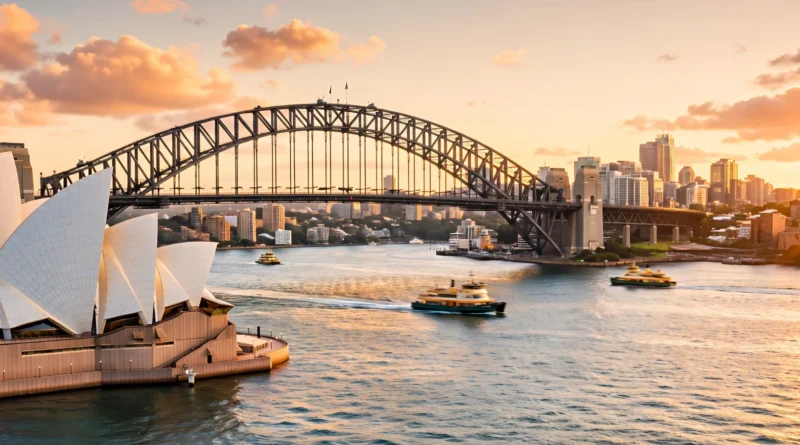
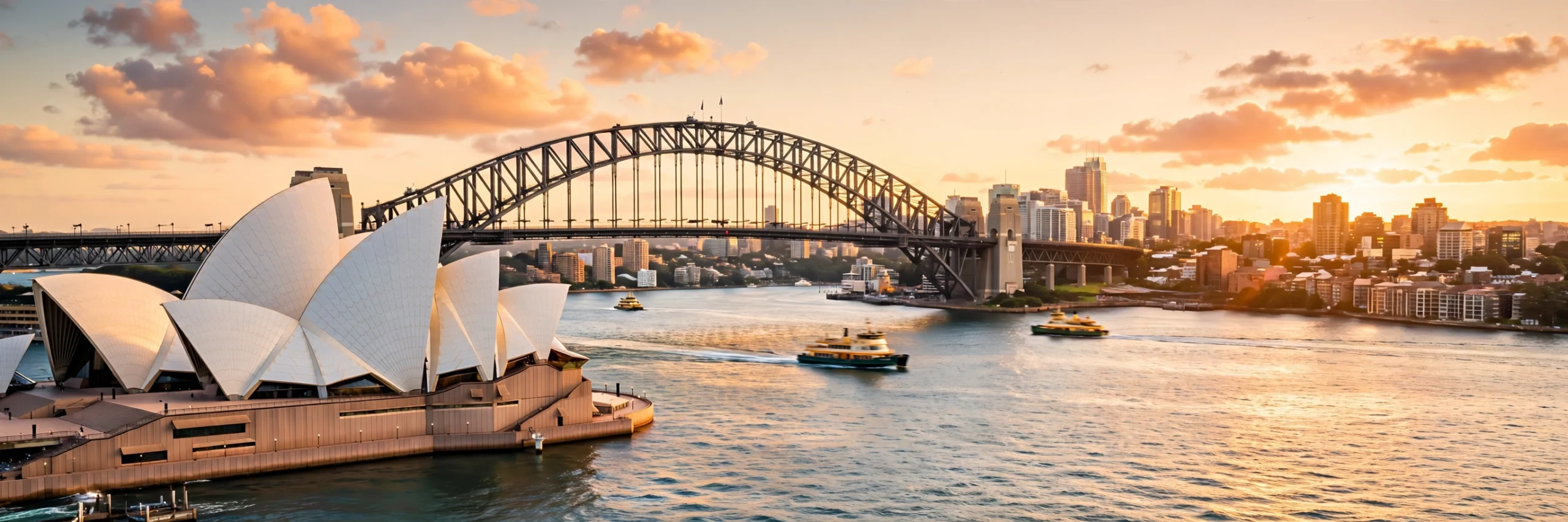
No Sydney holiday is complete without time on the harbour, and Circular Quay is where it all converges. The Sydney Opera House — a UNESCO World Heritage-listed masterpiece of 20th-century architecture — dominates the point, and you don’t need a show ticket to enjoy it: guided walking tours reveal the building’s design story, while the surrounding forecourt is one of the city’s best places for a stroll with water views.
Across the water rises the Sydney Harbour Bridge, affectionately known as “the Coathanger.” You can walk or cycle across it for free using the pedestrian path, or join an organised bridge climb for panoramic views from the top of the arch. Either way, the bridge and the harbour together form the postcard image of the city.
From Circular Quay, ferries fan out across the harbour — and they’re a highlight in their own right. The short ride to Manly passes through the harbour heads and doubles as an inexpensive sightseeing cruise, while Taronga Zoo, Watsons Bay, and Garden Island are all reachable by ferry.
Sydney’s Beaches and Coastal Walks
Sydney’s beaches are central to the holiday experience. Bondi Beach is the most famous, but locals will tell you the real magic is the coastline itself. The Bondi to Coogee coastal walk — a cliff-top trail of roughly six kilometres — strings together beaches, rock pools, parks, and ocean lookouts in a walk of about two to three hours at a relaxed pace. It is free, well-signposted, and among the best things you can do on any Sydney holiday.
Beyond Bondi, each beach has its own personality: family-friendly calm at Shelly Beach near Manly, surf culture at Maroubra, harbour-side swimming at Nielsen Park, and the dramatic headlands of the Northern Beaches. Whichever you choose, ocean safety applies everywhere: swim at patrolled beaches between the red and yellow flags, read the surf-safety signs, and respect rips — conditions can change quickly.
If your holiday style leans more toward resorts and long beach days than city sightseeing, a beach holiday destination guide like our Cape Verde resorts travel guide shows how a different kind of island-and-resort trip compares.
Neighbourhoods Worth Exploring
Sydney rewards travellers who look past the harbour. The Rocks, next to Circular Quay, is the city’s oldest neighbourhood — a maze of sandstone lanes, weekend markets, and historic pubs that tells the story of the early colonial settlement. Darling Harbour is the family-entertainment hub, with an aquarium, wildlife park, museums, and restaurants along the waterfront.
For food and culture, head to Surry Hills and Newtown for cafés, bars, and independent shops; Chinatown and Haymarket for some of the city’s best-value dining; and Paddington for heritage terraces and weekend markets. The Royal Botanic Garden, sitting between the Opera House and the harbour’s edge, is a free green escape with some of the finest harbour viewpoints in the city — an ideal picnic spot on a sunny day.
Getting Around Sydney
Sydney’s public transport is extensive and visitor-friendly. Trains connect the airport to the city centre in about fifteen minutes, and an integrated network of trains, buses, ferries, and light rail covers the metro area. The Opal card — a reusable smartcard, or its contactless-payment equivalent — is the way to pay across all modes, and ferries in particular give you harbour views that would cost far more on a dedicated cruise.
The city centre itself is very walkable, and many of the headline sights cluster around the harbour. That said, Sydney is spread out: getting from Bondi to Manly or out to the Blue Mountains involves real distances, so plan your days by area rather than zigzagging across the city. For travellers who enjoy long-distance scenic journeys, our vacation by rail in Europe guide explores a different continent’s take on slow travel.
Day Trips from Sydney
Some of New South Wales’ best experiences sit just outside the city, making them easy additions to a Sydney holiday of five days or more. The Blue Mountains, about 90 minutes west by train, offer dramatic sandstone escarpments, eucalyptus forests, and cliff-top lookouts — the Three Sisters rock formation at Echo Point is the signature view, with walks ranging from gentle lookouts to full-day hikes.
Wine lovers can head to the Hunter Valley, one of Australia’s oldest wine regions, for cellar doors and vineyard restaurants about two hours north. South of the city, the coastal drive toward Wollongong delivers beaches and sea cliffs, while the ferry to Watsons Bay makes an easy half-day trip with coastal walks and famous fish and chips.
Practical Tips: Costs, Safety, and Essentials
Sydney is one of the world’s more expensive cities, so budgeting matters. Accommodation near the harbour costs the most; staying a little further out — or in well-connected neighbourhoods like Surry Hills, Newtown, or North Sydney — can cut costs without sacrificing convenience. Many of the city’s best experiences are free: the coastal walks, the Botanic Garden, the Art Gallery of New South Wales’ general collection, and window-shopping the harbour foreshore.
For entry requirements, most international visitors need a visa or electronic travel authorisation before arrival — check the official guidance for your nationality well ahead of departure, as airlines can deny boarding without it. Pack for the season but always include sun protection: Australia’s UV levels are high even on overcast days, so a hat, sunscreen, and sunglasses are holiday essentials year-round.
Finally, keep an eye on two local quirks: tap water is safe to drink everywhere, and tipping is appreciated but not obligatory the way it is in some countries. For a broader look at planning a major city trip, the Qantas Sydney travel guide offers an airline’s-eye view of neighbourhoods, food, and practicalities.
Frequently Asked Questions
What should you know about sydney holiday?
The most important thing to know about a Sydney holiday is that the city is built around its harbour, so plan your days around the water: ferries, coastal walks, and harbour-view neighbourhoods give you the best of the city for little cost. Expect reversed seasons if you’re visiting from the Northern Hemisphere, budget for a relatively expensive city, and allow at least 3–4 days for the highlights.
What are the key things to consider for sydney holiday?
Key considerations for a Sydney holiday are timing (spring and autumn have the best weather), location of your accommodation (near the harbour or on a good transport line saves time), and how you get around — an Opal card covers trains, buses, ferries, and light rail. Also consider sun protection, ocean safety at beaches, and whether you’ll add day trips like the Blue Mountains, which need a full day each. A detailed planning resource like this complete Sydney things-to-do guide can help you prioritise.
How can you make the most of sydney holiday?
To make the most of a Sydney holiday, mix the icons with the outdoors: see the Opera House and Harbour Bridge, then walk the Bondi to Coogee trail, take the ferry to Manly, and spend a morning in the Royal Botanic Garden. Group sights by area to cut travel time, book popular tours and bridge experiences ahead in peak season, and leave at least one day free for a day trip — the Blue Mountains are the classic choice and well worth it.
Conclusion
A Sydney holiday delivers one of travel’s best combinations: genuine natural beauty — harbour, beaches, headlands, and nearby mountains — wrapped around a sophisticated, multicultural city. Come for the icons, stay for the coastal walks and neighbourhoods, and leave time for at least one day trip beyond the city limits.
Plan around the seasons, lean on the ferries and the Opal network, protect yourself from the sun, and don’t try to cram everything into two days. With this guide’s essentials covered, you’re ready to plan a Sydney holiday with confidence.