Reynisfjara Beach: Travel Guide, Tips & Highlights
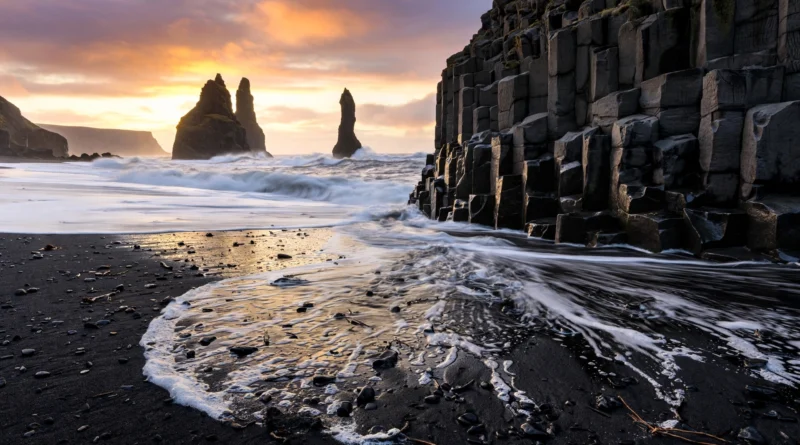
Few places on Earth look as otherworldly as Reynisfjara beach. Along Iceland’s dramatic south coast, this stretch of volcanic black sand sits beneath geometric basalt columns and towering sea stacks, with North Atlantic waves thundering in against it. It is consistently ranked among the most beautiful beaches in the world — and it is also one of the most dangerous, with unpredictable “sneaker waves” that demand respect and caution from every visitor.
Whether Reynisfjara is a quick stop on a Ring Road adventure or a highlight of your Iceland trip, this guide covers everything you need: how to get there, what to see, when to go, and — most importantly — how to stay safe while exploring it.
Key Takeaways
- Reynisfjara beach is Iceland’s most famous black sand beach, located on the south coast near the village of Vík, about 2.5 to 3 hours’ drive from Reykjavík via the Ring Road.
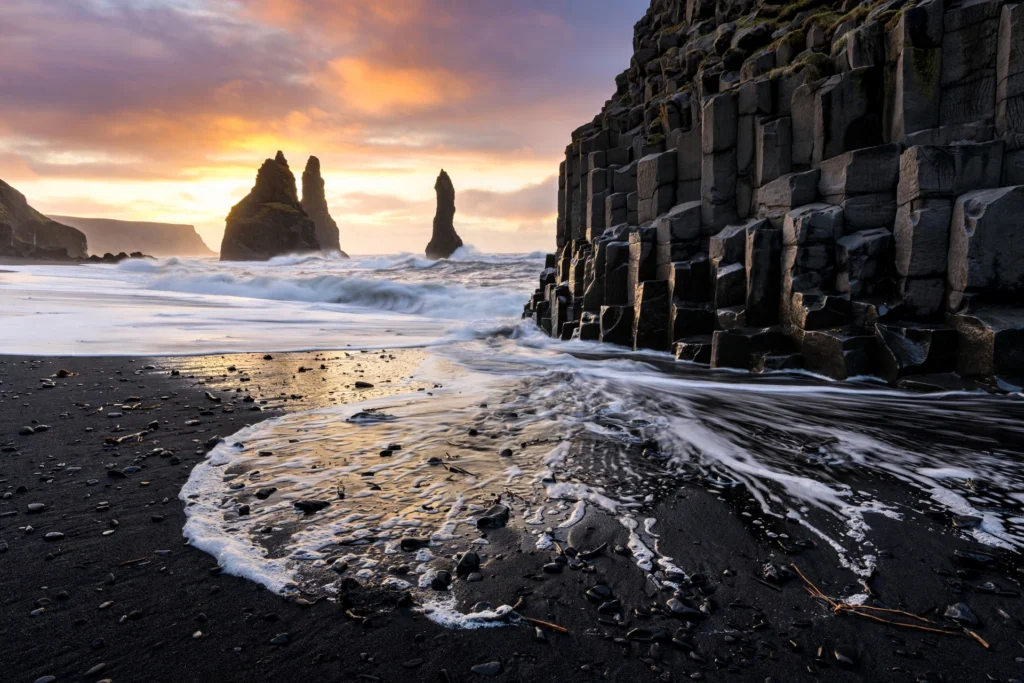
- The beach is defined by three natural wonders: hexagonal basalt columns at Hálsanefshellir cave, the Reynisdrangar sea stacks rising from the ocean, and the Dyrhólaey promontory to the west.
- It is a free, always-open natural attraction, but sneaker waves have caused serious injuries and deaths — never turn your back on the ocean, obey warning signs, and stay well back from the water.
- Visit for 45 minutes to 1.5 hours, wear sturdy shoes and weatherproof layers, and combine the stop with nearby Dyrhólaey, Skógafoss waterfall, and the village of Vík.
Where Is Reynisfjara Beach?
Reynisfjara beach lies on Iceland’s south coast near the small village of Vík í Mýrdal, roughly 180 kilometres southeast of Reykjavík. It is one of the signature stops on the South Coast tourist route, easily reached in about 2.5 to 3 hours by car along Route 1, the Ring Road that circles the country.
The beach sits within the Katla UNESCO Global Geopark, on privately owned land that is open to the public. A large parking area sits just steps from the shoreline, making it one of the most accessible natural wonders in Iceland — no hiking required. The site is free to visit, open around the clock, and needs no advance booking, though you will want to check weather and safety conditions before setting out.
Because it sits so close to Vík, many travellers combine Reynisfjara with a multi-day exploration of the south coast — which is also why an 8-day self-drive tour of Iceland so often features it as a highlight stop.
The Basalt Columns and Reynisdrangar Sea Stacks
What makes Reynisfjara beach genuinely unforgettable is its geology. At the eastern end of the beach stands Hálsanefshellir cave, a sea cave walled with near-perfect hexagonal basalt columns. These columns formed when ancient lava cooled slowly and contracted into regular pillars — a process that produces some of nature’s most architectural-looking rock formations.
Offshore, the Reynisdrangar sea stacks rise dramatically from the surf. These tall basalt pillars are the remains of a harder rock layer that survived while the softer surrounding cliff eroded away. Local folklore says they are two petrified trolls, turned to stone when they were caught by the morning sun while trying to drag a ship ashore.
To the west, the Dyrhólaey promontory completes the panorama — a rocky headland with a natural stone arch, itself one of the south coast’s great landmarks. In early 2026, severe winter storms and erosion altered parts of the beach and damaged sections of the famous basalt columns, a reminder that this coastline is constantly reshaped by the ocean. The iconic formations remain, but visitors should expect the landscape to keep evolving.
Safety First: Sneaker Waves and Warning Signs
This section matters more than any other in this guide. Reynisfjara beach is one of the most dangerous beaches in Iceland. So-called sneaker waves — large, unpredictable waves that can surge far inland without warning — have caused serious injuries and multiple fatalities over the years. They are generated by converging ocean swells and can strike even after long stretches of calm water.
The rules are simple and non-negotiable:
- Never turn your back on the ocean — always face the sea when standing on the beach.
- Stay well back from the water’s edge. During elevated hazard levels, the guidance is to stay at least 25 metres from the water.
- Obey every warning sign. Iceland’s safety service uses a colour-coded system: yellow means stay alert, orange means considerable hazard, and red means the beach is closed.
- Never climb on or walk behind the basalt columns into Hálsanefshellir cave during rough conditions, and stay off unstable slopes and newly formed erosion banks.
- Check the current safety level and wave forecast before you visit, and take it seriously if local guides close the beach on short notice.
Do not treat the signs as suggestions. The waves here have surprised and overwhelmed even experienced travellers who focused on photography instead of the water. A mindful, cautious visit is a spectacular one — the danger is entirely avoidable if you respect the ocean.
When to Visit Reynisfjara Beach
Reynisfjara is beautiful in every season, and the right time depends on what you want from your visit. Summer (roughly May through August) brings long daylight, milder weather, and the chance to spot puffins nesting on the cliffs above the beach — a highlight for many visitors. The cliffs around Dyrhólaey and Reynisfjara are among the best puffin-watching spots in southern Iceland during these months.
Winter offers a moodier, more dramatic atmosphere: stormy seas, low golden light, and far fewer crowds. It is also the season when conditions change fastest, so checking forecasts and safety levels becomes even more important. Autumn and spring sit comfortably in between, with striking light and thinner visitor numbers.
There is no truly bad season for the beach itself, but there are bad hours: visiting in daylight is strongly recommended, both for safety and because the rock formations are at their most photogenic in soft natural light. Plan for about 45 minutes to an hour and a half — enough time to walk the shoreline, explore the basalt columns, take photos, and simply watch the waves from a safe distance.
What to Wear and Bring
Icelandic weather changes fast, and Reynisfjara’s coastal position makes it windier and colder than it looks from the car window. The practical packing list is short:
- Waterproof and windproof outer layers — rain and sea spray are common, even on otherwise fair days.
- Sturdy, grippy footwear. The black sand and wet rock near the basalt columns can be slippery, and regular sneakers are a poor choice.
- Warm mid-layers, a hat, and gloves, even in summer. Wind chill at the water’s edge can be biting.
- A camera (or a well-charged phone) and something to protect it from spray.
- Snacks and water, since facilities at the beach itself are limited.
Swimming at Reynisfjara is out of the question — the currents, waves, and cold make it lethally dangerous. This is a beach for walking, photographing, and marvelling at, never for bathing.
Things to See Nearby
Reynisfjara works best as part of a South Coast itinerary, and the surrounding area is packed with Iceland’s greatest hits. Just west of the beach, the Dyrhólaey promontory offers clifftop views back toward Reynisfjara and is another prime summer puffin spot. The charming village of Vík, about ten minutes east, is the natural base for the area — a good place for lunch, coffee, or an overnight stay.
Driving toward Reykjavík, you will pass Skógafoss and Seljalandsfoss, two of Iceland’s most photographed waterfalls. The haunting Sólheimasandur plane wreck — the remains of a crashed US Navy aircraft on a remote black sand stretch — is another unforgettable stop not far away, though it involves a longer walk or a shuttle ride from the road.
All of these sites can be strung together into a single spectacular day from Reykjavík, though it is a long one. If you have the time, spreading them across two or three days lets you linger — and gives you a weather buffer if conditions are rough at the coast.
Photography Tips for Reynisfjara Beach
The beach is a photographer’s dream: dark sand, pale sea foam, geometric columns, and stacks on the horizon. A few tips make the shots work:
- Shoot early in the morning or late in the afternoon for the most dramatic light — the low sun sculpts the basalt columns beautifully.
- Bring a wide-angle lens to capture the scale of the beach and stacks together.
- Protect your gear from salt spray, which is constant near the waterline.
- Use the wet sand as a natural mirror — the dark, glossy surface creates stunning reflections.
- Above all, stay safe: the most famous Reynisfjara photos were not taken from the water’s edge. Keep your distance and let the lens do the work.
Comparing volcanic coastlines elsewhere can deepen your appreciation — for instance, the beach resorts and coastlines of Cape Verde offer a very different take on Atlantic beach landscapes.
Frequently Asked Questions
What should you know about Reynisfjara beach?
The single most important thing to know about Reynisfjara beach is that it is both spectacular and hazardous. It is Iceland’s most famous black sand beach, defined by hexagonal basalt columns, the Reynisdrangar sea stacks, and Dyrhólaey promontory, near the village of Vík. It is free to visit and open all hours, with no booking needed. But unpredictable sneaker waves have caused injuries and deaths, so you must check the official safety level before visiting, stay well back from the water, and never turn your back on the sea. Swimming is not safe under any circumstances.
What are the key things to consider for Reynisfjara beach?
The key considerations are safety, weather, timing, and gear. Check the real-time hazard level and wave forecast before you go — conditions can change quickly, especially in winter. Dress in waterproof, windproof layers with sturdy footwear, and plan about 45 minutes to 1.5 hours for your visit. Visit in daylight for safety and better photos, and be aware that facilities at the beach are minimal, so bring water and snacks. If you are short on time, a South Coast day tour from Reykjavík covers Reynisfjara along with waterfalls and other landmarks, though driving yourself offers the most flexibility.
How can you make the most of Reynisfjara beach?
To make the most of Reynisfjara beach, treat it as the centrepiece of a South Coast day rather than a rushed photo stop. Arrive in good light, walk the full shoreline from the basalt columns to the viewpoints toward Dyrhólaey, and give yourself time to simply watch the waves from a safe distance. Combine the visit with Dyrhólaey’s cliffs, lunch or coffee in Vík, and the Skógafoss and Seljalandsfoss waterfalls along the Ring Road. Visit in summer if spotting puffins on the cliffs matters to you, or in winter for the most dramatic, storm-swept version of the landscape.
Conclusion
Reynisfjara beach earns every bit of its reputation. The black sand, the columned cliffs, and the sea stacks create a landscape that feels more like another planet than a beach — it is the kind of place you remember decades later. But it rewards visitors who treat it with respect: the ocean here is wild and unpredictable, and the safety rules exist because people have been hurt ignoring them.
Come prepared, stay alert, keep your distance from the water, and you will have one of the great travel experiences of your life. For authoritative background on the geology and current conditions, the Perlan guide to Reynisfjara beach and the Reynisfjara overview on Wikipedia are both worth a read before you go.