Bilevel Rail Car: a Practical Guide
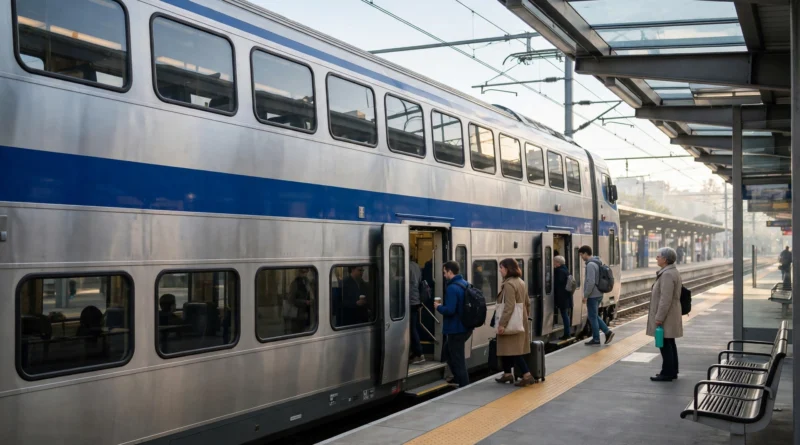
A bilevel rail car is one of the most practical inventions in modern commuter railroading: a passenger train car with two full decks that carries far more riders than a single-level car of the same length. If you have ever ridden a commuter train into a big city during rush hour and found a seat despite the crowd, there is a good chance you were sitting inside one of these double-decker workhorses. They look like ordinary trains from the platform, but step aboard and you will find an upper level, a lower level, and short intermediate landings at each end, all packed into a car roughly 16 feet tall.
This guide explains what a bilevel rail car is, how it works, where you will find them, and what makes them different from the single-level cars they so often run alongside. Whether you are a daily commuter curious about the train you ride, a transit enthusiast, or just someone planning a trip, you will come away knowing exactly what you are looking at the next time a two-story train glides into the station.
Key Takeaways
- A bilevel rail car stacks two passenger levels in one car, typically seating 136 to 162 riders — far more than a single-level car of the same length.
- The design was born in 1970s Ontario, Canada, for GO Transit, and more than 1,500 bilevel cars now run with commuter agencies across North America.
- Two sets of wide doors per side, intermediate end levels, and optional cab ends make bilevel trains fast to board and flexible to operate.
- Riders get a choice of upper or lower deck seating, with modern cars adding power outlets, bike racks, and accessible restrooms.
What Is a Bilevel Rail Car?
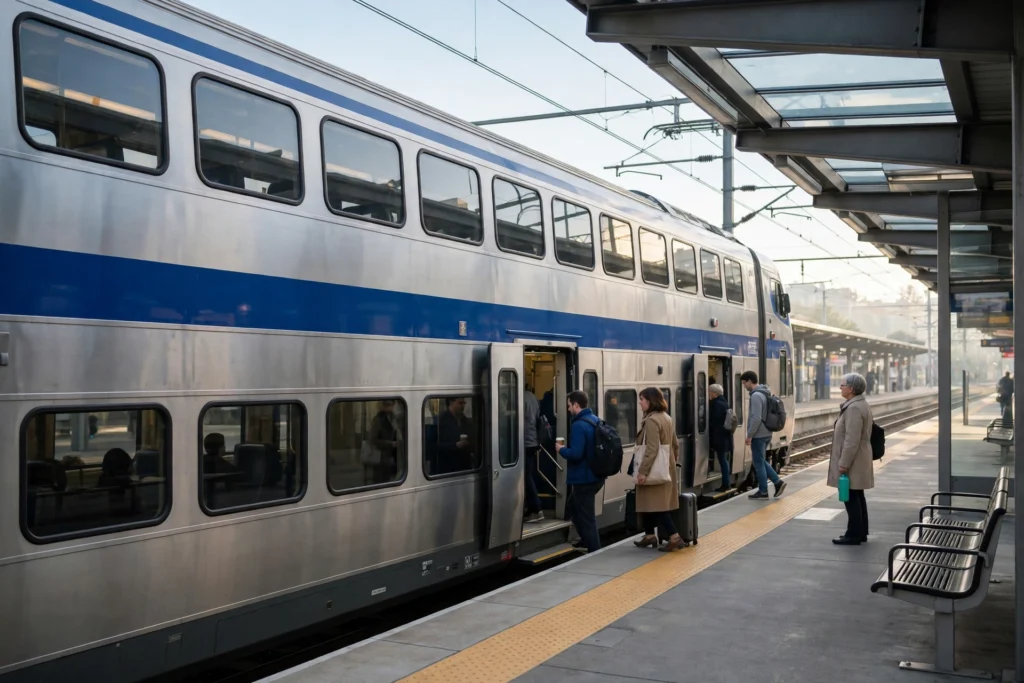
At its simplest, a bilevel rail car is a passenger coach with two levels of seating instead of one. The classic North American bilevel — the design most people mean when they use the term — has two full passenger decks running the length of the car plus short intermediate levels at each end where the doors and stairs are. This layout means passengers board onto a small mid-level landing, then take a few steps up or down to reach their seats.
The concept exists around the world in different forms. European and Asian railways run their own double-deck designs, from French TGV Duplex high-speed sets to German regional double-deckers. In North America, the bilevel rail car is most closely associated with commuter rail — the daily trains that ferry workers into cities like Toronto, Seattle, Los Angeles, and Miami. For rail fans and travelers who love train journeys in general, a vacation by rail in Europe offers a great chance to compare double-deck designs across different countries.
The Origins: A 1970s Canadian Solution
The story of the bilevel rail car begins in Ontario, Canada. By the mid-1970s, GO Transit — Toronto’s regional commuter rail service — had a problem: its peak-hour trains had grown to ten single-level coaches, and ridership kept climbing. Making trains even longer was one option, but longer trains mean longer station platforms, bigger yards, and more strain on infrastructure.
The province asked for a smarter answer: instead of making trains longer, why not make the cars taller? Hawker Siddeley Canada, working with the Urban Transportation Development Corporation (UTDC), designed the BiLevel coach — a car that packed two seating levels into a body about 15 feet 11 inches tall, 9 feet 10 inches wide, and 85 feet long. The first cars entered service with GO Transit in 1976, and the design proved so successful that it is still in production today, built by Alstom after its 2021 purchase of Bombardier Transportation, in the same Thunder Bay, Ontario plant where it all started.
Anatomy of a Bilevel Rail Car
What makes a bilevel rail car work is clever packaging. The car body is typically riveted or welded aluminum mounted on a steel frame, which keeps the tall car surprisingly light for its size — around 50 tonnes. The aluminum body also allowed an unusual octagonal cross-section profile, sometimes called a “lozenge” shape, that maximizes interior space while staying within railway clearance limits.
Inside, the layout is practical. Each car has two sets of bi-parting automatic doors per side, opening onto the intermediate-level landings at the car ends. Passengers who need the restroom — many bilevel cars carry one on the lower or intermediate level — or accessible seating tend to stay on the lower deck, while the upper deck offers a quieter ride and better views. Because the doors are wide and duplicated at both ends, a full car can be emptied remarkably fast, which matters enormously when a train has only a couple of minutes at a station.
Many bilevel fleets include cab cars — coaches with an engineer’s cab built into one end. These let a train be driven from either end, so a locomotive at the back can push while the cab car leads, eliminating the need to turn the train around. This push-pull setup is standard practice at many commuter agencies.
Where Bilevel Rail Cars Run
More than 1,500 bilevel coaches are in service across North America today, and they remain the backbone of some of the continent’s busiest commuter systems. GO Transit, the original customer, still operates the largest fleet by far — hundreds of coaches serving the Greater Toronto Area.
In the United States, you will find bilevel rail cars with Tri-Rail in South Florida, Caltrain and Metrolink in California, Sounder in the Seattle area, the Altamont Corridor Express in Northern California, Coaster in San Diego, FrontRunner in Utah, Trinity Railway Express in Dallas–Fort Worth, SunRail in Orlando, and the New Mexico Rail Runner, among others. In Canada, West Coast Express in Vancouver and Exo in Montreal run them too. The design has even seen recent investment: new Alstom-built bilevel coaches entered service on Seattle’s Sounder line, adding features like USB and power outlets at every seat, improved cycle racks, and crash energy management structures. According to the overview of bilevel rail cars, the concept continues to spread to new operators.
Bilevel vs. Single-Level: The Practical Trade-Offs
Why do agencies choose bilevel cars? The answer is capacity. A bilevel coach typically seats 136 to 162 passengers — and can carry hundreds more standing — compared with far fewer seats in a single-level car of the same length. On busy corridors where platform lengths and track slots are limited, going up instead of going longer is the cheapest way to add seats without rebuilding stations.
There are trade-offs. Taller cars need taller tunnels and bridges, so lines with low clearances cannot use them. The stairs inside the car slow movement slightly and are not ideal for passengers with mobility challenges, which is why modern bilevel designs include accessible lower-level seating, ramps, and accessible restrooms. Single-level cars, by contrast, offer true level boarding everywhere and are easier to use — which is why you will often see both types mixed in the same fleet, with single-level cars placed for accessibility while bilevel cars add capacity. More detail on the best-known design is in this history of the Bombardier BiLevel Coach.
Riding One: Practical Tips for Passengers
If you are new to bilevel rail cars, a few tips make the ride better. First, choose your deck deliberately: the upper level is generally quieter and offers better scenery, while the lower level keeps you near the doors and restrooms and usually has the accessible seating. Second, mind the stairs during rush hour — stand clear of the stairwells so boarding passengers can move. Third, if you bring a bike, use the designated racks or areas rather than blocking aisles; newer cars have purpose-built cycle storage.
For regular commuters, consistency helps: learn which door your stop’s platform favors and sit near that end’s stairway. Business travelers catching an early train into the city sometimes pair the trip with door-to-door ground transport, and a business chauffeur car service can be a useful complement for the first or last mile of the journey. Finally, keep bags off seats — at 136-plus seats per car, every seat counts at peak times.
Frequently Asked Questions
What should you know about bilevel rail car?
The essential thing to know is that a bilevel rail car doubles seating capacity by stacking two passenger levels in one car, making it the standard solution for crowded commuter lines in North America. Cars are about 85 feet long and 16 feet tall, carry 136–162 seated passengers, board through two door sets per side, and often run in push-pull trains with a cab car at one end. They have served systems like GO Transit, Sounder, Metrolink, and Tri-Rail since 1976.
What are the key things to consider for bilevel rail car?
The key considerations are capacity, clearances, and accessibility. Bilevel cars add seats without longer trains — ideal where platforms and track slots are fixed — but they require tall tunnels and bridges, so not every line can use them. Stairs inside the car mean planners must provide accessible lower-level seating and restrooms, and many agencies mix bilevel and single-level cars to cover all needs.
How can you make the most of bilevel rail car?
Make the most of a bilevel rail car by picking the right deck for your trip: upper for quiet and views, lower for quick exits, restrooms, and accessibility. Travel just off-peak when you can for the best seat choice, keep stairwells clear during boarding, and use the modern amenities newer cars offer, like power outlets at seats and dedicated bike storage.
Conclusion
The bilevel rail car is a quiet triumph of practical engineering: a 1970s answer to crowding that is still going strong nearly fifty years later. By building up instead of out, it lets commuter railways carry far more people with the stations, tracks, and train slots they already have. Whether you ride one every morning into the city or encounter one on a future trip, you now know the design’s story, its anatomy, and how to make the ride work for you. Next time the doors open on a two-story train, you will know exactly what you are stepping into.