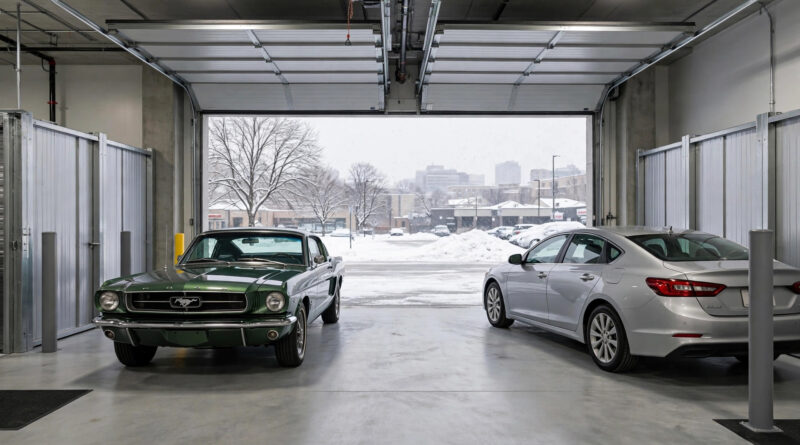
Car Storage Cleveland: a Practical Guide
Finding dependable car storage cleveland options can feel overwhelming if you have never rented a storage unit before. Between harsh winters, lake-effect snow off Lake Erie, and repeated freeze-thaw cycles, a vehicle left sitting outside can deteriorate much faster than most owners expect. This guide covers everything you need to know about car storage in Cleveland, from storage types and climate control to vehicle preparation and choosing the right facility. Whether you need a spot for a winter vehicle, a classic car, or a daily driver parked while you travel, these practical tips will help you plan your next step with confidence. The same principles apply to larger vehicles too — see our guide to RV storage for how owners prepare bigger rigs for winter.
Key Takeaways
- Indoor, ideally climate-controlled, storage best protects a car from Cleveland’s lake-effect snow, freeze-thaw cycles and road salt.
- Outdoor is cheapest, covered is the middle ground, indoor costs most but protects paint, seals, battery and electronics.
- Prepare before drop-off: wash off salt, fill the tank with stabilizer, maintain the battery, protect the tires and use a breathable cover.
- Check security, access hours and unit size before signing, and book early ahead of winter demand.
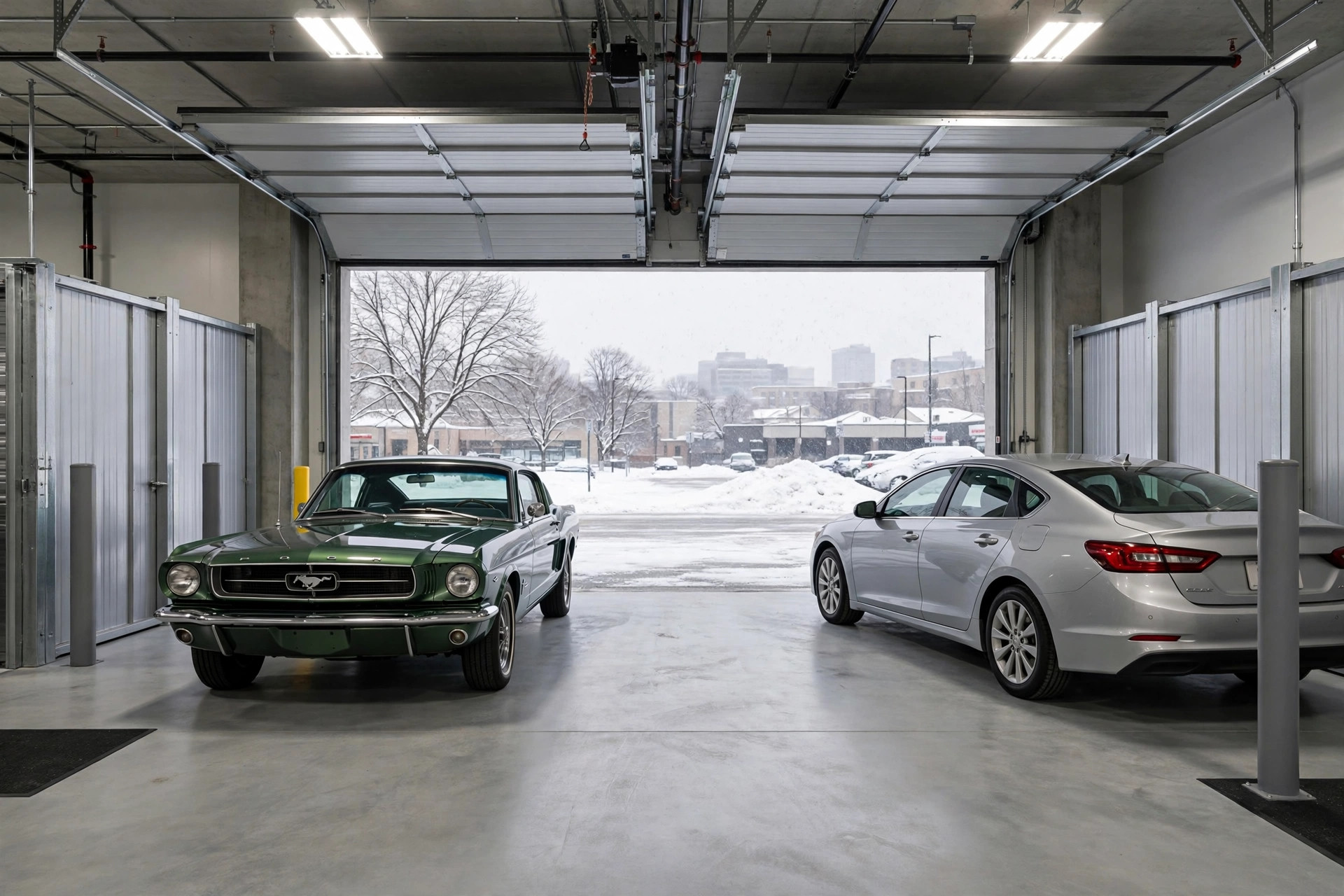
Indoor, Outdoor, and Covered Storage: What’s the Difference?
Most facilities offer three basic levels of vehicle storage. Understanding the trade-offs will help you match the option to your vehicle and budget.
Outdoor storage is the most affordable option. Your car parks in a designated spot on a fenced lot. It works for short-term needs, but the vehicle is fully exposed to rain, snow, ice, and sun. In Cleveland, that means snow loads, ice buildup, and road-salt residue sitting on your paint for months.
Covered storage sits in the middle. Your car parks under a carport-style canopy that blocks direct snow, ice, and sunlight while letting air circulate. It costs more than open parking but far less than an enclosed unit — a reasonable compromise for sturdy daily drivers, though it offers no protection from freezing temperatures or humidity.
Indoor storage means your vehicle sits inside a fully enclosed unit or shared warehouse. It offers the best protection from weather, theft, and vandalism, and it is typically the most expensive option. For classic cars, convertibles, sports cars, or any vehicle you want to keep in top condition, indoor storage is usually the smartest choice.
Why Climate Control Matters During Cleveland Winters
Cleveland’s winters are the biggest reason to think carefully about storage. Lake-effect snow can pile up fast, temperatures routinely drop well below freezing, and freeze-thaw cycles create condensation in and around a parked vehicle. Combined with road salt, these conditions accelerate corrosion, paint damage, and rubber-seal deterioration.
A climate-controlled unit keeps temperatures above freezing and moderates humidity year-round. That steady environment protects paint and clear coat, preserves rubber seals and weatherstripping, prevents moisture from settling into the cabin and trunk, and reduces strain on the battery and electronics. For a full winter or longer, climate control is worth serious consideration. AAA Club Alliance has a useful overview of the dos and don’ts of winter car storage.
Even non-climate-controlled indoor storage is a major upgrade over outdoor parking in Cleveland. It keeps snow and ice off the car, dampens temperature swings, and blocks wind and salt spray. For short-term winter storage of a reliable daily driver, an enclosed non-climate unit is often enough.
Security, Access Hours, and Unit Size
When comparing facilities, look closely at three things: security, access, and fit.
Security. Ask about gated entry with a personal access code, video surveillance, bright lighting, an on-site manager, and individually alarmed units. These features deter break-ins and vandalism. Also ask how access codes are managed and whether gate entries are logged.
Access hours. Some facilities offer 24/7 gate access; others limit entry to office hours. If you travel for work or may need the car on short notice, round-the-clock access matters. If the vehicle will sit untouched for months, standard hours are usually fine.
Unit size. A standard sedan or coupe fits comfortably in a 10×20-foot unit, while larger SUVs and trucks often need a 10×25 or 10×30 space. Measure your vehicle, including mirrors, and confirm there is room to open the doors and walk around the car. Drive-up units make access easier than interior warehouse units.
What Affects the Cost of Car Storage
Pricing varies widely across the Cleveland area. These factors move the price up or down:
- Storage type. Outdoor spots are generally the most budget-friendly, covered parking sits in the middle, and enclosed indoor units cost the most. Climate-controlled units command the highest rates.
- Location. Facilities near downtown or in high-demand suburbs typically charge more than those on the metro outskirts.
- Unit size. A compact unit for a sedan costs less than an oversized one for a full-size truck.
- Lease terms. Month-to-month rentals offer flexibility, while longer commitments sometimes earn discounted rates. Ask whether the rate is locked for the lease term.
- Security and amenities. Gated access, cameras, on-site staff, and 24-hour access add to operating costs.
- Insurance requirements. Many facilities require you to insure the stored vehicle yourself — budget for that separately.
Before signing, ask about deposits, administrative fees, late-payment policies, and seasonal rate changes. Winter is peak demand season for indoor storage in Cleveland, so booking early can save money and hassle.
How to Prepare Your Car for Storage
Proper preparation prevents most storage-related problems. Tailor your approach to how long the car will sit. Extra Space Storage also publishes a practical checklist on how to prep a car for storage.
Short-Term Storage (A Few Weeks to Two Months)
- Wash and wax the car, including the undercarriage, to remove road salt and grime that accelerate corrosion.
- Fill the fuel tank and add a fuel stabilizer to keep gasoline from degrading.
- Inflate tires to the manufacturer’s recommended pressure — if a warning light appears, our tire pressure light guide explains what to check.
- Disconnect the battery or connect a battery maintainer so it does not drain.
- Use a breathable car cover to shield paint from dust; avoid plastic tarps, which trap condensation.
- Remove valuables, food, and anything that could attract pests.
Long-Term Storage (Three Months or More)
Do everything above, plus:
- Change the oil and filter before storage; used oil contains contaminants that can damage engine components.
- Top off coolant, brake fluid, and other fluids to proper levels.
- Inflate tires slightly above the recommended pressure to reduce flat-spotting, or place the car on jack stands if you can do so safely.
- Use a battery maintainer rather than just disconnecting the battery, since long idle periods can permanently damage it.
- Place moisture absorbers inside the cabin and trunk to control humidity.
- Plug the exhaust and air intakes with rags or steel wool to deter rodents; remember to remove them before starting the car.
- Do not engage the parking brake, which can seize — use wheel chocks on a level surface instead.
- Review your insurance and registration; some owners adjust coverage during storage, but confirm your policy’s requirements first.
Checklist for Choosing a Storage Facility in Cleveland
- Location. Close enough to visit conveniently, even in winter driving conditions.
- Storage types offered. Outdoor, covered, and indoor options, including climate-controlled units.
- Climate control. If you need it, ask for the actual temperature and humidity ranges maintained.
- Security. Gated access, cameras, lighting, individual locks, on-site staff.
- Access hours. Confirm gate hours fit your schedule, including holidays.
- Unit fit. Verify your vehicle fits with room to open doors and walk around it.
- Contract terms. Read the lease for rate changes, notice periods, deposits, and fees.
- Insurance. Ask what coverage the facility requires and what its liability covers.
- Winter maintenance. Ask how the facility handles snow removal and lot upkeep.
- Reputation. Read recent reviews and visit in person before committing.
Frequently Asked Questions
What should you know about car storage cleveland?
Cleveland’s winter weather makes storage type matter more than in milder climates. Lake-effect snow, freezing temperatures, and road salt can damage a vehicle left outdoors for months. Indoor storage — ideally climate-controlled — offers the best protection for valuable or long-term vehicles. Book before winter demand peaks, confirm security and access hours, and make sure your insurance covers the car while stored.
What are the key things to consider for car storage cleveland?
Weigh six factors: storage type (outdoor, covered, or indoor), whether you need climate control, the facility’s security features, access hours, whether the unit fits your vehicle, and total cost including fees and insurance. Also consider the facility’s location and winter lot maintenance, and tour in person before signing.
How can you make the most of car storage cleveland?
Prepare the vehicle well: wash off road salt, fill the tank with stabilizer, maintain the battery, protect the tires, and use a breathable cover. Choose a facility close enough to check on the car during long storage periods. Book before the winter rush, keep insurance current, and keep the lease and facility emergency contact somewhere accessible.
Conclusion
The right car storage in Cleveland depends on your vehicle, timeline, and budget. Outdoor parking suits short-term needs on a tight budget, covered storage is a solid middle ground, and indoor — especially climate-controlled — storage is the best defense against Cleveland’s winters for valuable or long-term vehicles. Prepare your car before drop-off, use the checklist above to vet facilities, and book early ahead of winter demand. With the right setup, your vehicle will roll out in spring in the same condition it went in.