Coolant Color Meaning: a Practical Guide
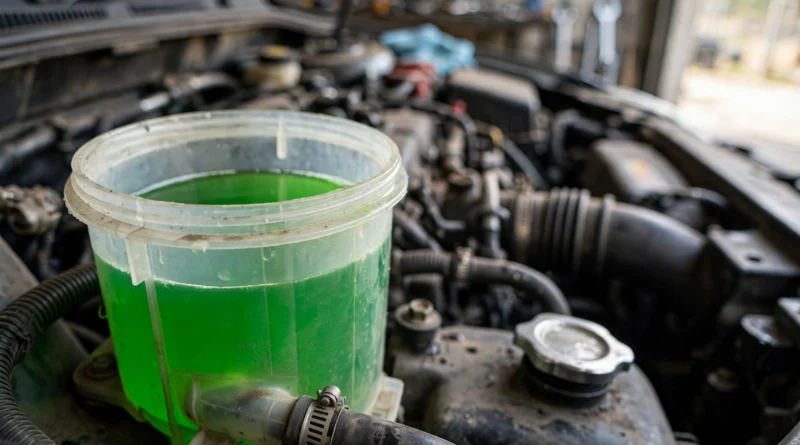
Pop the hood on a running engine and you will probably spot a small translucent tank with brightly colored liquid inside. Coolant color meaning is the question every car owner asks sooner or later: does that green, orange, pink, or blue liquid tell you anything useful about what is in your cooling system — and what you can safely add to it? The short answer is yes, but with an important catch. Coolant color is a rough indicator of the fluid’s chemistry and service life, not a universal standard, so reading it correctly means understanding the technology behind the tint.
Get it right and you buy the correct top-up fluid, protect your engine, and avoid a costly flush. Get it wrong — by mixing incompatible colors, for example — and you can end up with sludge clogging your radiator and heater core. This guide walks through what each common coolant color usually signals, why the system isn’t perfectly standardized, and the practical rules that keep your cooling system healthy.
Key Takeaways
- Color hints at chemistry, not brand: green usually means older IAT coolant, orange/pink often signals OAT, and yellow or blue frequently indicates a HOAT blend — but these are tendencies, not guarantees.
- Color is not a universal standard: manufacturers use dyes differently, so always confirm the specification in your owner’s manual before buying coolant.
- Never mix coolant colors casually: incompatible additive chemistries can react and form sludge that blocks coolant flow and causes overheating.
- When in doubt, flush it out: a full drain and refill with the correct specification is safer than topping up with an unknown or mismatched fluid.
Why Engine Coolant Is Colored at All
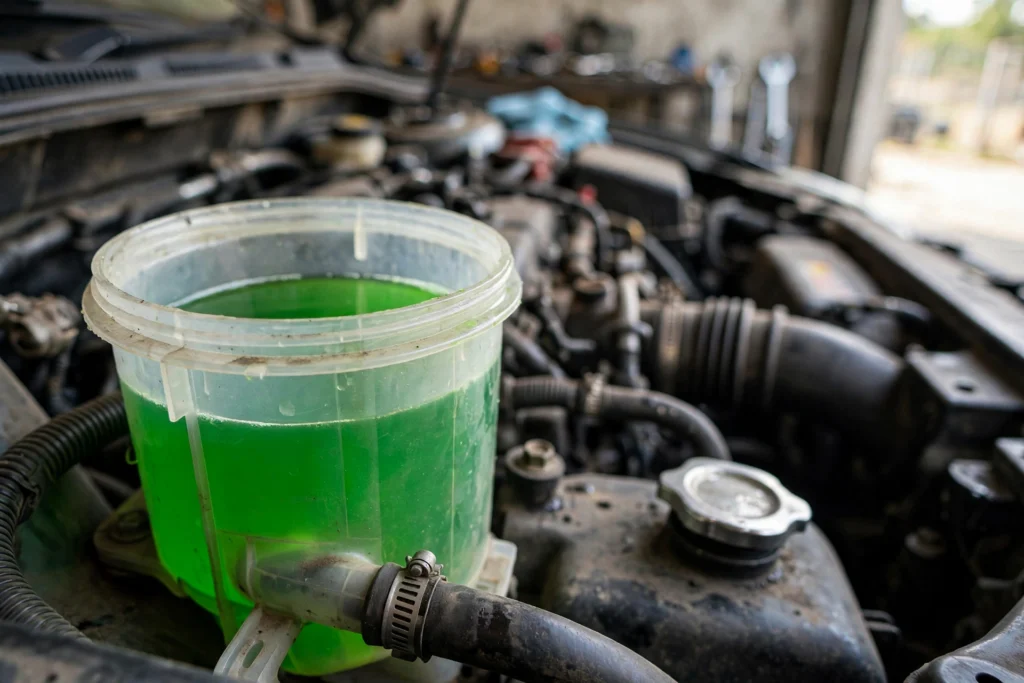
Engine coolant — also called antifreeze — is naturally clear. The color comes from dye added by the manufacturer for a few practical reasons. First, it makes leaks visible: a bright green or orange drip under your car is far easier to spot than a clear one. Second, it helps technicians and owners quickly identify roughly what type of fluid is in the system. Third, some dyes are tied to specific product lines so that a manufacturer can distinguish its own formulations.
The important thing to understand is that dye is not an ingredient that affects performance. Two bottles of coolant can be chemically identical yet different colors, and — more dangerously — two coolants can share a color while using completely different additive technologies. The color is a label on the outside of the envelope; the specification number on the bottle is what actually matters.
What the Common Coolant Colors Usually Mean
That said, colors do follow rough industry patterns, and knowing them helps you make better decisions at the parts store. Here is what the most common colors typically signal:
Green Coolant
Green is the traditional color, associated with IAT (Inorganic Acid Technology) coolant. This was the standard in most vehicles built before the mid-1990s. It uses silicates and phosphates as corrosion inhibitors and works well in older engines, but its additives deplete relatively quickly — expect a service interval around two years or 30,000 miles. If your classic car or older daily driver runs green, keep buying the same specification and change it on schedule.
Orange Coolant
Orange most commonly indicates OAT (Organic Acid Technology) coolant, the best-known example being Dex-Cool used in many General Motors vehicles. OAT coolants are silicate-free, rely on organic acid inhibitors, and offer extended service life — often up to five years or 150,000 miles. Orange coolant is designed for long, maintenance-light intervals, but it is unforgiving of contamination: mixing it with green IAT coolant is one of the classic routes to sludge formation.
Pink and Red Coolant
Pink and red coolants are frequently associated with Asian automakers such as Toyota, Honda, and Subaru, though the exact technology varies. Some are phosphated OAT formulas with long service intervals; others are hybrid blends. Red typically skews toward extended-life OAT chemistry, while pink can be a brand-specific HOAT or Si-OAT formula. Because these colors vary most by manufacturer, checking your manual is especially important here.
Yellow and Gold Coolant
Yellow or gold often signals a HOAT (Hybrid Organic Acid Technology) coolant — a blend of organic and inorganic inhibitor technologies designed to balance longevity with broad metal protection. Some universal or “all makes” coolants are sold in yellow as well, which can be confusing: a universal formula is designed for compatibility, but only with specific technologies, not with literally everything. Read the label’s fine print before trusting the color alone.
Blue Coolant
Blue shows up in certain European and Asian vehicles, often indicating a phosphate-free HOAT or brand-specific formula, and it is also common in some Honda and BMW applications depending on model year. Service intervals vary, so again, the specification matters more than the shade. If you are comparing maintenance schedules, our practical guide to gas cost calculations shows the same principle: the numbers on the label beat guesswork every time.
For a deeper brand-by-brand breakdown of colors, types, and maintenance advice, Prestone’s coolant color guide is a useful reference: What each coolant color means, with types and maintenance tips.
Why Coolant Color Is Not a Universal Standard
If the color patterns above sound consistent, it is worth stating the exception clearly: there is no single global authority assigning colors to coolant types. Manufacturers change dye colors over time for branding, regional markets differ, and some products are colored simply to stand out on a shelf. A yellow bottle from one brand and a yellow bottle from another are not guaranteed to be compatible.
This is why mechanics and manufacturers repeat one rule above all: match the specification, not the color. Your owner’s manual lists an exact standard — things like Dex-Cool, a VW/Audi TL spec, a Toyota SLLC designation, or a generic OAT requirement. The coolant you buy must meet that specification. The color can confirm you are in the right neighborhood, but the spec on the back of the bottle is the address.
Can You Mix Different Coolant Colors?
The safe default answer is no. Different coolant colors frequently mean different additive chemistries, and mixing IAT, OAT, and HOAT formulas can cause the additives to react, drop out of solution, and form gel-like sludge. That sludge restricts flow through the radiator, heater core, and water pump passages, which leads directly to overheating — exactly the problem coolant exists to prevent. A detailed look at the risks and the rare exceptions is covered well here: does different color coolant matter for engine health?
There are narrow exceptions. Some “universal” coolants are formulated to be compatible with a wide range of systems, and topping up with the identical specification from the same manufacturer is obviously fine. But the golden rules hold:
- Same spec beats same color: if the label confirms the exact specification your car requires, the color match is secondary.
- Never mix old and new without checking: even a small top-up of incompatible fluid can start a reaction over time.
- When the system is a mystery, flush: if you bought a used car and do not know what is in the reservoir, a full drain, flush, and refill with the correct coolant is the cheapest insurance you can buy.
How to Choose the Right Coolant for Your Car
Choosing coolant is a three-step process. First, open your owner’s manual and find the exact coolant specification — write it down or photograph the page. Second, buy a coolant whose label names that specification explicitly; reputable bottles list the standards they meet on the back. Third, match the existing color as a secondary confirmation, not the primary decision. If the label says it meets your car’s spec, it is the right fluid regardless of dye shade.
Concentrate versus premix matters too. Concentrated coolant must be mixed with distilled water — usually a 50/50 ratio, which protects down to roughly -37C in most formulations — while premixed coolant is ready to pour. Using tap water in hard-water areas can introduce minerals that form deposits, so distilled water is the safer choice when mixing your own. This is also one of those maintenance jobs where knowing your costs helps: our auto repair costs guide breaks down what typical cooling-system services cost, so you can tell whether a shop’s quote for a flush is fair.
Coolant Color Changes: Warning Signs
Beyond choosing coolant, color is a diagnostic tool. Check your overflow reservoir every few months with the engine cold. Normal coolant looks clear, bright, and uniform in its color. These changes are warning signs:
- Cloudy or milky: contamination, possibly oil mixing in from a failing head gasket — get it checked promptly.
- Rusty or brown: depleted corrosion inhibitors allowing internal rust; the system likely needs a flush and refill.
- Oily film on top: another sign of possible gasket or seal failure.
- Sludge or particles: often the result of mixed incompatible coolants; the system needs flushing before damage spreads.
- Dropping level with clean fluid: a leak somewhere — hoses, radiator, water pump, or head gasket — rather than a chemistry problem.
Coolant is also sweet-tasting and toxic to pets and wildlife, so clean up any spills and never leave a drain pan of used coolant where animals can reach it. Store new and used coolant in sealed containers away from children and pets.
Frequently Asked Questions
How does coolant color meaning work?
Coolant color meaning works as a rough visual shorthand: dye is added to coolant so drivers and technicians can quickly identify roughly what additive technology is in the system — green for older IAT formulas, orange and pink for OAT types, yellow and blue often for HOAT blends. However, because there is no universal color standard, the dye only suggests the chemistry; the specification printed on the bottle and in your owner’s manual is what actually determines compatibility. Treat color as a hint and the spec as the rule.
What should you know about coolant color meaning?
The most important thing to know about coolant color meaning is that color alone is never enough to choose a coolant. Manufacturers use dyes inconsistently and change them over time, so two coolants of the same color can use incompatible chemistries. Always match the specification in your owner’s manual first, use color as a secondary confirmation, never mix different technologies without a label that explicitly approves it, and flush the system if you are unsure what is in it.
What are common questions about coolant color meaning?
Common questions about coolant color meaning include whether it is safe to mix colors (usually no, unless the label explicitly approves it), whether color affects performance (the dye itself does not), and whether coolant color changing is normal (it is not — cloudiness, rust tint, or sludge are warning signs). Another frequent question is whether universal coolant is truly universal: it is formulated for broad compatibility, but you should still verify that it meets your vehicle’s specific requirement before using it.
Conclusion
Coolant color meaning is a useful first clue — green points to older IAT formulas, orange and pink toward long-life OAT, and yellow or blue toward hybrid HOAT blends. But color is a hint, not a contract. The specification in your owner’s manual is the final word on what goes in your engine, and mixing incompatible chemistries is one of the fastest ways to turn a simple top-up into a radiator-replacing repair. Check the label, match the spec, watch for color changes, and when in doubt, flush and start fresh. Your engine’s cooling system will repay the care with years of trouble-free service.