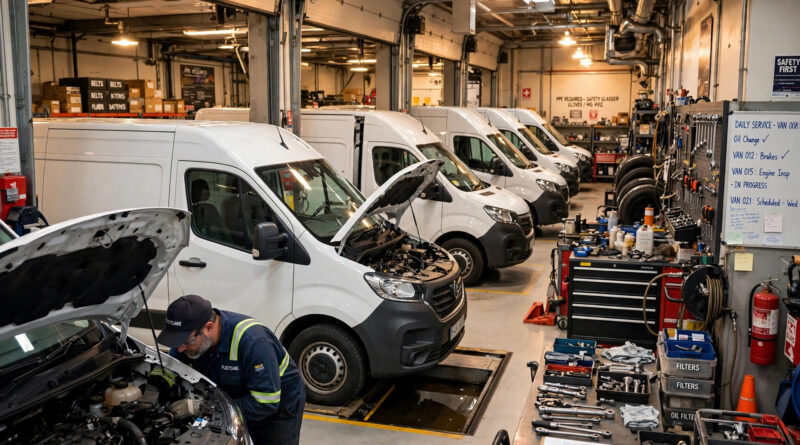
Fleet Repair Services: a Practical Guide
Whether you run a handful of delivery vans or a large commercial operation, fleet repair services are the backbone of keeping your vehicles safe, compliant, and on the road. A fleet is not just a collection of vehicles — it is a working asset, and every unplanned breakdown costs far more than the repair bill itself. Missed deliveries, idle drivers, and unhappy customers can quickly turn a minor mechanical issue into a serious business problem.
This practical guide explains what fleet repair services cover, how to structure maintenance so problems are caught early, what drives repair costs, and how to choose a repair partner that fits your operation. The goal is simple: fewer surprises, less downtime, and a fleet that runs predictably day after day.
Key Takeaways
- Preventive maintenance beats reactive repair. Scheduled inspections and servicing catch small problems before they become expensive breakdowns.
- Downtime is the real cost. A repair bill is only part of the damage — idle vehicles mean lost revenue, delayed work, and disrupted schedules.
- The right repair partner matters. Choose a provider with commercial vehicle experience, clear pricing, strong communication, and the capacity to handle your fleet’s size.
- Track everything. Service records, repair histories, and maintenance schedules for each vehicle help you spot patterns, plan budgets, and extend vehicle life.
What Fleet Repair Services Cover
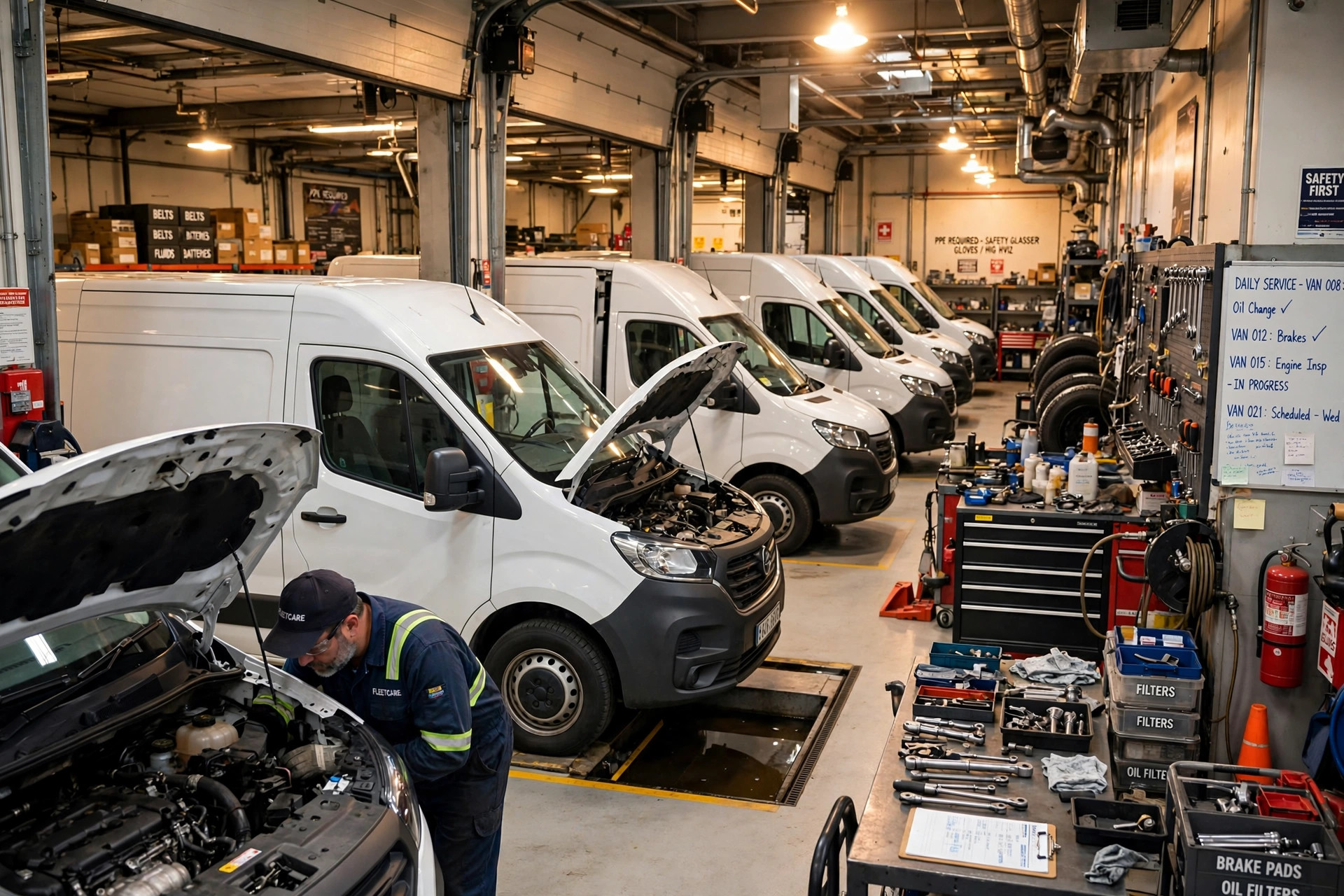
Fleet repair services cover the full lifecycle of keeping commercial vehicles in working order — not just fixing things when they break. A good provider handles both scheduled preventive work and unscheduled repairs, from routine oil changes and brake inspections to complex diagnostics and engine overhauls.
Typical services include routine inspections, oil and filter changes, brake service, tire management, steering and suspension work, electrical diagnostics, air conditioning repair, and transmission service. Many providers also offer compliance inspections, such as roadworthiness or DOT-style safety checks, plus roadside assistance for breakdowns away from the shop.
The scope scales with the fleet. A small business with five vans needs reliable scheduled servicing and fast turnaround on repairs. A larger operation may need dedicated fleet programs with assigned technicians, priority scheduling, digital service records, and reporting across multiple locations. The common thread is consistency: every vehicle should receive the same standard of care, on time, every time.
Preventive vs. Reactive Maintenance
The single biggest decision in fleet maintenance is philosophical: do you fix vehicles when they fail, or service them so they rarely do? Reactive maintenance — repairing only after a breakdown — almost always costs more in the long run. Emergency repairs carry premium labor rates, parts may not be in stock, and the vehicle sits idle while everything gets sorted.
Preventive maintenance flips that logic. Vehicles are serviced on a schedule based on mileage, engine hours, or time intervals, and inspections look for wear before it causes failure. A brake pad replaced during a scheduled service costs a fraction of a brake system damaged by worn pads grinding on rotors — and it never strands a driver on the road.
Most well-run fleets aim for the majority of their maintenance work to be preventive rather than reactive. The exact balance depends on vehicle age, mileage, and duty cycle, but the direction is always the same: more planned work, fewer surprises. A dependable repair partner helps you build and stick to that schedule instead of constantly firefighting.
Everyday Services That Keep Fleets Rolling
Most fleet repairs fall into a handful of familiar categories. Understanding them helps you read service reports, approve estimates, and plan budgets with confidence.
Engine and drivetrain. Oil changes, filters, belts, hoses, and cooling system service keep the engine healthy. Transmission servicing — fluid changes and inspections — protects one of the most expensive components in the vehicle.
Brakes and steering. Brake pads, rotors, calipers, and fluid are wear items that need regular inspection. Steering and suspension components affect handling, tire wear, and safety, so they should be checked on every major service.
Electrical and diagnostics. Modern vehicles rely on complex electronics for everything from engine management to safety systems. Professional diagnostic equipment pinpoints faults quickly, which is far cheaper than replacing parts by guesswork.
Fluids and filters. Engine oil, coolant, brake fluid, transmission fluid, and power steering fluid all degrade over time. Regular fluid service is one of the cheapest forms of insurance a fleet can buy.
Tires and Safety-Critical Repairs
Tires are where fleet maintenance meets road safety most directly. Underinflated or worn tires increase stopping distances, hurt fuel economy, and are a common cause of roadside failures. Fleet tire management means regular pressure checks, rotation, alignment, and replacement based on tread depth rather than waiting for a blowout.
Drivers should be trained to watch for warning signs — including the tire pressure warning light, which means at least one tire has fallen below the recommended pressure. If you want a deeper explanation of what that dashboard warning means and what to do about it, see our guide to the tire pressure light. For fleets, the rule is simple: never ignore it, and check pressures fleet-wide on a regular schedule.
Brakes belong in the same safety-critical category. Squealing, grinding, vibration, or longer stopping distances all deserve immediate attention. Safety-critical repairs should never be deferred for convenience — the liability and human cost of a failure far outweigh any short-term saving.
Understanding Fleet Repair Costs
Fleet repair costs vary widely with vehicle type, age, mileage, and local labor rates, but the structure is predictable. You pay for parts, labor, and — often overlooked — the downtime while the vehicle is in the shop. That is why comparing repair shops on hourly rate alone can be misleading: a slightly cheaper shop with slow turnaround may cost more overall than a pricier one that returns the vehicle a day sooner.
To get a feel for how individual repair jobs are priced and what influences a repair bill, our overview of auto repair costs breaks down the main cost drivers and how to evaluate an estimate. The same principles apply at fleet scale, multiplied across every vehicle.
The most effective way to control costs is predictability. Fixed or contracted maintenance schedules, negotiated fleet rates, and bundled preventive services are usually cheaper than paying retail for every job individually. Just as important is transparency: a trustworthy provider gives clear estimates before work begins, explains repairs in plain language, and flags upcoming work so you can budget for it.
How to Choose the Right Fleet Repair Provider
Choosing a repair partner is one of the highest-leverage decisions a fleet manager makes. A good provider keeps your vehicles moving; a bad one drains money and patience. Start with experience: look for a shop or company that works on your type of vehicles — cars, vans, trucks, or specialized equipment — and understands the demands of commercial use.
Location and capacity matter too. The provider should be accessible for your drivers and able to handle your fleet’s volume without long waits. For fleets spread across a region, a provider with multiple service points or mobile repair capability can be a major advantage.
Evaluate communication and reporting. You should receive clear documentation of what was done, what was found during inspections, and what may need attention soon — ideally in digital records tied to each vehicle. Transparent pricing with written estimates, and a willingness to explain priorities (what must be fixed now vs. what can wait), are signs of a partner you can trust. For a structured checklist of what to look for, this guide to choosing a fleet maintenance provider covers the key questions worth asking before you sign.
Building a Downtime-Proof Maintenance Program
Individual repairs matter less than the system around them. The strongest fleets run a documented maintenance program: every vehicle has a service schedule, every job is recorded, and someone reviews the data regularly.
Start with an inventory of your vehicles — make, model, year, mileage — and note each one’s service history. Then set service intervals based on the manufacturer’s recommendations and your vehicles’ actual duty cycles. A vehicle that idles all day in city traffic wears differently from one cruising highways, so one-size-fits-all intervals often need adjustment.
Track a few simple metrics: how often scheduled services happen on time, how much downtime each vehicle experiences, and where the money goes by repair category. These numbers reveal problem vehicles, highlight the true cost of deferring maintenance, and justify budget decisions. Fleet maintenance specialists consistently recommend this data-driven approach — UpKeep’s best-practices guide is a solid reference for the KPIs that matter most, from preventive-vs-reactive ratios to vehicle uptime percentages.
Finally, involve your drivers. They are the first to notice strange noises, warning lights, or handling changes. A simple daily walkaround habit — tires, lights, fluids, brakes — catches issues that no spreadsheet can. The best maintenance program is one where the shop, the fleet manager, and the drivers all pull in the same direction.
Frequently Asked Questions
What should you know about fleet repair services?
Fleet repair services keep commercial vehicles running through a mix of scheduled preventive maintenance and unscheduled repairs. They cover inspections, oil and filter changes, brakes, tires, electrical diagnostics, and major repairs, often with digital service records per vehicle. The core idea is consistency: every vehicle gets the same standard of care on a predictable schedule, which reduces breakdowns and controls long-term costs.
What are the key things to consider for fleet repair services?
Consider the provider’s experience with your vehicle types, their capacity and location relative to your operations, turnaround time, and how they communicate. Clear written estimates, plain-language explanations, documented service history per vehicle, and a genuine preventive maintenance process — not just breakdown repair — are the markers of a strong partner. Also consider mobile or roadside capability if your vehicles operate far from the shop.
How can you make the most of fleet repair services?
Make the most of fleet repair services by running a documented maintenance program: set service schedules per vehicle based on manufacturer guidance and actual use, track repairs and downtime, review the data for patterns, and negotiate fleet rates or contracts instead of paying retail per job. Involve drivers with daily walkaround checks, and work with a provider that reports clearly and flags upcoming work before it becomes urgent.
Conclusion
Fleet repair services are ultimately about reliability. The cheapest repair is the one you plan for, and the most expensive breakdown is the one that surprises you. By combining preventive maintenance, a capable repair partner, transparent costs, and simple record-keeping, you turn vehicle maintenance from a constant source of stress into a predictable business process. Start with one step — schedule the inspections you’ve been putting off — and build the program from there.