Hall of Mirrors Versailles: What to Know
Introduction
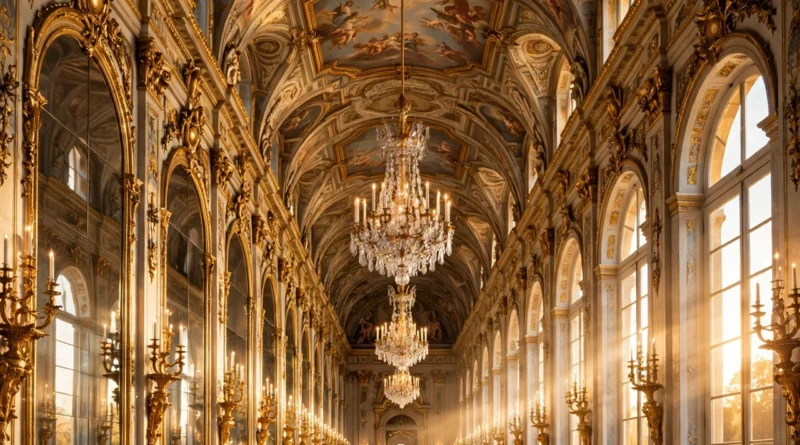
The Hall of Mirrors Versailles is one of the most famous rooms in the world — and for good reason. Known in French as the Galerie des Glaces, this 73-metre-long gallery inside the Palace of Versailles dazzles visitors with 357 mirrors, a painted ceiling celebrating Louis XIV’s reign, and windows that open onto the palace gardens. Whether you are planning a trip to France or simply curious about one of Europe’s greatest architectural masterpieces, this guide covers what to know before you go: the history of the gallery, the art and symbolism to look for, the world-changing events that happened within its walls, and practical tips for visiting it well.
Key Takeaways
- The Hall of Mirrors is a 73-metre gallery in the Palace of Versailles, decorated with 357 mirrors, 17 tall windows, and a ceiling painted by Charles Le Brun.
- Built for Louis XIV in the 1680s, the gallery was designed to showcase French art, industry, and royal power at its peak.
- The room hosted defining moments in history, including the signing of the Treaty of Versailles in 1919, which formally ended the First World War.
- You visit the Hall of Mirrors as part of a Palace ticket, with timed entry — booking in advance and arriving early makes the experience far more enjoyable.
What Is the Hall of Mirrors?
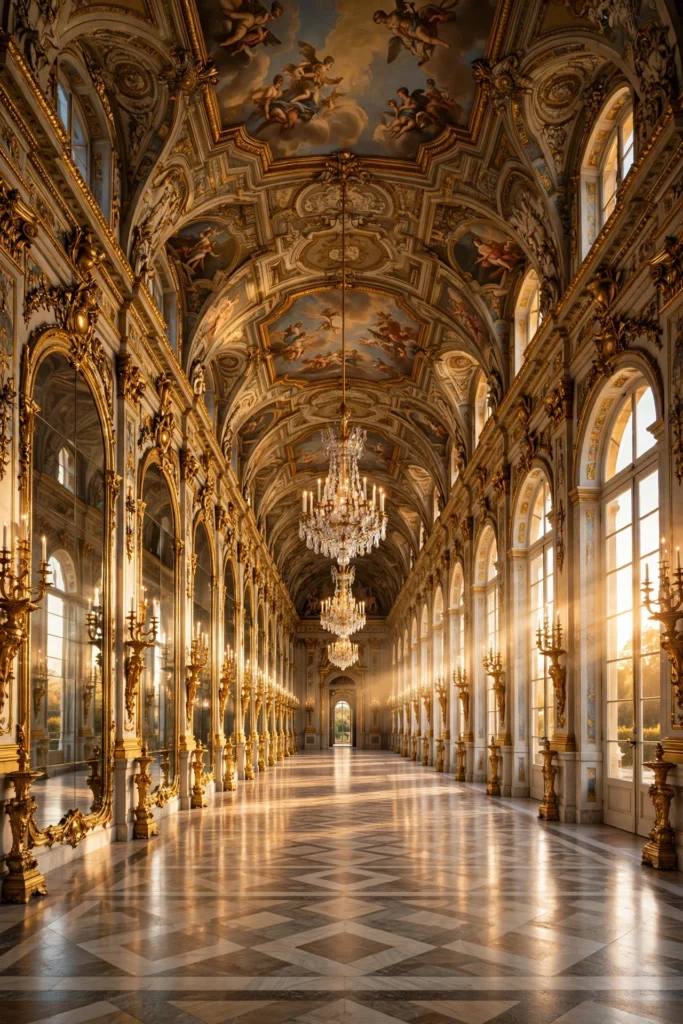
The Hall of Mirrors is the grandest ceremonial gallery of the Palace of Versailles, linking the King’s Apartments and the Queen’s Apartments on the first floor of the main château. Seventeen tall arched windows face seventeen mirrored arcades on the opposite wall, so daylight ricochets across the room and the gardens seem to double themselves in reflection. In the age of Louis XIV, mirrors of this size and clarity were an extraordinary luxury — producing them required France to break the Venetian monopoly on mirror manufacturing, which is precisely the point the room was built to make. Official accounts from the Château de Versailles describe how the sheer number and size of the mirrors demonstrated that the new French manufacture could rival Venice, turning the gallery into a showcase of economic as well as artistic power. You can read the palace’s own account of the gallery on the official Hall of Mirrors page.
The History Behind the Gallery
The gallery was commissioned by Louis XIV, the Sun King, and designed by architect Jules Hardouin-Mansart with the painter Charles Le Brun overseeing the decoration. It was constructed on the site of an earlier terrace overlooking the gardens — which explains the gallery’s remarkable view across the Grande Perspective laid out by the king’s gardener, André Le Nôtre. Courtiers and visitors crossed the Hall of Mirrors daily in the 17th and 18th centuries, using it as a place for waiting, meeting, and grand ceremony. On rare occasions the hall hosted extraordinary events: in 1685 the Doge of Genoa crossed its full length before the French court, and ambassadors from Siam, Persia, and the Ottoman Empire were received there under the scrutiny of tiered courtiers. The throne itself was placed on a platform near the Peace Room end during diplomatic receptions, a staging of royal power few rooms in history have matched.
The Art and Architecture: What to Look At
Every element of the Hall of Mirrors was designed to glorify Louis XIV and the France he ruled. The vaulted ceiling carries 30 painted compositions by Charles Le Brun depicting the king’s political, diplomatic, and military successes during the first 18 years of his personal reign — look for the sun motif, the king’s emblem, woven through allegories drawn from antiquity. The Rouge de Rance pilasters between the mirrors are topped with capitals of gilded bronze in a newly invented “French style,” incorporating national emblems: the fleur-de-lis, the royal sun, and the Gallic rooster. Gilded bronze torchères line the hall, once holding candles that multiplied their flames into a golden blaze across the mirrors, and crystal chandeliers unify architecture, painting, and sculpture into a single immersive Baroque experience. At either end of the gallery sit two salons that mirror each other thematically: the War Room (Salon de la Guerre) and the Peace Room (Salon de la Paix). Together the three rooms form a triad about conflict, diplomacy, and royal authority — the whole political theory of absolute monarchy, expressed in stone, glass, and paint.
Historic Moments That Happened Here
Few rooms in the world have witnessed history on this scale. On 18 January 1871, following France’s defeat in the Franco-Prussian War, Kaiser Wilhelm I was proclaimed Emperor of Germany inside the Hall of Mirrors — a deliberate humiliation staged in France’s most celebrated room. Nearly fifty years later, on 28 June 1919, the same gallery was chosen by France for Germany to sign the Treaty of Versailles, formally ending the First World War. French Prime Minister Georges Clemenceau selected the location with full awareness of its symbolic weight: the room that had witnessed France’s humiliation would now witness Germany’s. Beyond these two seismic events, the hall’s daily life as the stage of the French court shaped European diplomacy for a century. When you stand in the gallery today, you are standing where the fate of nations was quite literally signed and sealed.
Planning Your Visit
The Hall of Mirrors is inside the main Palace (Château) on the first floor of the State Apartments, and it is included with a standard Palace ticket — you cannot visit it on a gardens-only ticket. Admission works on timed entry, so book your slot online in advance, especially in spring and summer when queues are long and the rooms are staffed to keep visitors moving. Expect to spend roughly 15–30 minutes walking through the King’s Apartments before you reach it, and plan to linger 20–30 minutes in the hall itself if crowds allow. Check the official website for current opening hours, ticket options, and any scheduled closures before your trip, since the palace occasionally closes rooms for state events. Versailles sits about 20 kilometres southwest of central Paris and is easily reached by regional train — many visitors combine it with a wider rail journey through Europe for a trip that covers several great cities in one itinerary.
Tips for a Better Experience
A few practical choices make the difference between glimpsing the Hall of Mirrors and truly experiencing it. Arrive at your timed slot early, since security lines can eat into your entry window, and visit on a weekday if your schedule allows — the gallery is at its most magical when you can pause rather than shuffle. Morning light streaming through the garden-side windows is especially beautiful, and from the gallery’s centre you can look down the Grande Perspective exactly as Le Brun’s contemporaries did. Travel light: large bags are not admitted and must be left at the cloakroom, so bring only a small day bag. Photography rules can change, so follow the signage and staff guidance in each room. Finally, don’t rush off afterward — the gardens, the estate of Trianon, and the Queen’s Hamlet reward visitors who give Versailles a full day rather than a flying half-day. If you are visiting in the shoulder seasons, pair it with ideas from fall vacations in Europe to build a trip around the season’s best experiences. A detailed companion overview of the hall’s highlights and history can be found in this Hall of Mirrors guide.
Frequently Asked Questions
What should you know about hall of mirrors versailles?
The essentials: it is the 73-metre ceremonial gallery of the Palace of Versailles, famous for its 357 mirrors, Charles Le Brun’s painted ceiling, and its role in events like the 1919 Treaty of Versailles. It is visited as part of a Palace ticket with timed entry, and booking ahead is strongly recommended. The gallery replaced a former terrace, which is why its garden-side windows offer one of the most famous views in France.
What are the key things to consider for hall of mirrors versailles?
Consider timing, tickets, and crowds. Buy a timed-entry Palace ticket online in advance, arrive early for your slot, and travel light to speed through security. Decide how much of the estate you want to see — the State Apartments, the gardens, and the Trianon estate can easily fill a full day. Weekdays and shoulder seasons are noticeably calmer than summer weekends, and checking the official site for closures before you go avoids disappointment.
How can you make the most of hall of mirrors versailles?
Slow down once you reach the gallery: stand on the central axis and pivot slowly to take in the mirrors, the ceiling, and the garden view as one composition. Look up at Le Brun’s ceiling cycle and spot the sun motif; find the War Room and Peace Room at either end. Pair the visit with the gardens and Trianon for the full estate experience, and if you are touring more of the continent, build Versailles into a wider European itinerary rather than rushing it as a half-day bolt-on.
Conclusion
The Hall of Mirrors is far more than a beautiful room — it is where art, power, and history collide. Built to prove that France under Louis XIV could outshine Venice, its architects, and its rivals, the gallery became the stage on which empires were proclaimed and world wars were formally ended. Visit with a little planning — booked tickets, an early arrival, and time to linger — and the Hall of Mirrors Versailles delivers one of the most memorable hours in European travel. Give it the full day it deserves, and let the gardens, the Trianon, and the grand perspective complete the picture.