Famous Places in India: Top Sights and Travel Tips
Introduction
From the white marble domes of the Taj Mahal to the burning ghats of Varanasi and the tiger reserves of central India, famous places in India span one of the most diverse travel landscapes on earth. India is the seventh-largest country in the world, and a single journey here can compress several civilizations — ancient, Mughal, colonial, and modern — into a few thousand kilometres. As of 2025, India holds 44 officially recognized UNESCO World Heritage properties, with dozens more sites on the country’s tentative list, so even a month-long trip barely scratches the surface. This guide gathers the essential famous places in India, grouped by theme and region, with practical travel tips to help first-time and returning visitors plan a smooth, rewarding trip.
Key Takeaways
- India’s most famous places cluster around a few themes: Mughal monuments (Taj Mahal, Red Fort, Humayun’s Tomb), Rajput forts and palaces (Amber, Mehrangarh), sacred cities (Varanasi, Amritsar, Bodh Gaya), and natural wonders (Kerala’s backwaters, Kaziranga).
- The best overall season for visiting most famous places in India is October to March, when the weather is cooler and drier across the northern plains and Rajasthan.
- Many visitors combine 3–4 regions in one trip — Delhi, Agra, and Jaipur form the classic “Golden Triangle,” easily extended with Varanasi, Rajasthan, or Kerala.
- Plan logistics early: long-distance trains and popular heritage hotels book out weeks ahead, and entry to top monuments is smoothest in the early morning.
The Taj Mahal, Agra — India’s Defining Wonder
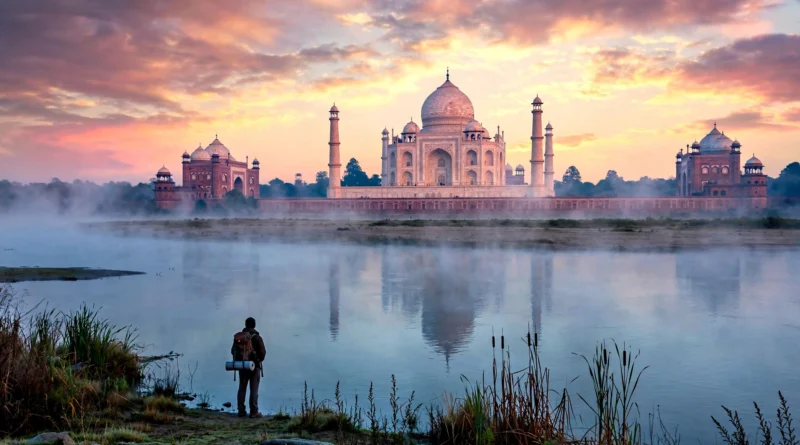
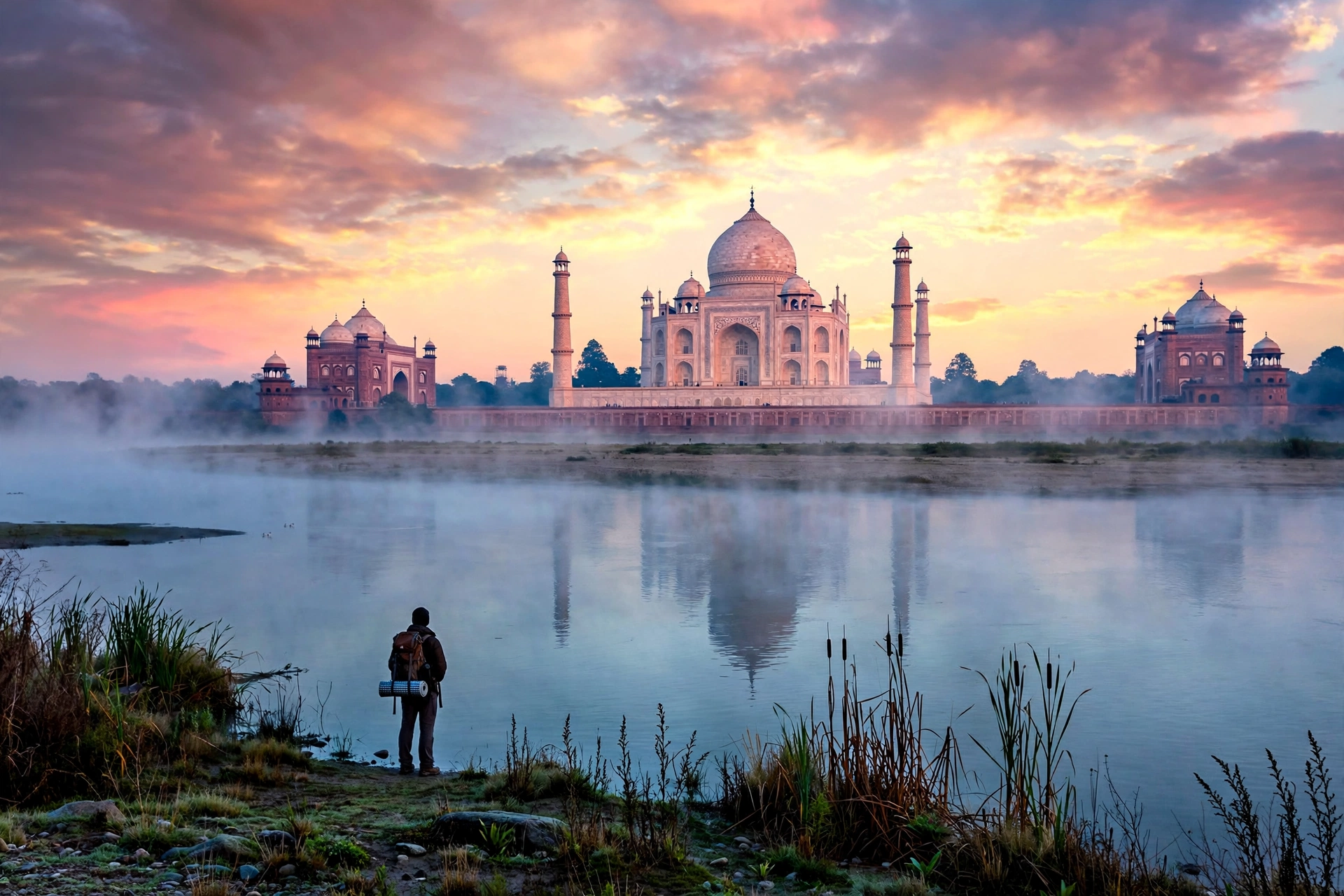
No list of famous places in India can start anywhere else. The Taj Mahal rises on the banks of the Yamuna River in Agra, Uttar Pradesh — a white-marble mausoleum commissioned by the Mughal emperor Shah Jahan in the 17th century in memory of his wife Mumtaz Mahal. Its perfect symmetry, pietra dura inlay work, and the way the marble shifts color with the light make it one of the most photographed buildings in the world, and it was among the first Indian properties inscribed on the UNESCO World Heritage List. Arrive at opening time for the quietest experience and the famous sunrise glow; the monument is closed to visitors on Fridays. Agra also rewards travelers who stay longer: the red-sandstone Agra Fort, a Mughal imperial stronghold with sweeping views toward the Taj, and the abandoned capital of Fatehpur Sikri nearby are both UNESCO-listed and richly worth half a day each. You can browse the complete set of India’s recognized heritage properties on the UNESCO World Heritage Centre’s India listing.
Delhi’s Mughal Heritage: Red Fort, Qutb Minar and Humayun’s Tomb
India’s capital is itself a compendium of famous places, layered over eight centuries of history. Old Delhi holds the Red Fort, the sprawling Mughal citadel whose sandstone walls framed three centuries of imperial ceremony, and Jama Masjid, one of the largest mosques in the country. A short journey south brings you to the Qutb Minar complex, dominated by the 73-metre tapering tower that has stood over Delhi since the 13th century, and Humayun’s Tomb, the garden-tomb that architectural historians regard as the prototype for the Taj Mahal. All three are UNESCO-listed. New Delhi, built as the colonial capital in the early 20th century, contributes the wide boulevards of the government district, the India Gate war memorial, and the Lotus Temple’s distinctive petal architecture. Give Delhi at least two full days — it rewards patience, and it is the natural starting point for almost every Indian itinerary.
Rajasthan: Forts, Palaces and the Pink City
Rajasthan, the land of kings in India’s northwest, concentrates more famous forts and palaces than anywhere else in the country. Jaipur, the “Pink City,” is the gateway: the honeycombed Hawa Mahal, the hilltop Amber Fort with its mirror palace and elephant-ascended ramparts, the astronomical instruments of Jantar Mantar, and the walled city itself, which was inscribed as a UNESCO World Heritage site. West of Jaipur, Jodhpur’s Mehrangarh Fort towers over the blue-washed old city, while Udaipur’s lake palaces — including the floating Lake Palace, now a hotel — define romantic India. The Hill Forts of Rajasthan, a serial UNESCO property, also include Chittorgarh’s massive citadel and Kumbhalgarh, whose walls rank among the longest continuous fortifications in the world. Rajasthan pairs beautifully with the Taj Mahal circuit: Delhi–Agra–Jaipur is India’s classic Golden Triangle, and the state’s desert cities extend the route into a full two-week journey.
Sacred India: Varanasi, Amritsar and Bodh Gaya
Some of the most famous places in India are defined not by architecture alone but by the spiritual life that animates them. Varanasi, on the Ganges in Uttar Pradesh, is among the oldest continuously inhabited cities in the world and Hinduism’s holiest city; at dawn, pilgrims bathe at the ghats while priests perform the fire ritual, and the evening aarti ceremony draws crowds to the riverbank. In Amritsar, Punjab, the Golden Temple — Sikhism’s holiest shrine — floats on its sacred pool, its gold-plated dome reflected in the water; the temple’s community kitchen serves free meals to tens of thousands of visitors daily, one of the largest free kitchens anywhere. Bodh Gaya in Bihar marks where the Buddha attained enlightenment beneath the Bodhi Tree, and the Mahabodhi Temple complex is a UNESCO World Heritage site that draws Buddhist pilgrims from across Asia. Sacred sites demand respectful dress and conduct: cover shoulders and knees, remove shoes where required, and ask before photographing worshippers. The spiritual reach of Buddhism across Asia continues in our facts about Thailand guide, where ancient temples play an equally central role in daily life.
Natural Wonders: Kerala’s Backwaters and Kaziranga
India’s famous places are not all made of stone. Kerala’s backwaters — a network of lagoons, lakes, and canals fringing the Arabian Sea coast — are best explored by houseboat, gliding past coconut groves and village life at walking pace. In the northeast, Kaziranga National Park in Assam protects the world’s largest population of the one-horned rhinoceros, and its grasslands also shelter elephants, swamp deer, and one of India’s densest tiger populations. The Western Ghats mountain range, the Great Himalayan National Park, and the Valley of Flowers add UNESCO-listed natural heritage to the list, while the Mountain Railways of India — including the Darjeeling Himalayan Railway and the Kalka–Shimla line — turn the journey itself into a heritage experience. India’s heritage story keeps growing: the Ministry of Culture continues to add natural sites to the country’s UNESCO tentative list, as announced in its recent additions notice, so returning visitors always find new officially recognized wonders to discover.
Practical Travel Tips for Visiting India
A little planning transforms an India trip from overwhelming to unforgettable. Most foreign nationals need a visa, and the e-Visa system lets most travelers apply online before flying — apply well ahead of your departure date. The currency is the Indian Rupee; carry some cash for small towns and markets even though cards and digital payments are widely accepted in cities. For getting around, India’s rail network is one of the largest in the world and an experience in itself — book long-distance trains as early as schedules allow, since popular routes sell out, and consider overnight sleeper or air-conditioned classes for long hauls. Domestic flights efficiently connect the far corners of the country when distances are extreme. Pack for the season: October to March suits most of the famous places in India, the summer months (April–June) are intensely hot in the north, and the southwest monsoon (roughly June–September) brings heavy rain to much of the country. Finally, build rest days into your itinerary — India’s sensory intensity is part of the magic, but pacing yourself keeps it enjoyable. For a companion perspective on another of Asia’s great historic urban civilizations, see our guide to the major cities in China.
Frequently Asked Questions
What are the best famous places in India?
The consensus shortlist: the Taj Mahal in Agra, Delhi’s Red Fort, Qutb Minar and Humayun’s Tomb, Jaipur’s Amber Fort and the palaces of Rajasthan, Varanasi’s ghats, the Golden Temple in Amritsar, the Khajuraho temples, Hampi’s ruins, the Konark Sun Temple, and the backwaters of Kerala. Heritage enthusiasts should add the Ajanta and Ellora caves, the Mahabodhi Temple at Bodh Gaya, and the churches of Old Goa. First-time visitors with limited time usually focus on Delhi, Agra, and Jaipur — the Golden Triangle — then add one or two deeper destinations.
When is the best time to visit famous places in India?
October to March is the best overall window for most famous places in India, with cooler, drier weather across the northern plains, Rajasthan, and much of the south. December and January can be foggy in the north, which occasionally affects travel schedules. The hill stations and Himalayan regions are best in summer (May–June and September). The monsoon season (roughly June–September) brings heavy rain to much of the country, though some destinations, like Ladakh, are at their best in those months.
What should visitors know before exploring famous places in India?
Arrange your visa before traveling, carry a mix of cash and cards, and book trains and popular hotels early. Dress modestly at religious sites and remove shoes where required. Drink bottled or filtered water, ease into street food, and keep travel insurance current. Monument entry is smoothest early in the morning, and hiring licensed local guides at major sites greatly enriches the experience. Above all, allow flexible time in your schedule — India rewards travelers who slow down.
Conclusion
Few countries compress as much wonder into a single journey as India does. The famous places in India — from the Taj Mahal’s marble perfection to the living spirituality of Varanasi, the desert forts of Rajasthan, and the wild grasslands of Kaziranga — offer something for every kind of traveler, and they sit within a heritage landscape that continues to earn global recognition. Visit in the cooler months, plan your routes and trains ahead, and give each place the unhurried time it deserves. India is not a destination you finish; it is one you begin — and then return to, again and again.