La Palma Canary Islands: Travel Guide, Tips & Highlights
La Palma Canary Islands: Travel Guide, Tips & Highlights
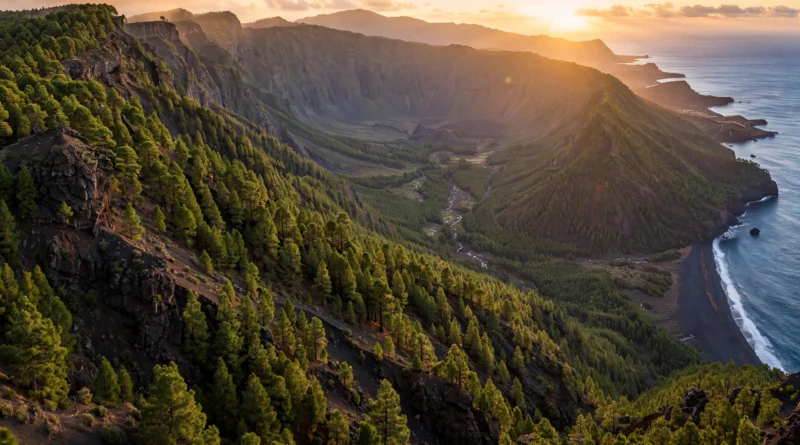
La Palma Canary Islands is the archipelago’s greenest and most tranquil island — a place of deep volcanic craters, ancient laurel forests, black-sand beaches, and some of the clearest night skies on Earth. Nicknamed “La Isla Bonita” (The Beautiful Island), it sits apart from the busier resort islands of the Canaries, drawing travelers who come for hiking, stargazing, and slow travel rather than package holidays. The entire island is a UNESCO Biosphere Reserve, and its landscapes range from pine-clad ridges above 2,300 metres to banana groves along a dramatic coastline. If you are planning a trip, here is a practical travel guide to La Palma: what to see, how to get around, when to go, and the tips that make the difference.
Key Takeaways
- La Palma is the northwesternmost of the Canary Islands and its most mountainous per square kilometre — plan your trip around hiking, stargazing, and nature rather than nightlife.
- The Caldera de Taburiente National Park is the island’s natural centerpiece, with trails for every level, from the easy La Cumbrecita viewpoint loop to full-day descents into the crater.
- One of the world’s best stargazing spots sits on the island’s summit — the Roque de los Muchachos observatories and the Starlight Reserve protect famously dark skies.
- Renting a car is the most practical way to explore; roads are winding but scenic, and public transport between major towns is reliable while remote trailheads are harder to reach by bus.
Why La Palma Stands Out Among the Canary Islands
Each of the Canary Islands has its own character, and La Palma’s is defined by nature and authenticity. While neighbouring islands built large resort strips, La Palma stayed quiet — a rural island of whitewashed villages, terraced hillsides, and small coastal towns. Visitors consistently describe the atmosphere as relaxed and unhurried: no crowds, no queues, just winding paths through forests and villages where life moves at its own pace.
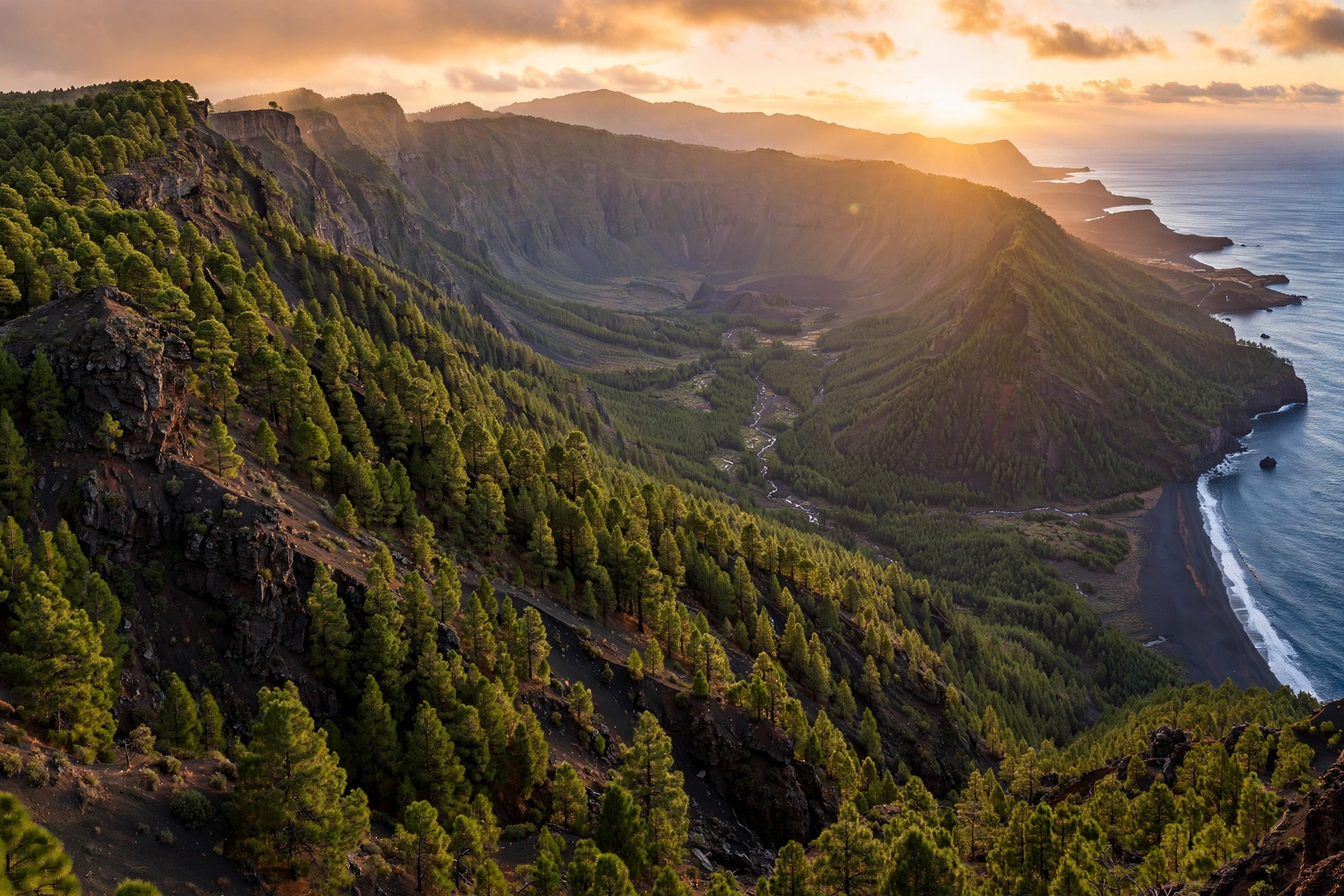
The island’s geography explains the variety. Roughly pear-shaped and just 708 square kilometres, La Palma packs an enormous vertical range into a small area. The Caldera de Taburiente — a vast natural crater with near-vertical walls — dominates the centre and north. To the south runs the Cumbre Vieja ridge, a volcanic spine whose youngest addition, the Tajogaite volcano, erupted in 2021 and became Europe’s newest volcano. The result is a landscape that feels alive and geologically young, with lava fields, crater cones, and dramatic cliffs sitting beside lush forests. For a different take on Atlantic island travel, you can also read our guide to Cape Verde resorts, another island destination off the North African coast.
Getting There and Getting Around
La Palma has its own airport (SPC) with direct flights from mainland Spain and connections from the other Canary Islands, plus regular ferry links — most commonly from Tenerife — if you want to island-hop. Travellers from further afield usually connect through a Spanish hub such as Madrid or Tenerife. Once you land, the most practical choice is a rental car: the island’s roads are winding and scenic, and having your own vehicle makes the difference between seeing the main towns and reaching the trailheads, viewpoints, and hidden beaches that define the island.
Public transport does exist and works reliably between the main towns — the capital Santa Cruz de La Palma and the larger Los Llanos de Aridane are well connected — but buses are limited in remote areas and around hiking trailheads. Taxis are a good option for short hops or one-way hiking transfers, where you walk a trail and get a ride back to your start point. Ferries are also useful if you plan to combine La Palma with another Canary Island in the same trip.
Caldera de Taburiente National Park: The Island’s Natural Centerpiece
The Caldera de Taburiente National Park is La Palma’s headline attraction — an enormous volcanic crater ringed by cliffs, pine forests, waterfalls, and deep ravines. It is one of Spain’s national parks and the heart of the island’s hiking culture, with a well-signposted network of trails for every fitness level.
For an easy introduction, the La Cumbrecita viewpoint loop is a short, family-friendly walk with sweeping views straight into the crater. More ambitious hikers can tackle the classic full descent from the Mirador de los Brecitos down through the Barranco de las Angustias (the Ravine of Anguish) — a full-day route that passes natural pools and the Cascada de Colores, a waterfall stained in vivid mineral greens, yellows, and oranges. The Ruta de los Volcanes along the southern ridge is another signature walk, tracing lava fields and craters from El Pilar to Fuencaliente and ending near lighthouses and natural swimming pools.
Practical notes matter here: bring layers, plenty of water, and proper footwear, because weather changes fast between the coast and the high ridges. Some routes and the park’s camping area require advance booking or permits, so check the official park and tourism information before your visit. The island’s hiking scene is genuinely one of Europe’s best, and the best hiking routes in La Palma give a useful sense of the standout trails to shortlist.
Stargazing at Roque de los Muchachos
La Palma is one of the world’s great stargazing destinations, and this is not marketing language — a pioneering law to protect the night sky has been in force on the island for decades, keeping light pollution exceptionally low. The island holds Starlight Reserve status, and the Roque de los Muchachos observatory complex sits near the summit, where international telescopes take advantage of some of the clearest skies on the planet.
You do not need a telescope to enjoy it. On clear nights the Milky Way is visible to the naked eye from many elevated spots, and guided stargazing sessions with telescopes are available for visitors who want expert commentary on what they are seeing. The astronomical viewpoint near the summit is one of the most photographed places on the island, especially at sunset when the sea of clouds sits below the ridgeline. Pack warm clothing for the summit — temperatures above 2,300 metres are noticeably colder than at the coast, even in summer.
Beaches, Coastal Towns and Black Sand
La Palma’s beaches will not suit travellers looking for long golden strands — the coastline is mostly rocky and volcanic, which gives the island its striking black-sand beaches. Tazacorte and Puerto Naos on the sunnier western side are the island’s main beach towns, with harbour promenades, fish restaurants, and sunset views. The sheltered beaches near Los Cancajos on the east coast sit just minutes from the airport and the capital, making them an easy first or last stop.
For something wilder, the black-sand beach of Nogales in the northeast is reached by a staircase down from the cliffs — dramatic and photogenic, though swimming there demands caution with strong currents. Along the coast you will also find natural rock pools carved into the lava, which offer calm swimming in sheltered settings and are a local favourite.
The towns themselves are worth exploring beyond the beach. Santa Cruz de La Palma, the capital, has carved wooden balconies, Renaissance squares, and a seafront museum shaped like a sailing ship. Los Llanos de Aridane, the island’s largest town, has a leafy central plaza and a livelier local scene. In the south, Fuencaliente combines young volcanoes, Malvasía vineyards, salt pans, and lighthouses at the island’s tip. For a broader picture of the island’s towns and regions, the La Palma travel guide site breaks down each area in detail.
Best Time to Visit and How Long to Stay
La Palma enjoys a mild subtropical climate year-round, so there is no bad season — but the character of a trip changes with the calendar. Spring brings wildflowers, flowing waterfalls, and ideal hiking weather. Summer offers warm nights for stargazing and beach weather on the coasts. Autumn sees fewer visitors and comfortable walking temperatures, while winter is mild and moody — excellent for forest hikes and quiet trails, with the possibility of rain in the north.
Because of the elevation changes, temperatures can shift dramatically from coast to summit, so pack layers regardless of season. For trip length, allow at least a week if you can: three or four days for the main hikes and viewpoints, plus time for the coast, the stargazing, and a slower day in Santa Cruz or Los Llanos. A shorter trip of four or five days works if you focus on one side of the island, but La Palma rewards travellers who slow down — it is the kind of place where the best moments happen between the planned highlights. If you are weighing where to base a longer stay, our guide to handpicked holiday rental villas in Marbella covers the rental approach for a Spanish destination with a similar slow-travel appeal.
Practical Tips for Planning Your Trip
A few practical points will make the trip smoother. First, book accommodation and car hire early if you travel in summer or around holiday periods — the island’s small scale means good options are limited. Base yourself according to your priorities: Santa Cruz and Los Cancajos for culture and easy airport access, the west coast around Tazacorte or Los Llanos for the sunniest weather and hiking access, and Fuencaliente for wine, volcanoes, and the Ruta de los Volcanes trailhead.
Second, respect the island’s rural character. La Palma is a Biosphere Reserve, so stay on marked trails, take your rubbish with you, and support local businesses — family-run restaurants, village shops, and local guides. Third, check trail conditions and any access restrictions before setting out, especially in the national park, where weather or conservation work can temporarily close routes. Finally, learn a few words of Spanish: English is spoken in tourist areas, but the island’s rural corners reward travellers who can order coffee and ask directions in the local language.
Frequently Asked Questions
What should you know about La Palma Canary Islands?
Know that La Palma is the greenest and quietest of the major Canary Islands, best suited to nature lovers, hikers, and stargazers rather than nightlife seekers. The entire island is a UNESCO Biosphere Reserve. Its highlights include the Caldera de Taburiente National Park, the Roque de los Muchachos observatory and dark-sky viewing, black-sand beaches, and the volcanic landscapes reshaped by the 2021 eruption. Renting a car is the most practical way to get around.
What are the key things to consider for La Palma Canary Islands?
Consider the season and your base: spring is best for wildflowers and hiking, summer for beaches and stargazing, and winter is mild but wetter in the north. Choose where to stay based on your plans — west coast for sun and hiking, east for the capital and airport access, south for volcanoes and wine. Allow at least a week to see the island properly, pack layers for the elevation changes, and check trail permits and conditions before hiking in the national park.
How can you make the most of La Palma Canary Islands?
Make the most of it by planning your trip around the island’s strengths: hike at least one major trail in the Caldera de Taburiente, spend a night stargazing under the protected dark skies, explore both the capital and a coastal town, and take a day to drive the island’s scenic routes. Slow down between the highlights — visit a local vineyard, swim in a natural pool, and eat where the locals eat. La Palma rewards unhurried travel more than packed itineraries.
Conclusion
La Palma Canary Islands is a destination for travellers who value nature over noise. Between the vast Caldera de Taburiente, some of the clearest night skies in the world, black-sand beaches, and villages that still feel authentically local, “La Isla Bonita” earns its nickname in a way that has nothing to do with resort luxury and everything to do with landscape and atmosphere. Plan around hiking and stargazing, rent a car, pack layers, and give the island time to work on you — it is the kind of place that turns a week-long trip into a story you tell for years.