Maximalist Wallpaper: Bold Patterns, Room-by-Room Ideas, and Renter-Friendly Tips
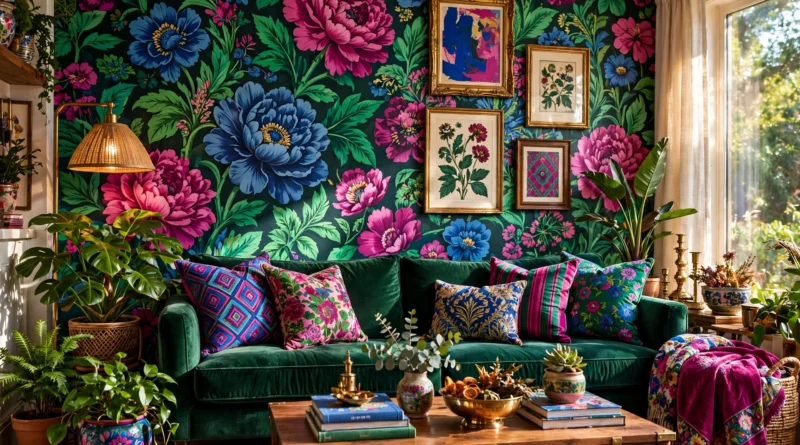
Direct answer: Maximalist wallpaper is bold, patterned wallpaper used as the statement layer in a maximalist room — large florals, geometrics, damask, tropical prints or rich murals in saturated colour. It works best when one wall (or one room) takes the lead: pick a single anchor pattern, repeat one or two of its colours elsewhere in the room, and balance the rest with solid furniture and breathing space. Peel-and-stick versions make the same look renter-friendly, because they can be removed without paste.
Key Takeaways
- Maximalism is “more is more” done on purpose — layered colour, pattern and texture, not random clutter.
- Start with one feature wall or one small room, such as a powder room, hallway or entryway.
- Mix patterns by scale (large, medium, small) and hold them together with a shared colour palette.
- In small rooms, one bold wall plus plain bedding or furniture usually beats papering every surface.
- Peel-and-stick wallpaper is the low-commitment route for renters; always test a patch and check your lease first.
- Measure the wall, allow for pattern matching, and order an extra roll — running out mid-wall is the most common mistake.
What Is Maximalist Interior Design?
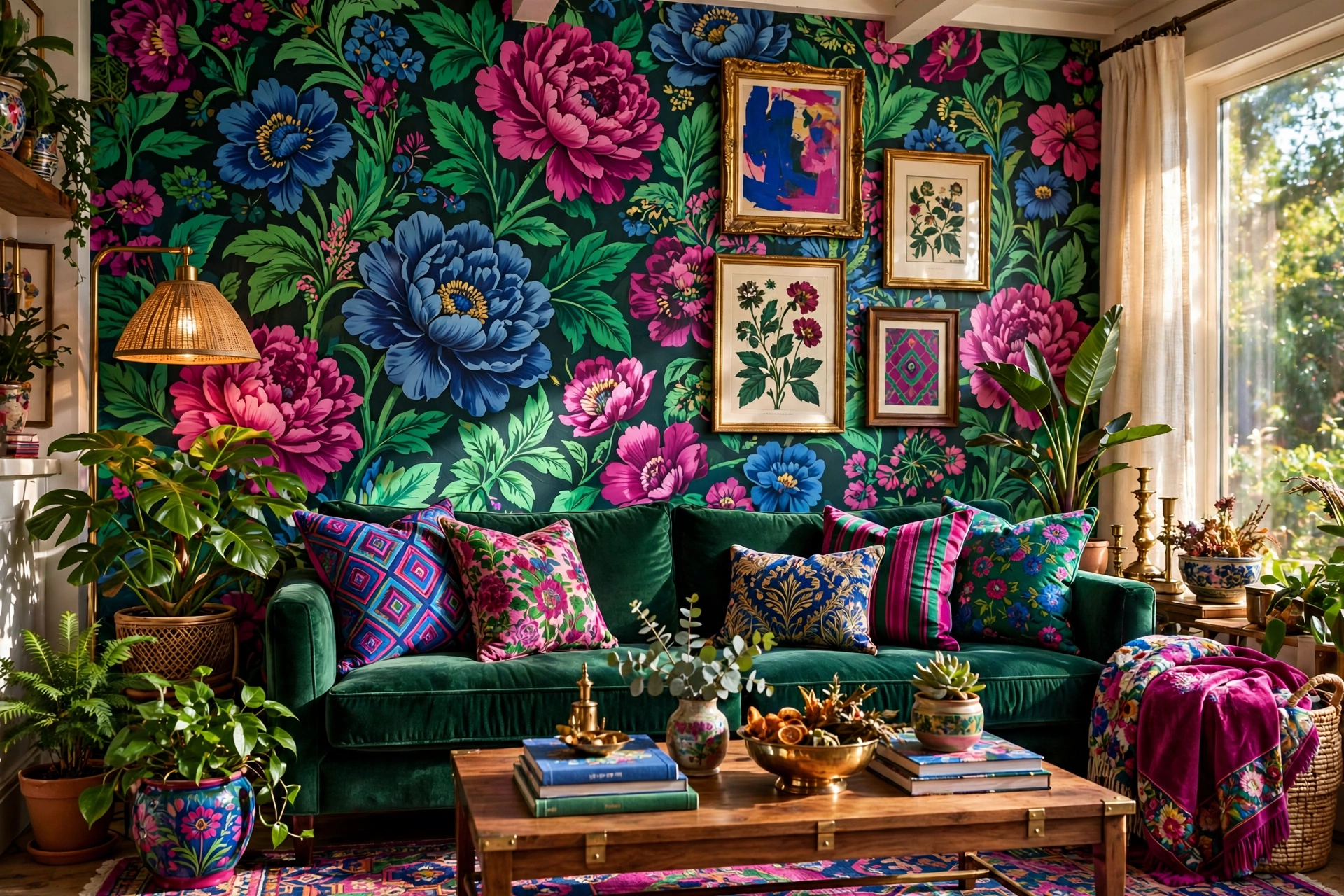
Maximalist interior design is a style built on intentional layering: bold colour, mixed patterns, varied textures and personal objects, arranged so the room feels collected and expressive rather than empty. Where minimalism edits a room down to a few quiet pieces, maximalism lets a room tell a story through everything in it — art, books, textiles, plants and, very often, wallpaper.
What is a maximalist?
In design terms, a maximalist is simply someone who prefers abundance to restraint: more colour, more pattern, more texture, more personality on display. That does not mean keeping everything you own on show. Good maximalism is curated. Each piece earns its place because it adds colour, memory or contrast — a vintage print, a jewel-toned cushion, a patterned rug — rather than because it happened to be available.
What is the opposite of minimalist?
Maximalist is the direct opposite of minimalist in interior design. Minimalism favours neutral colours, clean lines, empty surfaces and very few objects. Maximalism favours saturated colour, layered patterns, filled shelves and gallery-style walls. The two styles are not enemies, though. Many real homes sit somewhere between them, and a single maximalist wallpaper wall can work beautifully in an otherwise calm room.
What Counts as Maximalist Wallpaper?
Maximalist wallpaper is any wallpaper whose pattern, colour or scale is bold enough to lead a room. It is not defined by one print. It is defined by impact: oversized motifs, high-contrast colour combinations, dense repeats, or a full mural scene. A pale, small-scale stripe is not maximalist wallpaper. A wall of oversized banana leaves in deep green and blush pink is.
Common maximalist wallpaper patterns include:
| Pattern | Feel | Best rooms |
|---|---|---|
| Oversized botanical / floral | Lush, romantic, dramatic | Living room, bedroom, dining room |
| Tropical / jungle | Energetic, holiday-like, bold | Bathroom, hallway, home office |
| Geometric / art deco | Structured, glamorous, graphic | Living room, entryway, bedroom |
| Damask / baroque | Classic, luxurious, ornate | Dining room, bedroom, formal living room |
| Abstract / mural | Artistic, modern, one-of-a-kind | Living room feature wall, home office |
| Animal / chinoiserie-style | Playful, collected, eclectic | Powder room, guest bedroom, hallway |
The pattern you choose sets the room’s mood before anything else goes in. A dark, moody damask reads formal and cosy. A bright tropical print reads energetic and fun. Start from the mood you want, not from the print that merely looks exciting on a small sample — large prints behave very differently at full-wall size.
Maximalist Wallpaper Room by Room
Living room
The living room is the classic maximalist wallpaper room, because it can carry a full feature wall behind a sofa or fireplace. Anchor the wall with solid-coloured furniture in one of the wallpaper’s colours, then add patterned cushions in a smaller scale. If the wallpaper is very busy, keep the rug and curtains comparatively plain so the eye has somewhere to rest.
Bedroom
In a bedroom, maximalist wallpaper usually works best behind the bed as a headboard wall. A large botanical or damask print adds drama without surrounding you on all sides while you sleep. Pair it with plain bedding in a colour pulled from the print, and repeat that colour once more — in a throw, a lamp or a piece of art — so the room feels planned.
Bathroom and powder room
Small bathrooms and powder rooms are ideal first experiments. They are used briefly, they have little wall space, and a bold print turns an overlooked room into a talking point. Tropical, geometric and small-scale floral prints all work well here. If the room is damp, check that your chosen wallpaper type suits bathroom use, and favour peel-and-stick or vinyl options that cope better with moisture than plain paper.
Hallway and entryway
Hallways are often the plainest rooms in a home, which makes them perfect for maximalist wallpaper. A bold print in a hallway creates an immediate first impression, and because you pass through rather than sit in it, even a very loud pattern rarely becomes tiring. This is also a good place to try wallpapering a ceiling or a stairwell wall for an unexpected effect.
The ceiling
Wallpapering a ceiling is one of the most striking maximalist moves, and it is often overlooked. A patterned ceiling draws the eye upward and can make a plain room feel finished. It suits dining rooms and bedrooms particularly well. It is a bigger job than a single wall, so it is best saved for a second project, once you know you enjoy living with the pattern.
Is Maximalist Wallpaper Good for a Small Room?
Yes — with one condition: use it as a statement, not as a blanket. In a small room, one bold wallpapered wall can add depth and personality without closing the space in. Papering all four walls in a very large, dark print can make a tiny room feel smaller, so small rooms reward restraint in placement, not in pattern.
Tips that help maximalist wallpaper work in small rooms:
- Choose one feature wall, usually the wall you see first when you enter.
- Match the pattern scale to the room: medium-scale prints are often safer than huge motifs in a very small space, though a single large motif on one wall can still work.
- Keep larger furniture in solid colours drawn from the wallpaper.
- Use mirrors and good lighting so the pattern reads as decoration, not as darkness.
- Leave some breathing space: a clear surface, a plain curtain or an unpatterned stretch of wall helps the bold wall shine.
How to Mix Patterns Without Chaos
Mixing patterns is where maximalist rooms succeed or fail. The rule is simple: vary the scale, share the colour.
- Pick one anchor pattern. Usually, this is your maximalist wallpaper. It is the largest, boldest print in the room.
- Add a medium pattern. This could be a geometric cushion, a striped throw or a patterned rug, in a print roughly half the scale of the wallpaper.
- Add a small pattern. A small floral, dot or texture on a cushion or curtain adds detail without competing.
- Hold them together with colour. At least one colour should repeat across all three patterns. If the wallpaper is emerald, sapphire and magenta, pick cushions that echo emerald or sapphire, not an unrelated new colour.
- Give the eye a rest. Solid colours, plain wood and empty surfaces are part of the design. A room with no plain areas feels noisy; a room with one or two plain areas feels curated.
A useful limit is three patterns in a room. More than that can work, but only when the colour palette is very tight. If you are starting out, three patterns plus solids is a reliable formula.
Peel-and-Stick vs Traditional Wallpaper
| Peel-and-stick wallpaper | Traditional (paste) wallpaper | |
|---|---|---|
| Installation | Peel off backing, smooth onto wall, repositionable | Paste the wall or paper, then hang; needs more skill |
| Removal | Peels off, usually without damage if the wall was sound | Needs steaming or stripping; more work and mess |
| Best for | Renters, first-timers, small rooms, experiments | Long-term rooms, heavyweight papers, whole-room jobs |
| Pattern range | Very wide, including bold maximalist prints | Very wide, including premium textures like grasscloth |
| Risk | Poor adhesion on textured or dusty walls; test first | Harder to correct mistakes once pasted |
For a first maximalist wallpaper project, peel-and-stick is usually the smarter choice. It lets you live with a bold pattern, move it if the alignment is wrong, and remove it when your taste changes — all without hiring an installer or damaging the wall beneath.
How to Apply Peel-and-Stick Wallpaper
You do not need professional tools, but you do need patience and a clean wall. Work slowly, one panel at a time.
- Clean the wall and let it dry completely. Dust, grease and texture all weaken adhesion.
- Measure the wall height and cut the first panel slightly longer than needed, so you can trim the excess at the top and bottom.
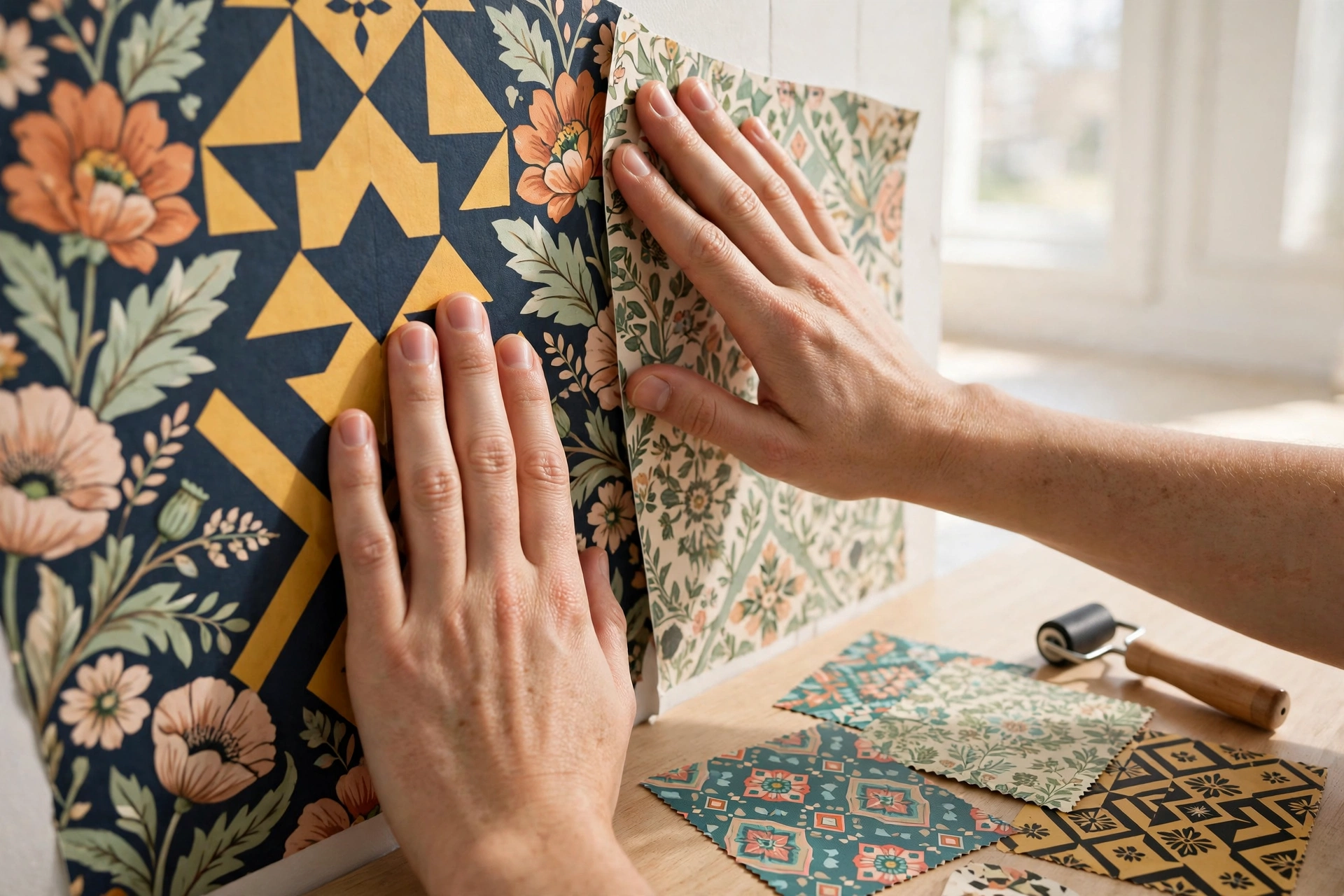
- Start at a corner or a straight edge, peel back a short section of backing, and press the top of the panel into place.
- Smooth downward slowly with a plastic smoother or a dry cloth, peeling more backing as you go. Work out air bubbles as you move, rather than trying to fix them all at the end.
- Match the next panel to the pattern repeat before sticking it down. This is the step people rush — and the step that makes the wall look professional.
- Trim the excess at the ceiling and skirting with a sharp blade and a straight edge.
- Step back and check the seams in daylight. Small misalignments are much easier to fix on peel-and-stick than on pasted paper, because you can lift and reposition a panel.
How Much Wallpaper Do I Need?
Measure first, order second. For each wall, measure its width and height, multiply them for the wall area, and repeat for every wall you plan to paper. Then allow for the pattern repeat: because each strip must align with the last, you will waste some paper at the top and bottom of each strip, especially with large repeats.
The practical rules are:
- Always add at least one extra roll beyond your calculation, for pattern matching, trimming and future repairs.
- Order all rolls from the same batch where possible, so the colour matches exactly.
- If you are papering a single feature wall, measure that wall only — do not guess from the room size.
- Keep one offcut after the job. It is invaluable if a panel is later scratched or stained.
Running out mid-wall is the most common and most avoidable maximalist wallpaper mistake. A spare roll costs far less than a half-finished wall.
Can Renters Use Maximalist Wallpaper?
Yes, in most cases — peel-and-stick wallpaper was made for renters. It is designed to be removed without damaging a sound, painted wall, which is why it suits rented homes, student rooms and anyone who redecorates often. Before you start, though, take three precautions:
- Check your lease. Some leases forbid any wall covering, even removable ones. A quick message to your landlord avoids a deposit dispute later.
- Test a patch. Stick a small piece in a hidden corner, leave it for a few days, then peel it off. If paint lifts, the wall surface is not suitable, and you have learned that cheaply.
- Prepare the wall. Clean, dry, smooth paint holds peel-and-stick best. Fresh paint needs time to cure first — follow the wallpaper maker’s guidance rather than guessing.
When you move out, peel slowly from a corner, at a low angle, and clean any light residue with a damp cloth. Good-quality removable wallpaper should leave the wall ready for the next tenant.
Common Maximalist Wallpaper Mistakes to Avoid
- Papering every wall in a large, dark print on your first try. Start with one wall or one small room.
- Choosing from a tiny sample alone. Order a large sample and look at it in daylight and lamplight before committing.
- Adding a new colour with every accessory. Repeat the wallpaper’s colours instead of introducing unrelated ones.
- Ignoring pattern scale. Pair a large wallpaper print with medium and small prints, not with another equally large print.
- Skipping the extra roll. Pattern matching always uses more paper than a plain calculation suggests.
- Forgetting breathing space. Solid furniture, plain curtains and clear surfaces are what make a bold wall look intentional rather than chaotic.
Frequently Asked Questions
Does maximalist mean cluttered? No. Maximalism means layered and expressive, but the best maximalist rooms are curated: every object has a reason to be there, and plain areas give the bold pieces room to breathe. Clutter is accumulation without a plan; maximalism is abundance with one.
Can maximalist wallpaper work with minimalist furniture? Yes, and it often works beautifully. A bold wallpaper wall behind a simple sofa or a clean-lined bed is a classic combination: the wall supplies the personality, the furniture supplies the calm. For more on the minimalist side of the balance, see our guides to minimalist furniture and becoming a minimalist.
Is maximalist wallpaper going out of style? Maximalism comes in and out of fashion as a trend, but patterned walls themselves are a long-standing design choice, not a single-season fad. Choosing a pattern you genuinely like — rather than the loudest print available — is the best protection against regretting it in a year.
What if I get tired of a bold pattern? That is exactly where peel-and-stick wallpaper earns its keep. You can remove it, swap it for a calmer print, or keep it on one small wall where it is easy to change. Starting small is the safest way to find out how much boldness you enjoy living with.
Conclusion
Maximalist wallpaper is the fastest way to give a room a personality: one bold wall, one anchor pattern, and a colour palette repeated through the rest of the space. Start with a feature wall or a small room, mix patterns by scale rather than by volume, and choose peel-and-stick if you rent or want the freedom to change your mind. Done that way, “more is more” feels warm, collected and intentional — not chaotic.
For the opposite approach, read our guide to minimalist furniture. If you want to simplify the rest of your home first, our beginner’s guide to becoming a minimalist is a practical place to start.