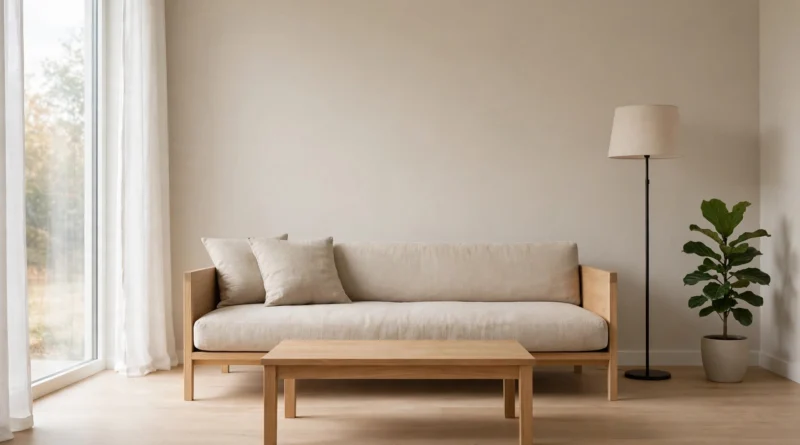
Minimalist Furniture: How to Choose Simple, Well-Made Pieces That Last
Direct Answer
Minimalist furniture is furniture chosen for function first and looks second: clean lines, simple shapes, a neutral palette, and no decoration that serves no purpose. A minimalist room does not have to be empty. It has fewer pieces, but each piece is well made, correctly sized for the room, and used every day. If a piece does not earn its place by being useful, comfortable, or genuinely loved, it does not belong in a minimalist home.
Key Takeaways
- Minimalist furniture means fewer, better pieces — not an empty room.
- Choose solid, durable materials and simple shapes that will still look right in ten years.
- Size matters more than style: measure the room, the doorways, and the walkways before you buy.
- Multifunctional pieces — storage beds, extendable tables, nesting tables — are the easiest way to keep a small home calm.
- Warmth comes from natural materials and texture, not from adding more objects.
What Is Minimalist Furniture?
Minimalist furniture follows a simple rule: every piece should have a clear job. A sofa is for sitting comfortably. A table is for eating or working. A bed frame holds the mattress and, ideally, hides storage underneath. When a piece tries to do too much visually — carved details, mixed patterns, shiny finishes competing for attention — it stops feeling calm, even if it is expensive.
The look is usually easy to recognise. Silhouettes are straight or gently curved, never fussy. Colours stay neutral: white, cream, beige, grey, black, and natural wood tones, with at most one muted accent. Surfaces are mostly clear. Storage is hidden behind closed doors rather than displayed on open shelves. None of this means a home must look like a showroom. A lived-in minimalist home still has books, blankets, and a favourite chair — they are just chosen on purpose and given a proper place.
Minimalism in furniture also has a practical side that is easy to overlook. Fewer pieces mean less dusting, fewer things to move when you clean, and fewer decisions every morning. That is a large part of why the style suits busy households and small homes so well: the room does less visual work, so the people in it can relax.
Minimalist Furniture vs Maximalist Interior Design
The most common question people ask when they first meet this style is how it differs from maximalism. The two styles are often described as opposites, and in one sense they are: minimalism finds calm through restraint, while maximalism finds energy through abundance. But both need control to work. A minimalist room fails when it feels unfinished; a maximalist room fails when it feels crowded.
| Aspect | Minimalist furniture | Maximalist interior design |
|---|---|---|
| Main idea | Fewer, carefully chosen pieces | More layers with a clear connection |
| Colour | Neutral, earthy, or tonal | Bold, deep, or contrasting |
| Furniture | Simple silhouettes, hidden storage | Statement shapes, mixed eras |
| Pattern | Used sparingly, if at all | Used across fabrics, art, and surfaces |
| Best quality | Calm and clarity | Character and richness |
| Main risk | Looking cold or unfinished | Looking overcrowded |
Most real homes sit somewhere between the two. A minimalist base — a plain sofa, a simple table, closed storage — with one or two personal, expressive pieces on top is often the most liveable version of either style. You do not have to choose a label and follow it strictly; borrow the minimalist rule of quality over quantity, and keep only the maximalist touches you truly enjoy.
The Traits That Make a Piece Genuinely Minimalist
Not everything sold as "minimalist" deserves the name. A cheap white box with thin panels and wobbly legs is not minimalist furniture; it is just plain furniture that will not last. Use these five checks before you buy.
First, look at the shape. Clean, uninterrupted lines and a single material or two, used consistently, are good signs. Second, check the function. Can you explain in one sentence what the piece does, and does it do that job well? Third, check the build. Solid wood frames, well-joined corners, and sturdy legs outlast flat-pack pieces with thin fixings. Fourth, check the finish. Matte and natural finishes age more gracefully than high gloss, which shows every scratch. Fifth, ask whether the piece will still suit your home in five years. Timeless shapes do; novelty shapes date quickly.
Best Materials for Minimalist Furniture
Materials do most of the work in a minimalist room, because there is so little decoration to hide behind. Natural materials are the safest choice: they add texture and warmth without adding visual noise, and they usually age better than synthetic lookalikes.
Solid wood — oak, ash, walnut, and beech are the usual choices — is the backbone of minimalist furniture. Its grain gives a plain table or bed frame character without any carving or pattern. For upholstery, natural fibres such as linen and cotton feel soft and breathe well, while leather, if you choose it, should be a simple, well-made piece that improves with use rather than peeling after a year. Metal appears mainly as slim legs and frames in black or brushed finishes; it keeps pieces looking light and gives them strength without bulk. Bamboo and rattan can work too, especially for lighter pieces, as long as the shape stays simple.
Sustainable choices fit naturally here. Buying one solid, repairable piece instead of three disposable ones is both the minimalist and the environmentally sensible move. Reclaimed wood, responsibly sourced timber, and recycled metals are worth asking about, but check the construction first — a sustainable label does not rescue a weak frame.

For a room-by-room example, see this guide to picking furniture for a minimalist bedroom.
Minimalist Furniture by Room
You do not need to furnish a whole home at once. Start with the room you use most, and buy its anchor piece first — the sofa in the living room, the bed in the bedroom, the table where you eat. Everything else should support that piece, not compete with it.
| Room | Essential minimalist pieces | Optional additions | Avoid |
|---|---|---|---|
| Living room | Low-profile sofa, simple coffee table, closed media storage | One lounge chair, slim side table | Matching sets of decorative side furniture |
| Bedroom | Platform bed frame, one nightstand, wardrobe with closed doors | Under-bed storage, floating shelf | Bulky headboards and multiple dressers |
| Dining area | Solid table sized for daily use, comfortable chairs | Bench against a wall, extendable leaf for guests | Oversized table that blocks walkways |
| Home office | Plain desk, supportive chair, closed storage | Wall-mounted shelf | Extra chairs and open clutter shelves |
In the bedroom, the same principles apply in smaller form: a platform bed keeps sight lines clean because it needs no box spring, a light wood frame adds warmth without pattern, and a single well-made dresser beats three cheaper ones that never quite match. Choose bedding in solid, muted tones and let texture — linen, cotton, wool — do the decorating.
Is Minimalist Furniture Suitable for Small Apartments?
Yes — small apartments are where minimalist furniture works hardest. A small room punishes every oversized or unnecessary piece, while a few correctly sized pieces can make the same room feel open. Multifunctional furniture is the key: a storage bed hides bedding and seasonal clothes, an extendable dining table seats two on weekdays and six when friends visit, nesting tables tuck away until they are needed, and a storage ottoman works as a seat, a footrest, and a box for blankets.
Scale is the skill that matters most here. Measure the room before you shop, measure the doorways and stairwells the piece must travel through, and leave clear walkways around every large item. A sofa that looks modest in a showroom can dominate a small living room, and a tall wardrobe can swallow a bedroom. When in doubt, choose the smaller option: a room with breathing space around its furniture always feels larger than a room filled wall to wall.
For more on small homes, see our guide to organising small rooms and the step-by-step approach to living with less.
How to Choose the Right Size
Start with the room, not the catalogue. Sketch the floor plan, even roughly, and mark doors, windows, radiators, and plug sockets. Then apply three simple tests. First, the walkway test: can two people pass comfortably, and can every door and drawer open fully? Second, the proportion test: does the largest piece suit the room, or does it crowd everything else? A long sofa in a short room, or a huge table in a narrow dining area, will always feel wrong however beautiful it is. Third, the daily-use test: picture an ordinary Tuesday, not a dinner party. If the table is too big for everyday meals or the sofa too deep to sit on comfortably, it is the wrong piece.
Height matters as much as width. Low-profile sofas and beds keep a room feeling open because they leave more wall visible above them. Slim legs, rather than solid bases that run to the floor, let light and floor show underneath and make a piece look lighter. These are small details, but in a room with few objects, small details carry the whole look.
How to Keep a Minimalist Room From Feeling Cold
The most common complaint about minimalist rooms is that they feel cold or bare. The fix is almost never to add more furniture. It is to add warmth through materials and texture. A wool throw over a plain sofa, a linen cushion in a muted tone, a wooden bowl on a table, and a plant by the window can transform a stark room without adding clutter. Warm lighting helps too: soft, warm-white light in the evening feels inviting where harsh white light feels clinical.
Colour is your other tool. Keep the large pieces neutral, then use one muted accent — sage, terracotta, olive, or dusty blue — in small, repeatable touches: a cushion, a throw, a single piece of art. Repeating the same accent twice or three times ties the room together; scattering many different colours breaks the calm you were trying to create.
See also this comparison of minimalist vs maximalist styles.
Mistakes to Avoid
The first mistake is buying a matching set. Sets look tidy in a showroom and flat in a real home, because every piece is the same wood, the same finish, and the same shape. Mix finishes within one calm palette instead: a light oak table with darker chairs, or a fabric sofa with a wooden side table.
The second mistake is choosing style over comfort. A sofa you cannot sit on for an hour, or a chair that hurts your back, will be replaced quickly — which is the opposite of minimalist thinking. Sit on it, lie on it, and open every drawer before you commit.
The third mistake is filling the space you just cleared. An empty corner is not a problem to solve. Leave it empty until you find a piece that genuinely earns the spot. Minimalist homes improve slowly, one good decision at a time, and a half-finished room with good pieces beats a finished room full of compromises.
Caring for Minimalist Furniture
Good minimalist furniture is an investment, and simple care protects it. Dust wood with a soft, dry cloth and wipe spills promptly rather than letting them soak in. Keep solid wood out of constant direct sunlight, which fades and dries it, and away from radiators for the same reason. Wash linen and cotton covers according to their labels, and treat leather occasionally with a conditioner made for it. Tighten legs and fixings once or twice a year — a wobble caught early is a five-minute fix, while a wobble ignored becomes a broken joint.
FAQ
Is minimalist furniture comfortable? Yes, when it is chosen for comfort as well as looks. A well-made minimalist sofa with good cushioning and proper seat depth is as comfortable as any other sofa; the style is about removing decoration, not removing comfort. Always sit on a piece before buying it.
Is minimalist furniture expensive? It can cost more per piece, because solid materials and good joinery cost more than thin panels and shortcuts. But a minimalist home usually needs fewer pieces, and good pieces last far longer, so the total cost over ten years is often lower than repeatedly replacing cheap furniture.
Does minimalist furniture suit families with children or pets? Yes, with sensible material choices. Washable linen or cotton covers, solid wood that can be sanded and refinished, and rounded rather than sharp corners all help. Choose darker muted tones for the most-used pieces if stains are a real concern, and keep fragile items out of the main play areas.
Can I mix minimalist furniture with pieces I already own? Yes. Keep your best-loved existing pieces and let the minimalist ones set the tone. A single inherited wooden table or a favourite armchair can anchor a room beautifully, as long as the overall palette stays calm and every piece has room to breathe.
Conclusion
Minimalist furniture is not about owning as little as possible. It is about owning pieces that work hard, last long, and let the room breathe. Start with one anchor piece in the room you use most, choose natural materials and a calm palette, size everything to the room rather than the showroom, and add warmth through texture instead of objects. Done that way, a minimalist home feels not empty, but calm, comfortable, and easy to live in — which is the whole point.
For the opposite, maximalist approach, see our guide to maximalist wallpaper.