Soup Season: When It Starts, the Best Soups to Make, and How to Store Them
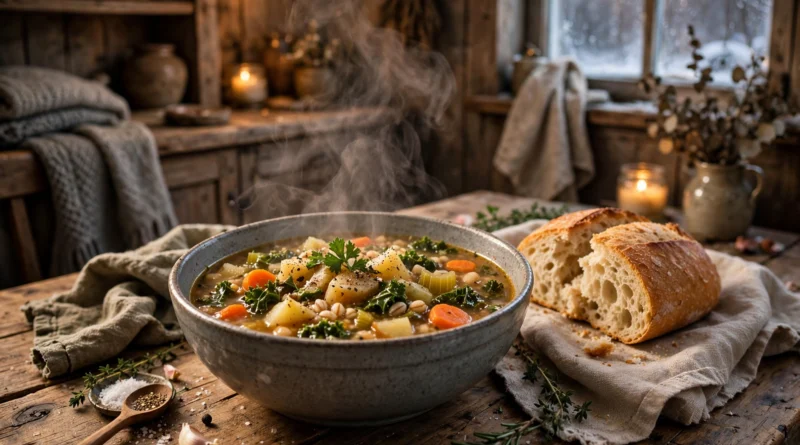
Soup season is the cold-weather stretch from fall through winter when warm, filling soups move from an occasional meal to a regular part of weekly cooking. In the United States, soup buying typically picks up in late September to early November depending on the state, and peaks around Thanksgiving and through the coldest months. The simplest way to enjoy soup season is to keep one brothy soup, one hearty bean or lentil soup, and one slow-cooker soup in rotation, serve them with bread or a crisp side, and store leftovers safely: 3 to 4 days in the fridge, or 2 to 3 months in the freezer for best quality.
Key Takeaways
- Soup season generally runs from fall into winter, with US soup buying rising from late September and peaking around Thanksgiving.
- The best soup-season plan is a small rotation, not a new recipe every night: one brothy, one hearty, one slow-cooker soup.
- Chicken noodle soup pairs best with crusty bread, crackers, or a light salad — something with crunch that does not overpower the broth.
- Leftover soup keeps 3 to 4 days in the fridge at 40°F or below, and should be reheated to 165°F (a rolling boil for soups, sauces and gravies).
- Freeze soup in flat, portion-sized containers, and keep noodles, rice, and dairy out of the batch you freeze when you can.
What Is Soup Season?
Soup season is not an official date on a calendar. It is the name cooks and shoppers give to the months when soup becomes the obvious dinner: temperatures fall, daylight shortens, and a hot bowl feels more satisfying than a cold salad. In practical terms, most households enter soup season in fall, cook soup most often in winter, and taper off as spring vegetables and warmer weather arrive. That seasonal rhythm also matches what is in season. Root vegetables, squash, cabbage, dried beans, and lentils — the backbone of many winter soups — are at their best and cheapest in the colder months, and they store well. A pot of soup also stretches ingredients further than many other dinners, which is part of why it suits busy winter weeks.
When Does Soup Season Start?
When does soup season start? It depends on where you live. A 2025 Instacart analysis, which tracked when each state’s bowl-soup buying rose at least 20% above its yearly average and stayed there for two weeks, found Idaho first, on September 29, followed by Utah on October 2 and Montana on October 3. Most Midwest and Northeast states reached that point between October 24 and November 2, as did the United States as a whole on November 2. The last states were Arizona and Texas, on November 7. In other words, there is no single national start date — but if you are planning a soup-season rotation, late September in the Mountain West and late October to early November elsewhere is a realistic guide. Thanksgiving week is a clear peak: cooking soups such as cream of mushroom, cream of chicken, broth and stock all surge in the week of November 17 or 24 in that same data. For your own kitchen, a simpler trigger works just as well: when you start reaching for a sweater in the evening and want something hot for dinner more nights than not, soup season has started for you.
When Does Soup Season End?
Soup season fades rather than ends. Light, vegetable-based soups carry well into spring — asparagus, pea, and carrot soups suit that season — and chilled soups such as gazpacho take over in summer. The hearty, slow-simmered end of soup season usually winds down when consistently warm weather returns and fresh summer produce arrives. There is no rule against soup in summer; the season simply describes when most people cook it most.
The Best Soups for Soup Season
The best soup-season lineup covers different moods and schedules, so you do not get bored by the third week. Think in types, not in a single recipe list.
| Soup type | Best for | Examples |
|---|---|---|
| Brothy and comforting | Weeknights, colds, light dinners | Chicken noodle, vegetable, miso, tomato |
| Hearty and filling | A full dinner with bread | Beef stew-style soup, lentil, bean, minestrone, potato |
| Creamy and rich | Weekend cooking, guests | Chowder, creamy tomato, butternut squash, cream of mushroom |
| Slow-cooker | Hands-off days | Chicken, beef stew, bean and lentil soups (see our slow-cooker guides linked below) |
| International | Variety without new skills | Thai tom kha gai, Mexican pozole, Moroccan harira, Japanese miso, Eastern European borscht |
A good starting rotation is: chicken noodle soup on a busy night, a lentil or bean soup midweek, and a slow-cooker soup on the weekend that also covers lunches. If you already have slow-cooker favourites, this guide is the seasonal frame around them — our detailed slow-cooker chicken recipes and slow-cooker crockpot meals posts cover those recipes in full, rather than repeating them here.
How to Use a Slow Cooker for Soup Season
How do you use a slow cooker for soup? The short version: add your ingredients, cook on Low for 6 to 8 hours or High for 3 to 4 hours, and add anything quick-cooking — pasta, rice, or dairy — near the end so it does not turn mushy or split. That is also why slow cookers suit soup season so well: a soup can cook while you work, and the long, gentle heat suits beans, lentils, and tougher cuts.
- Thaw meat and poultry before it goes in — never cook frozen meat in a slow cooker, because it spends too long in the danger zone between 40°F and 140°F.
- Keep the lid on. Every lift adds cooking time.
- Add noodles, rice, and pasta in the last 20 to 30 minutes, and dairy at the very end.
- Do not reheat leftovers in the slow cooker. Reheat on the stove or in the microwave to 165°F, then keep hot food at 140°F or above if it must stand.
For full recipes, see our slow-cooker chicken recipes and slow-cooker crockpot meals posts.
How Do You Thicken Soup?
How do you thicken beef stew in a slow cooker? The simplest reliable method is a cornstarch slurry: mix 1 tablespoon of cornstarch with 2 tablespoons of cold water, stir it in during the last 30 minutes, and let it simmer until the soup thickens. A flour-and-butter roux, mashed potatoes or beans stirred back into the pot, or simply simmering with the lid off to reduce the liquid all work too. Choose the method that fits the soup: a slurry keeps a brothy soup clear, while blended beans suit a rustic bean or lentil soup. Add thickener gradually — you can always add more, but you cannot easily thin a soup that has gone gluey without watering down its flavour.
What to Eat With Chicken Noodle Soup
What to eat with chicken noodle soup? The best sides give you crunch, something to dip, or a fresh contrast — without turning a light soup into a heavy meal. The same answer covers the related search, what goes good with chicken noodle soup.
- Crusty bread or rolls — the classic. Sourdough, a baguette, or soft dinner rolls soak up broth without falling apart.
- Crackers — saltines or oyster crackers for a quick, light lunch.
- Grilled cheese — the favourite soup-and-sandwich duo, best when the soup is the lighter half of the meal.
- A simple green salad — mixed leaves with a tangy vinaigrette cut through a rich broth.
- Roasted vegetables — carrots, sweet potatoes, or green beans add colour and substance without competing with the soup.
- Fresh herbs — parsley, dill, or thyme sprinkled on top brighten the whole bowl at no extra cooking cost.
What to avoid: a second starchy main, such as a large portion of pasta or mashed potatoes alongside noodle soup, which turns the meal heavy and muddles the broth. Keep the side simple and let the soup stay the star.
How Long Is Soup Good in the Fridge?
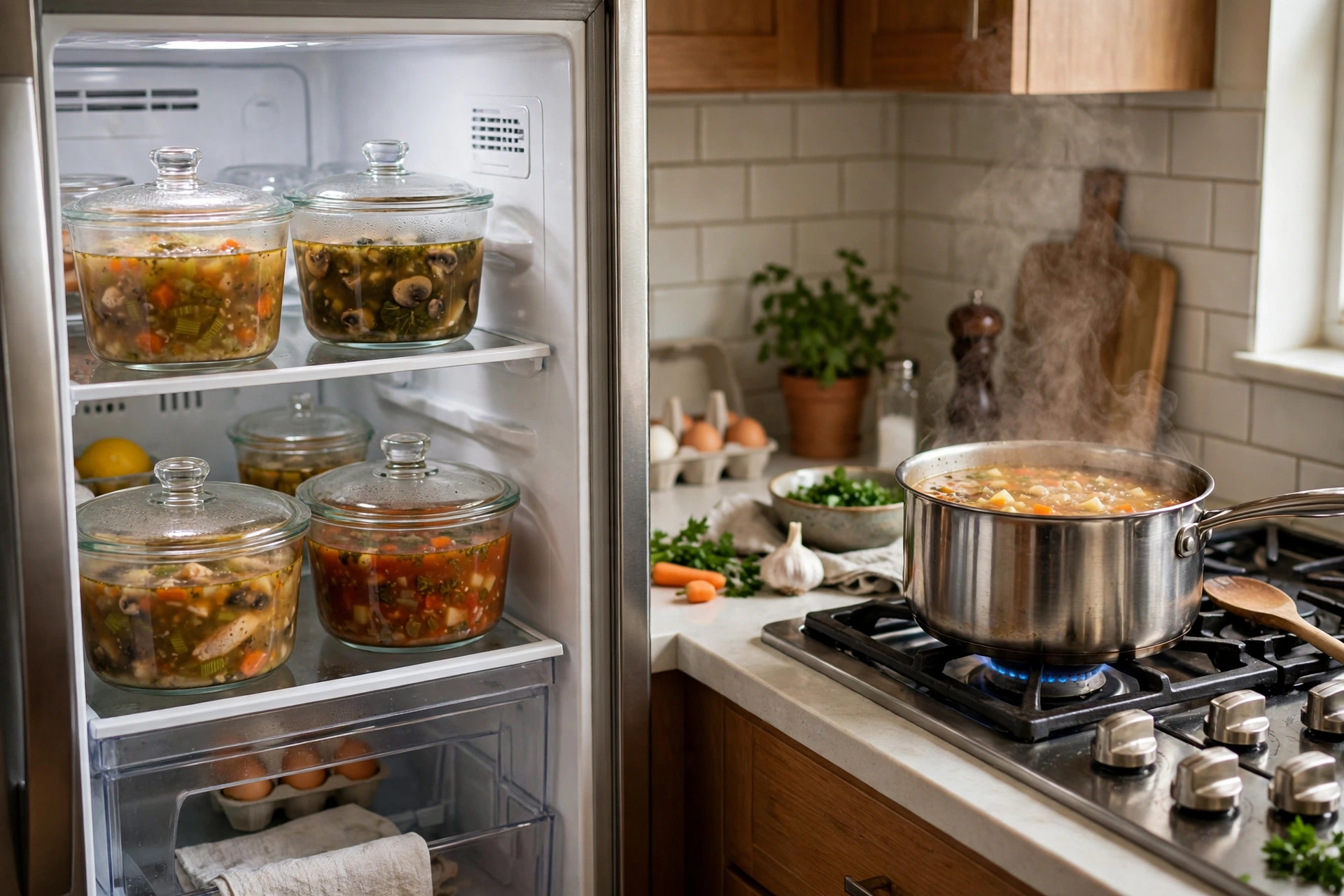
How long is chicken soup good in the fridge? Like most cooked leftovers, soup and stew keep 3 to 4 days in the refrigerator at 40°F or below, according to USDA FoodSafety.gov guidance. That 3-to-4-day rule is the headline answer for chicken soup too — do not stretch it to a full week because it still smells fine, since bacteria you cannot detect can grow in that time.
Practical storage rules, from the same USDA guidance:
- Refrigerate within 2 hours of cooking (1 hour if food has been above 90°F).
- Divide a big pot into shallow containers so it cools quickly; do not leave the whole pot on the counter to cool.
- Keep the fridge at 40°F or below and the freezer at 0°F or below.
- Reheat leftovers to at least 165°F before serving. For soups, sauces and gravies, that means bringing them to a rolling boil.
- When in doubt, throw it out — reheating does not make food that has been left out too long safe.
Cream-based soups and seafood soups are the exceptions to treat more strictly: use cream soups sooner within that window, and seafood soups within about 2 days, because dairy and seafood spoil faster. If a soup smells sour, looks slimy, or shows mould, discard it; do not taste-test it.
Can You Freeze Soup?
Can you freeze beef stew? Yes — and soup in general freezes very well, which is what makes a big soup-season batch worth cooking. Soups and stews keep 2 to 3 months in the freezer for best quality (food kept continuously at 0°F stays safe indefinitely, but flavour and texture fade over time).
- Cool it quickly in shallow containers, then portion it into the servings you will actually reheat.
- Leave headspace for expansion, and label each container with the soup name and date.
- Freeze broth-based soups as-is. For soups with noodles, rice, or pasta, freeze the base without them and add fresh noodles or rice when you reheat, so they do not go mushy.
- For cream soups, freeze before adding the dairy when you can, and stir the cream in after reheating — dairy can separate on thawing.
- Thaw in the fridge, in cold water, or in the microwave — not on the counter — and bring the reheated soup to a rolling boil.
This is also the answer to the related question, can you freeze a beef stew: yes, in portions, for 2 to 3 months for best quality, reheated to 165°F.
A Simple Soup Season Weekly Plan
You do not need seven soup recipes. You need a plan you will actually repeat:
- Monday: Brothy soup — chicken noodle or vegetable, with bread.
- Wednesday: Hearty soup — lentil, bean, or minestrone, with a salad.
- Weekend: Slow-cooker soup — a big batch that also covers one or two lunches.
- Freezer: One portion from every big batch, labelled, so a busy week still has a homemade soup ready.
Checklist before you cook: broth or stock on hand, one root vegetable, one can of beans or lentils, an onion, carrots and celery, bread or crackers for serving, and containers for leftovers. With that pantry, soup season never needs a special shopping trip.
FAQ
Q: When is soup season?
A: Soup season runs from fall through winter. In the US, soup buying typically rises from late September to early November depending on the state, and peaks around Thanksgiving and the coldest months.
Q: What are the best soups for winter?
A: Chicken noodle, lentil, bean, minestrone, beef stew-style soup, potato soup, and creamy squash or chowder are the winter staples. A rotation of one brothy, one hearty, and one slow-cooker soup covers most weeks.
Q: How long does soup last in the fridge?
A: 3 to 4 days at 40°F or below. Reheat to 165°F (a rolling boil for soup), and discard anything left at room temperature for more than 2 hours.
Q: Can I freeze chicken noodle soup?
A: Yes. Freeze the broth, chicken, and vegetables without the noodles for the best texture, and add freshly cooked noodles when you reheat. Use within 2 to 3 months for best quality.
Q: Is soup healthy?
A: It can be — brothy, vegetable- and bean-based soups are naturally filling and hydrating. Watch the salt in prepared broths and the cream in rich soups if you eat them often; a homemade broth and plenty of vegetables keep a soup on the lighter side. This is general nutrition information, not personal medical advice.
Conclusion
Soup season is less about a start date and more about a habit: a hot, filling, forgiving dinner that suits cold weather, busy weeks, and tight budgets. Start with the timing — fall into winter, peaking around Thanksgiving — build a small rotation of brothy, hearty, and slow-cooker soups, pair them simply with bread or a salad, and store what is left safely for 3 to 4 days in the fridge or a few months in the freezer. Cook one big pot this weekend, freeze a portion, and soup season will already be working for you.
For a baked one-dish alternative on cold nights, see our casserole recipes guide.
For a single serving of soup instead of a big pot, see our easy dinner recipes for one, including a chicken
noodle soup for one and how to freeze the rest in single portions.
For a lighter, lower-carb way to keep soup season satisfying, see our low carb meals guide for protein, vegetable and healthy-fat ideas.