Belize Location: Travel Guide, Tips & Highlights
Understanding the Belize location is the first step to planning a trip to one of the most surprising destinations in the Western Hemisphere. This small country sits where Central America meets the Caribbean Sea, packing tropical islands, ancient Maya cities, a world-famous barrier reef, and rainforest jungles into an area roughly the size of Massachusetts. Despite its tiny footprint, Belize blends Caribbean and Central American cultures in a way few destinations can match.
Whether you are planning your first visit or simply trying to place Belize on a map, this guide covers exactly where it is, what surrounds it, how to get there, and what to know before you go.
Key Takeaways
- Belize is in northern Central America, bordered by Mexico to the north, Guatemala to the west and south, and the Caribbean Sea to the east.
- It is the only English-speaking country in Central America, with a rich mix of Maya, Creole, Garifuna, Mestizo, and Mennonite cultures.
- The Belize Barrier Reef — a UNESCO World Heritage Site — runs nearly the full length of its coast, alongside Maya sites such as Caracol and Xunantunich.
- Most international visitors fly into Philip S. W. Goldson International Airport near Belize City, with direct connections from major North American hubs.

Where Exactly Is Belize Located?
Belize sits on the eastern coast of northern Central America, on the Yucatán Peninsula, at roughly 17 degrees north of the equator. Geographically it is part of North America, but culturally it bridges two worlds: Central America and the Caribbean — a dual identity that shapes its music, food, and travel style.
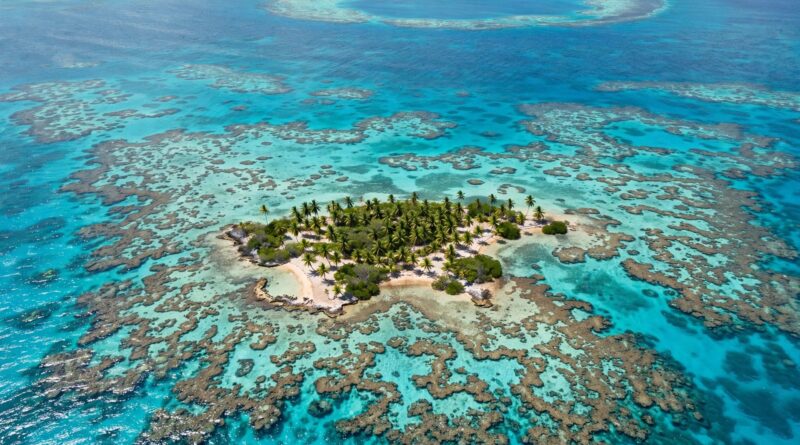
The Belize location map and borders tell the story clearly: Mexico lies to the north, Guatemala to the west and south, and the open Caribbean Sea to the east. Its coastline runs about 240 miles, lined with mangroves, lagoons, and sandy cayes, while offshore the barrier reef system stretches almost the entire length of the coast, dotted with hundreds of islands and the iconic Great Blue Hole.
For planning purposes, note that Belize uses Central Standard Time (UTC-6) all year round, with no daylight saving.
Belize on the Map: Borders and Neighbors
Belize shares land borders with Mexico (the state of Quintana Roo) to the north and Guatemala to the west and south, plus a maritime boundary with Honduras to the southeast, with regular boat services linking the southern coast to Puerto Cortés.
The country’s position makes it an ideal base for regional travel. It is roughly a two-hour flight from US gateways such as Miami, Houston, Dallas, and Atlanta, so it works well as a standalone trip or as part of a wider Central American or Caribbean itinerary. Travelers often pair it with neighboring regions — Nicaragua, another Central American destination, appeals to the same kind of traveler who enjoys colonial towns, volcanoes, and vibrant local culture.
Distances within Belize are short: you can breakfast in the mountains of the Cayo District, explore a Maya ruin by midday, and be snorkeling over the reef by late afternoon.
Geography and Landscape of Belize
Belize’s geography is remarkably varied. The northern coastal strip is low, flat, and swampy, with mangrove forests and lagoons. Inland and south, the land rises into the forested Maya Mountains and the Mountain Pine Ridge, where waterfalls, granite peaks, and pine forests feel far from the tropics.
More than half of the country is forested, and a large share is protected in national parks, wildlife sanctuaries, and marine reserves — which is why Belize punches above its weight for eco-tourism. Howler monkeys, toucans, and scarlet macaws inhabit the protected forests, while manatees, sea turtles, and reef sharks live in the marine reserves.
The offshore cayes — low sandy islands along the reef — range from tiny uninhabited sandbars to developed resort islands like Ambergris Caye and Caye Caulker. Further out, atolls such as Turneffe and Lighthouse Reef (home of the Great Blue Hole) are prized by divers.
Belize’s Main Regions and Destinations
Belize divides naturally into distinct areas. The Cayes and the Reef is the postcard Belize: snorkeling with nurse sharks and stingrays at Hol Chan Marine Reserve, diving the Great Blue Hole, or unwinding on the beach. Ambergris Caye is the most developed island; Caye Caulker is smaller, quieter, and famous for its laid-back “go slow” motto.
Western Belize (Cayo District) is the adventure and culture heartland. San Ignacio is the base for the great Maya cities of Caracol and Xunantunich, the Actun Tunichil Muknal cave with its ancient artifacts, and hiking in the Mountain Pine Ridge. Most of the country’s jungle lodges are here.
Southern Belize offers Garifuna culture in Dangriga and Hopkins, the beaches of the Placencia Peninsula, cacao farms and chocolate-making experiences, and the Cockscomb Basin Wildlife Sanctuary — a leading destination for learning about jaguar conservation.
Northern Belize is quieter and less visited, with the Lamanai Maya site (reached by river safari) and easy access across the border to Mexico’s Yucatán attractions. Belize City (the former capital, where most visitors arrive) and Belmopan (the small inland capital) serve mainly as transit hubs.
Getting to Belize: Flights and Entry Basics
Almost all international visitors arrive by air at Philip S. W. Goldson International Airport (BZE), about 10 miles from Belize City. Direct flights operate from several major US cities as well as Central American hubs, and short domestic flights connect onward to San Pedro (Ambergris Caye), Dangriga, Placencia, and Punta Gorda.
Overland entry is also possible from Mexico and Guatemala at the main border crossings. Travelers planning a multi-country trip should confirm current border procedures and fees, and make sure their travel documents allow re-entry to any country they leave and return to.
Visitors from the United States, Canada, the United Kingdom, and the European Union generally do not need a visa for short tourist stays, but entry rules can change — practical Belize travel and entry information should be checked with an official source before you book. Keep your passport, accommodation bookings, and onward travel details handy.
Best Time to Visit Belize
Belize has two main seasons. The dry season, roughly November through April, brings warm, sunny weather around 75–85°F (24–29°C) — ideal for diving, snorkeling, and exploring ruins. This is peak season, so expect higher accommodation prices and more visitors at popular sites.
The wet season, June through October or November, brings more rain — usually in short afternoon bursts rather than all-day downpours. The jungle is at its greenest, prices drop, crowds thin out, and wildlife viewing can be excellent. Hurricane season technically runs June through November, with September and October carrying the highest risk, though Belize has historically been spared the worst of many storms.
The shoulder months of May and November often offer the best of both worlds: decent weather, lower prices, and fewer crowds. If diving the reef is your priority, the dry season’s calmer seas and better visibility are hard to beat.
Practical Tips for Planning Your Belize Trip
Language is not a barrier. English is the official language — Belize is the only English-speaking country in Central America — so communicating with hotels, guides, and tour operators is straightforward. You will also hear Spanish, Kriol, and several Maya languages in daily life.
Money is simple. The local currency is the Belize dollar, pegged at two Belize dollars to one US dollar, and US dollars are widely accepted in tourist areas at the same rate. Credit cards work in most tourist-zone hotels and restaurants; carry cash for small towns, markets, and water-taxi fares.
Getting around is easy. Domestic flights save the most time; water taxis and ferries connect Belize City with the northern cayes; rental cars and shuttles cover the mainland. If you enjoy regional travel elsewhere in Central America, our San José travel guide has useful context on getting around another popular destination in the region.
Pack smart and stay safe. Reef-safe sunscreen, insect repellent, quick-dry clothing, a light rain jacket, and sturdy walking shoes cover nearly every activity. Normal travel precautions apply: avoid isolated areas at night, secure valuables, use licensed tour operators, and consider travel insurance that covers diving, snorkeling, and caving.
Frequently Asked Questions
What should you know about Belize location?
Belize is located in northern Central America on the Caribbean coast of the Yucatán Peninsula, bordered by Mexico to the north, Guatemala to the west and south, and the Caribbean Sea to the east. It is the only English-speaking country in Central America, uses Central Standard Time year-round with no daylight saving, and sits about a two-hour flight from major US gateway cities — making it one of the most accessible Caribbean destinations for North American travelers.
What are the key things to consider for Belize location?
Consider its dual Central American–Caribbean identity, which shapes both culture and the travel experience; its compact size, which lets you combine reef, jungle, and Maya ruins in a single trip; and its protected natural areas, which make eco-tourism the country’s strongest offering. Also consider the seasons: the dry season (November–April) suits diving and ruins, while the wet season (June–November) brings lower prices and lush landscapes. Most visitors arrive at the international airport near Belize City and connect onward by domestic flight, ferry, or road.
How can you make the most of Belize location?
Split your time between two worlds: part of the trip on the cayes and reef for snorkeling and diving, part inland in the Cayo District for Maya sites, caves, and jungle adventures. Use the short distances to your advantage — multi-region itineraries are easy without long travel days, and connections to Mexico, Guatemala, and Honduras make multi-country trips straightforward too. Allow at least a week to experience both the coast and the interior properly.
Conclusion
The Belize location — perched between Central America and the Caribbean, a short flight from North America — is exactly what makes this small country such a rewarding destination. Few places let you dive a world-class barrier reef in the morning and stand in an ancient Maya city by afternoon, yet Belize does exactly that, all while remaining easy to reach and navigate thanks to its English-speaking population and compact size.
Plan around the seasons, split your time between the reef and the interior, and respect the protected natural areas that make the country special. Do that, and Belize’s unique spot on the map will reward you with one of the most varied and memorable trips in the region.