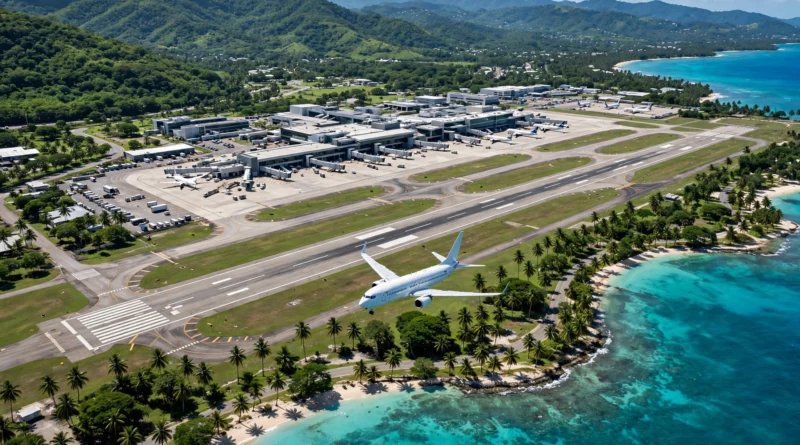
How Many Airports in Jamaica
If you are planning a trip to the island and wondering how many airports in Jamaica there are, you are asking one of the most practical travel questions there is. The airport you fly into decides how long your transfer to the beach takes, how many flight options you have, and sometimes even how much your airfare costs. The good news is that Jamaica’s airport network is small, well-organized, and easy to understand once you know how it is structured.
Jamaica has three international airports and three domestic aerodromes, all overseen by the Airports Authority of Jamaica (AAJ). Together they form a six-facility public aviation network that connects the island to the world and links its own coastlines to each other. In this guide, we break down each facility, explain what the total number really means for travelers, and help you choose the right arrival airport for your trip.
Key Takeaways
- Jamaica has 3 international airports: Sangster International in Montego Bay (MBJ), Norman Manley International in Kingston (KIN), and Ian Fleming International near Ocho Rios (OCJ).
- There are 3 domestic aerodromes: Tinson Pen in Kingston (KTP), Negril (NEG), and Ken Jones in Port Antonio (POT), used for local hops, charters, and general aviation.
- Sangster International handles more than 70% of the island’s tourist arrivals and is the default airport for most vacation travelers heading to the north coast.
- Fly into the airport closest to your accommodation: Montego Bay for the north and west coast, Kingston for the capital and east, and consider Ian Fleming for the Ocho Rios area.
The Quick Answer: Six Public Facilities
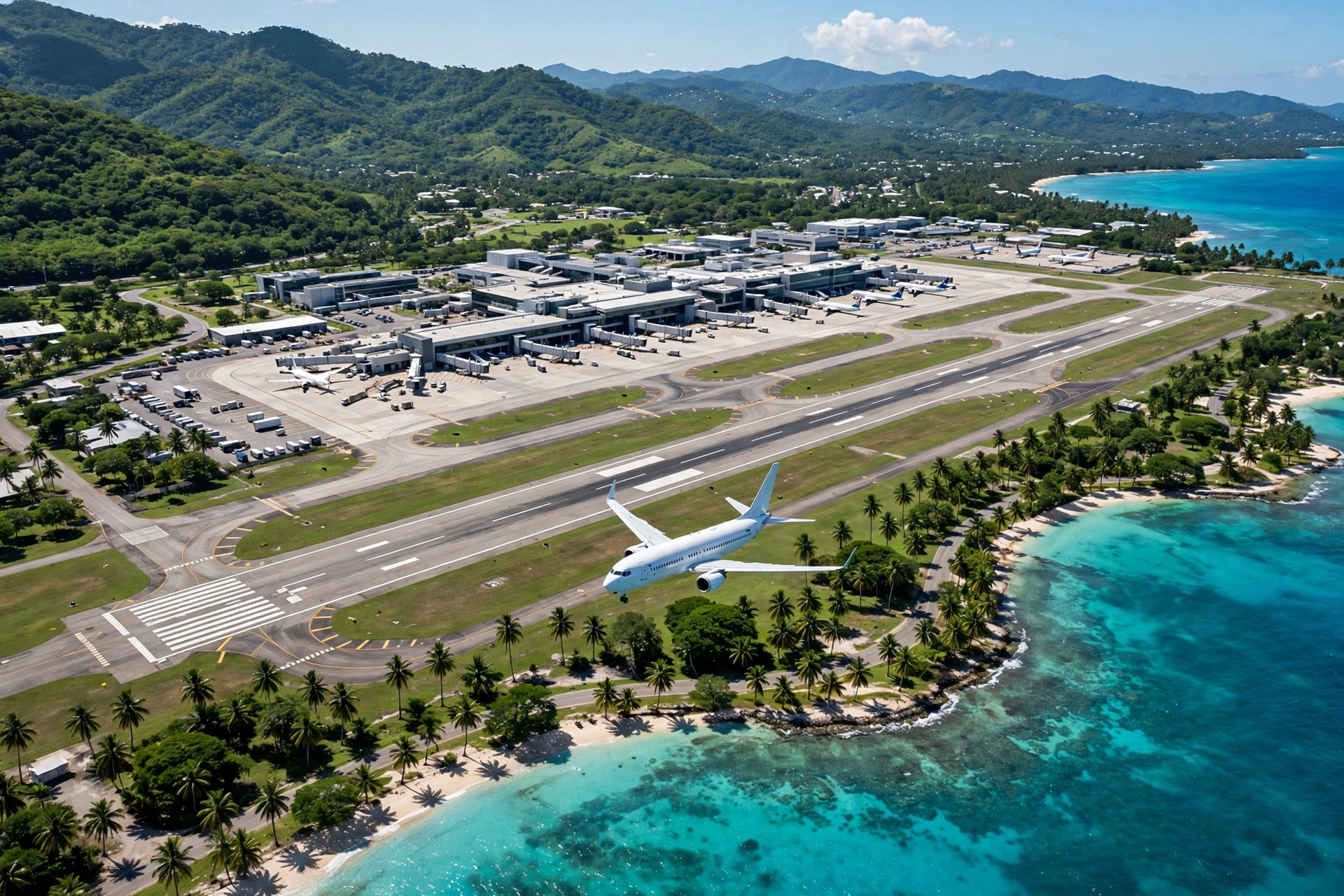
When people ask how many airports in Jamaica, the most accurate simple answer is six: three international airports and three domestic aerodromes. These are the facilities the Airports Authority of Jamaica manages and that appear in official government and aviation listings. Depending on the source you check, you may also see references to military airfields and small private airstrips, which push the total number of landing strips higher — but for travelers, the six public facilities are the ones that matter.
Understanding the difference between an “international airport” and a “domestic aerodrome” is important. The three international airports have customs and immigration facilities, so they can receive flights directly from other countries. The three domestic aerodromes handle flights within Jamaica, charter operations, flight training, and general aviation. Only Negril Aerodrome among the domestic fields carries scheduled commercial passenger service, according to aviation listings.
The 3 International Airports of Jamaica
All three of Jamaica’s international airports sit in different parts of the island, and each serves a distinct travel pattern. Here is what each one offers.
Sangster International Airport (MBJ) — Montego Bay
Sangster International Airport is Jamaica’s busiest gateway and the airport most visitors will use. Located in Montego Bay on the island’s northwest coast, it handles more than 70% of the island’s tourist arrivals, according to the Airports Authority of Jamaica. The airport began operations in 1947 and has grown into one of the most modern facilities in the English-speaking Caribbean, with capacity for millions of passengers per year and a runway of 8,704 feet that can accommodate large wide-body aircraft.
If you are staying in Montego Bay, Negril, Ocho Rios, or anywhere along the north coast, MBJ is almost certainly your airport. It is operated by MBJ Airports Limited and connects Jamaica to North America, the United Kingdom, continental Europe, and other Caribbean islands through dozens of scheduled carriers.
Norman Manley International Airport (KIN) — Kingston
Norman Manley International Airport serves Jamaica’s capital city, Kingston, on the southeastern coast. While Sangster handles the bulk of leisure tourism, Norman Manley is the primary hub for business travel, cargo operations, and the island’s Jamaican diaspora — millions of Jamaicans abroad fly home through KIN each year, especially from the United States, Canada, and the UK.
The airport is operated by NMIA Airports Limited, a wholly owned subsidiary of the Airports Authority of Jamaica. Travelers heading to Kingston, the Blue Mountains, Port Antonio, or the island’s southeastern parishes should fly here rather than endure a cross-island drive from Montego Bay.
Ian Fleming International Airport (OCJ) — Boscobel, St. Mary
The newest and smallest of the three, Ian Fleming International Airport sits at Boscobel on the north coast of St. Mary, near Ocho Rios. The former Boscobel Airstrip was extensively refurbished and reopened as an international airport in 2011, named after Ian Fleming, the creator of James Bond, whose Jamaican home, Goldeneye, sits just a few kilometers away in Oracabessa.
OCJ initially served private jets and charters, and has steadily expanded into select scheduled international flights — in the 2023/24 fiscal year it welcomed an inaugural American Airlines flight, a milestone noted by the Jamaica Information Service. It is an excellent option if your trip centers on Ocho Rios or the northeast coast and you want a quieter arrival experience than Montego Bay’s busy terminal.
The 3 Domestic Aerodromes
Below the international tier, Jamaica’s three domestic aerodromes keep the island connected internally:
- Tinson Pen Aerodrome (KTP) — Kingston: Located on Marcus Garvey Drive near downtown Kingston, Tinson Pen is the island’s main domestic aviation hub. It handles charter flights, inter-island connections, flight training, and general aviation. For business travelers who need to hop between Kingston and other parts of the island quickly, this is the field that makes it possible.
- Negril Aerodrome (NEG) — Westmoreland: Serving the famous beach resort town of Negril on the island’s western tip, this aerodrome is listed as having scheduled passenger service. It is a convenient option for visitors heading to Negril’s Seven Mile Beach who want to skip the road journey from Montego Bay.
- Ken Jones Aerodrome (POT) — Port Antonio: Located at St. Margaret’s Bay near Port Antonio in Portland Parish, Ken Jones Aerodrome serves the lush, quieter northeastern coast. It is popular with charter operators and private aircraft visiting one of Jamaica’s most unspoiled regions.
All three domestic aerodromes were confirmed operational in official government communications, including statements around reopenings after Hurricane Beryl in 2024, when the Airports Authority of Jamaica announced coordinated reopening schedules for every facility in its network.
Military and Private Airstrips
Beyond the six public facilities, aviation databases list several additional landing strips in Jamaica that are not relevant to commercial travel. These include military airfields such as Up Park Camp in Kingston and the Moneague Training Camp in Saint Ann, plus private airfields like Bath Airfield in Saint Thomas and Tulloch Airfield near Bog Walk. These strips serve military operations, private owners, or specific enterprises and do not appear on any passenger booking site. They are worth knowing about only because they explain why some directories quote a higher total than six.
Which Airport Should You Fly Into?
The number of airports in Jamaica matters less than choosing the right one. Now that you know how many airports in Jamaica there are, use this simple guide:
- Montego Bay, Negril, or the north coast: fly into Sangster International (MBJ). It has the most flight options, the most competitive fares, and the shortest transfers to the main resort areas.
- Kingston, the Blue Mountains, or the east: fly into Norman Manley International (KIN). Driving across the island from Montego Bay can take several hours, so arriving in Kingston saves real travel time.
- Ocho Rios or the northeast coast: compare Ian Fleming International (OCJ) and Sangster (MBJ). OCJ offers a smaller, calmer arrival closer to Ocho Rios, while MBJ offers more flights and usually lower fares.
If your itinerary covers multiple regions — say, Kingston’s culture and Negril’s beaches — check whether an “open-jaw” ticket (arriving at one airport and departing from another) works for your trip. It can save a long overland journey at the end of your holiday.
Tips for Traveling Through Jamaica’s Airports
A smooth airport experience in Jamaica comes down to a few practical habits:
- Arrive early: give yourself the full recommended check-in window for international flights, especially at Sangster during peak tourist season, when the terminal is at its busiest.
- Have your travel details ready: immigration and customs are straightforward, but having your passport, return flight details, and accommodation address easily accessible speeds everything up.
- Use licensed ground transport: pre-arrange hotel transfers or use officially licensed taxis and shuttle services. The Airports Authority’s official guidance and government travel pages recommend verified transportation providers.
- Check your departure airport: domestic and international facilities are separate, so confirm whether your return flight leaves from the same airport you arrived at — especially if you used a domestic hop during your stay.
- Monitor for weather disruptions: hurricane season runs roughly June through November. The Airports Authority of Jamaica coordinates reopening schedules and advisories for all its facilities during severe weather, so check official announcements if a storm is approaching.
For more Caribbean travel planning, our practical guides pair well with this one — see how to plan around official guidance in our Cabo San Lucas travel advisory guide, and get resort-area context in our Cape Verde resorts guide. For the official picture of Jamaica’s airport system, the Airports Authority of Jamaica publishes facility details and updates, and the Jamaica Information Service reports on ongoing airport development work across the island.
Frequently Asked Questions
How many airports are there in Jamaica?
Jamaica has six public airports and aerodromes: three international airports (Sangster International in Montego Bay, Norman Manley International in Kingston, and Ian Fleming International near Ocho Rios) and three domestic aerodromes (Tinson Pen in Kingston, Negril, and Ken Jones in Port Antonio). There are also military and private airstrips that are not open to commercial travel.
What should you know about airports in Jamaica?
The key thing to know is that the Airports Authority of Jamaica manages all six public facilities as one coordinated system. Sangster International handles the vast majority of tourist arrivals, Norman Manley serves the capital and business traffic, and Ian Fleming serves the north coast near Ocho Rios. Domestic aerodromes connect the island internally through charters and general aviation. Always fly into the airport closest to where you are staying to minimize transfer time.
What are the most common questions about Jamaica’s airports?
Travelers most often ask which airport to choose, whether Ian Fleming International is really international, and how the domestic aerodromes work. The answers: choose the airport nearest your accommodation (MBJ for the north and west, KIN for the capital and east); yes, Ian Fleming is a full international airport with customs and immigration; and domestic aerodromes like Tinson Pen, Negril, and Ken Jones mainly serve charter flights, flight training, and general aviation rather than scheduled airlines.
Conclusion
So, how many airports in Jamaica? Six public facilities — three international airports and three domestic aerodromes — managed as one national system by the Airports Authority of Jamaica. For most travelers, the choice comes down to Sangster International for the resort-heavy north coast, Norman Manley International for the capital, or Ian Fleming International for a quieter arrival near Ocho Rios. Pick the airport closest to where you are staying, give yourself plenty of time at the terminal, and you will be off the plane and into island time before you know it.
One last tip for the security line: make sure your carry-on toiletries comply with the TSA 3-1-1 rule for liquids.