
Snow Scooter: What to Know
If you love winter but want something more hands-on than a classic sled, a snow scooter might be exactly what you are looking for. It blends the familiar steering of a kick scooter with skis built for snow, and it has become one of the most talked-about additions to the family winter-gear closet. Whether you are buying one for the kids or considering it for yourself, here is everything worth knowing before you head for the hill.
Key Takeaways
- A snow scooter is essentially a kick scooter with skis instead of wheels — a T-bar for steering, a deck or seat, and one or two skis gliding over snow.
- Most models suit riders of many ages, with children’s models, youth versions, and sturdier builds for teens and adults.
- Look for a lightweight frame, reliable steering, an effective brake, and a design matched to your terrain and riding style.
- Snow scooters do not have a steep learning curve, but a helmet and basic safety habits are still essential.
What Exactly Is a Snow Scooter?
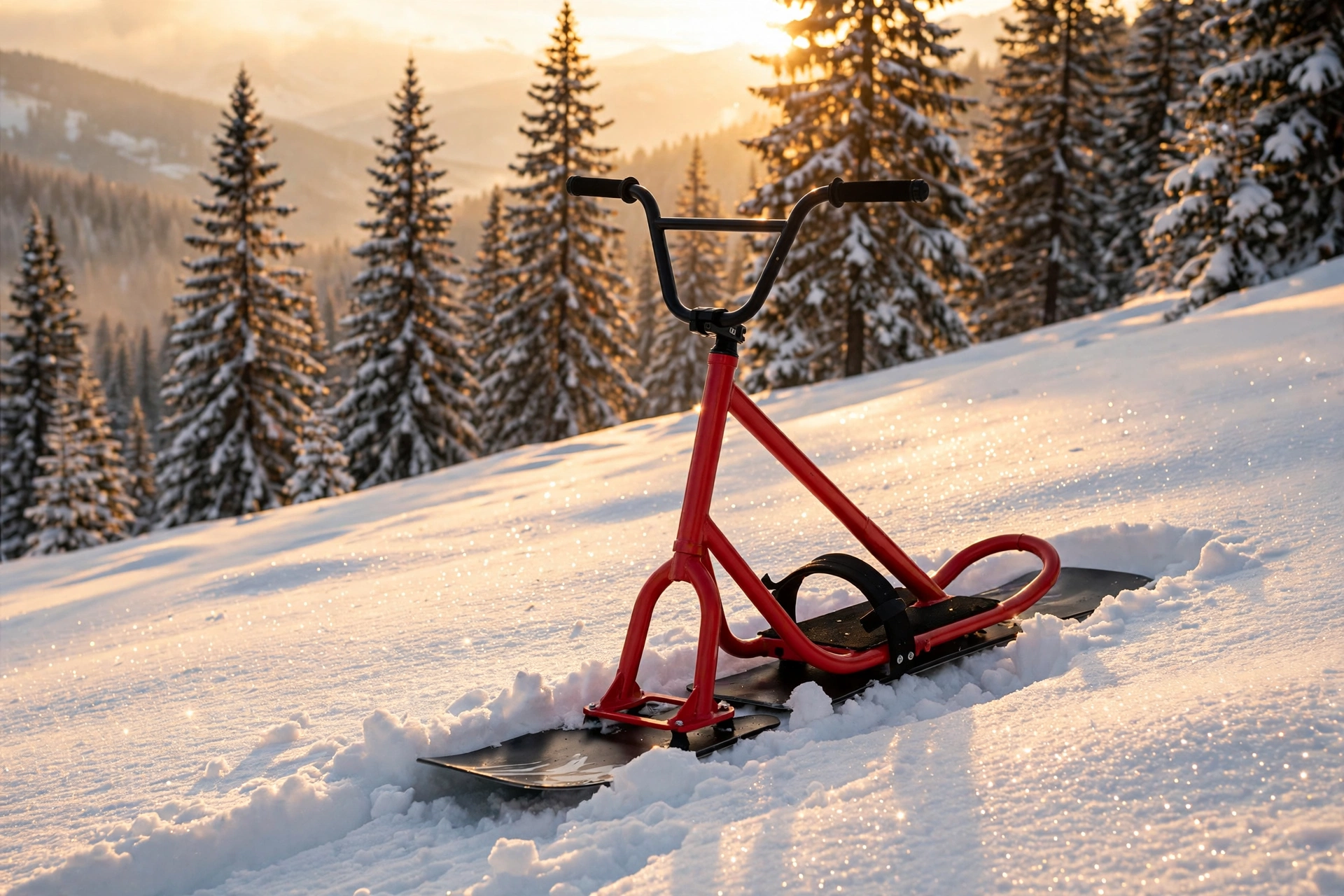
A snow scooter is a winter ride-on device built around the same idea as a kick scooter, except the wheels are replaced by skis. Most designs have a T-bar handlebar for balance and steering, a platform or seat where the rider stands or sits, and either a single ski or a pair of skis underneath. Gravity does most of the work: you point it downhill, steer with the bars and your body weight, and carve your way down.
One thing that confuses newcomers is the name. “Snow scooter” is also used as an informal synonym for a snowmobile in some regions — the motorized vehicle with a track at the rear and skis at the front that is designed for winter travel and recreation on snow (Wikipedia’s snowmobile overview explains the distinction). In buying guides and most retail contexts, though, a snow scooter means the unpowered, scooter-style device you ride down a slope, which is what this guide covers.
How Does a Snow Scooter Work?
The mechanics are refreshingly simple. The front ski (or pair of skis) connects to the handlebar steering column, so turning the T-bar — or in seated models, a steering wheel — aims the ski in your chosen direction. Leaning into the turn, much like you would on a bicycle or regular scooter, tightens the carve. The rear ski or deck supports your weight and keeps the ride stable on the glide path.
Speed control comes from a combination of carving across the slope rather than straight down it, dragging a foot in the snow, and — on better models — a built-in brake that presses into the snow to slow you. Because there is no engine, your snow scooter is silent, light enough to carry back uphill, and usable wherever a slope and enough snow exist. Buying guides note that the best snow scooters are lightweight, durable, and easy to transport, and that they have no steep learning curve (BestReviews’ snow scooter buying guide).
Types of Snow Scooters
Not all snow scooters are built the same. Knowing the main styles helps you pick the right one:
- Stand-up snow kick scooters. The classic style: a T-bar, a deck, and one or two skis. You ride them standing, shifting your weight to steer. They are compact, light, and popular with teens and adults who like a sportier feel.
- Seated snow racers. Models like the well-known Stiga snow racer put you on a low seat with a steering wheel, twin skis, and often a foot brake and pull cord for the walk back up. The carving-shaped front ski and wide-set skis give a planted, controlled ride that families love.
- Trick and freestyle models. Sturdier frames, reinforced decks, and grippier skis for riders who want to practice spins, slides, and small jumps on gentle terrain. These are aimed at experienced riders, not first-timers.
- Junior and kids’ models. Smaller, lighter, and sized for young riders, often with simpler steering and modest speed. Many are marketed for children aged 5 and up, while youth and adult sizes cover the rest of the family.
Some models also ship with interchangeable wheels and skis so the same scooter can roll on pavement in summer — worth considering if your winters are short.
Who Is a Snow Scooter For?
Practically anyone who enjoys snow. Snow scooters are described as rideable by people of all ages, and in practice the sweet spot covers school-age kids through adults. Children’s models keep the size and speed modest for younger riders, while youth and adult versions add sturdier frames and more responsive steering for bigger, faster riders.
It is also a great fit for families that find traditional sledding a little dull: the steering adds real control, the brake adds confidence, and riding standing up feels more active. If you travel to snowy destinations for winter fun — our guide to Quebec City at Christmas is a favorite example of a snow-filled getaway — a snow scooter is an easy piece of gear to throw in the car.
Key Things to Consider Before You Get One
Keep these practical points in mind when comparing models:
- Intended use. A child who wants a toy for gentle neighborhood hills needs something very different from a teen eyeing trick riding. Match the build to the rider.
- Weight and portability. You will carry it back up the hill, load it into the car, and store it all summer. Lighter frames make every part of ownership easier.
- Steering and brakes. Check that the steering turns freely, the handlebar grips feel secure in gloves, and the brake actually engages the snow. A model with a real brake is worth the upgrade for kids.
- Skis. Wider skis float better in fresh powder; carving-shaped front skis steer more precisely. Inspect the skis for damage or cracks before each season.
- Rider fit. Handlebar height should let the rider stand comfortably without hunching, and seated models should support the rider’s weight within the stated limits.
- Terrain. Packed snow on gentle to moderate slopes is ideal. Avoid icy crust, rocks, roads, and anywhere with obstacles hidden under the snow.
How to Ride a Snow Scooter: The Basics
Riding is intuitive, but a little technique goes a long way:
- Start on a gentle slope. Pick packed snow, free of obstacles, with a clear runout at the bottom.
- Mount up. On a stand-up model, place one foot on the deck and hold the T-bar with both hands. On a seated model, sit firmly, feet on the footrests, both hands on the steering wheel.
- Steer with bars and body. Turn the handlebars in the direction you want to go and lean gently into the turn — your body weight is the real steering engine.
- Control speed by carving. S-turns across the slope bleed speed naturally. On steeper sections, use the brake or drag a foot.
- Stop cleanly. Slow with the brake or foot drag, then step off to the side of the track so riders behind you have a clear path.
Safety Tips That Actually Matter
A snow scooter is a toy, but speed on snow deserves respect:
- Wear a helmet. Winter helmets (or a ski/snowboard helmet) are the single most important piece of gear, especially for kids.
- Dress for the cold. Waterproof layers, warm gloves with good grip, and boots that keep feet dry and planted on the deck.
- Inspect before you ride. Check the steering, brake, skis, and fasteners for damage or ice buildup before the first run of the day.
- Scope the hill. Walk or look over the slope first. Rocks, fences, trees, and drop-offs hide easily under fresh snow.
- Ride within your level. Gentle slopes first, steeper terrain only after the basics feel automatic. Trick moves belong on purpose-built, gentle terrain with plenty of space.
- Keep clear of others. Yield to riders downhill of you, and never ride toward roads or parking areas.
Planning a winter road trip with snowy stops along the way? Our 8-day Iceland self-drive tour guide shows how magical snow-country travel can be — and why packing versatile winter gear pays off.
Maintenance and Storage
Snow scooters are low-maintenance, but a few habits extend their life. After each outing, wipe off snow and moisture so metal parts do not rust. Check bolts and fasteners periodically — vibration loosens them over a season of use. Store the scooter dry and indoors over summer, out of direct sun that can degrade plastics and grips. Before the first snowfall, give the steering and brake a quick function check so day one of winter is ready to ride.
Frequently Asked Questions
What should you know about snow scooter?
A snow scooter is a kick-scooter-style winter device with skis instead of wheels, ridden standing or seated down snowy slopes. It suits many ages, has no steep learning curve, and works best on packed snow with gentle to moderate hills. A helmet, an inspected brake and steering, and an obstacle-free slope cover the essentials.
What are the key things to consider for snow scooter?
Match the model to the rider’s age, size, and ambition: kids’ models for young riders, sturdier youth and adult builds for bigger riders. Prioritize a light frame, reliable steering, an effective brake, and skis suited to your snow conditions. Check weight limits, rider fit, and whether you need all-terrain versatility before buying.
How can you make the most of snow scooter?
Start on gentle packed slopes to build steering and braking reflexes, then graduate to longer runs as confidence grows. Maintain the scooter between outings, ride with a helmet and proper winter gear, and bring it along on snowy trips — destinations with real winter, like those in our snowy travel guides, are where a snow scooter earns its keep.
Conclusion
A snow scooter packs a surprising amount of fun into a simple idea: a scooter that trades wheels for skis. It is easy to learn, light to carry, and adaptable enough for kids, teens, and adults alike. Pick a model that fits the rider and the terrain, respect basic safety habits, and you have a winter companion that will see you through many snowy afternoons. When the first real snowfall arrives, you will be glad one is leaning by the garage door.