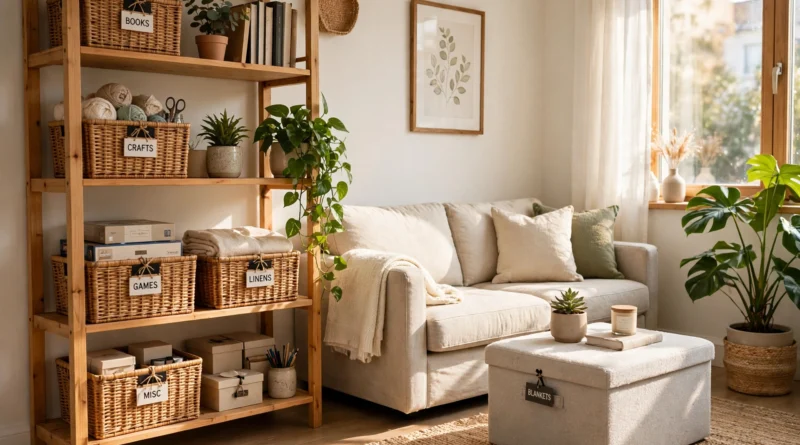
How to Organize Small Spaces: A Room-by-Room System That Actually Stays Tidy
Learning how to organize small spaces is less about buying more storage boxes and more about giving every item one clear home. Start by decluttering, then divide each room into zones, use your walls and the height of your rooms, keep daily items within easy reach, and finish with a short daily reset. That system — declutter, zone, go vertical, maintain — is what keeps a small apartment or small house tidy long after the first big clean-up.
Key Takeaways
- Declutter before you buy anything: every item you remove is one less item to store.
- Organize by zone and by routine, not by room alone: keep things where you actually use them.
- Use vertical space first: walls, doors, cabinet height and under-bed space beat new floor furniture.
- Keep only daily-use items visible; store the rest in closed, labeled containers.
- A 10-minute daily reset and a weekly sweep are what keep the system working.
Where Do I Start When Organizing a Small Apartment?
Start with one room, and start with decluttering — not shopping. If you are wondering how to organize small spaces and feel stuck, the most common mistake is buying organizers before knowing what you actually own. Pull everything out of one area, sort it into keep, donate or sell, and discard, and only then decide what storage that area needs. A practical order is: kitchen first, because it holds the most categories and the biggest daily impact; then the living room, bedroom, and bathroom. Work in short sessions — one drawer, one shelf, one closet — rather than emptying the whole home at once. Ask of each item: have I used this in the past year, does it have a home here, and would I buy it again today? This is also how to declutter a small apartment without making a bigger mess: finish one zone completely before starting the next, and take donations out of the home the same day so bags do not become a new pile.
How to Organize a Small Apartment: The Zone System
A small home feels chaotic when unrelated things share the same surface. The fix is zones: give each activity a defined area, even if that area is only a shelf or a corner.
- Entry zone: hooks for coats and bags, a small tray for keys and mail, and a shoe spot by the door.
- Cooking zone: food preparation, cooking, and clean-up kept together, with tools near the stove or sink where they are used.
- Work zone: desk supplies in or beside the desk, not scattered through the bedroom.
- Sleep and dressing zone: clothes, accessories, and bedding kept together, with out-of-season items stored elsewhere.
- Relaxation zone: books, remotes, and chargers in one basket or drawer, not spread across every surface.
Use rugs, furniture placement, and lighting to mark zones in a studio or open-plan room: the back of a sofa can separate living from dining, and a rug can anchor a dining area without a wall. Assign storage to the zone that uses it — cooking utensils stay in the kitchen zone, not in a utility closet across the apartment.
How to Maximize Space in a Small Apartment: Go Vertical
When floor space is limited, the only way to go is up. Learning how to maximize space in a small apartment usually means looking at walls, doors, and heights you have been ignoring. Install floating shelves or tall, narrow shelving for books, kitchen supplies, and decorative items. Use over-door organizers for shoes, cleaning supplies, or toiletries. Add hooks and pegboards for coats, bags, pans, and tools. Stack inside cabinets: shelf risers, stackable bins, and under-shelf baskets turn one shelf into two. Use the space under beds and sofas for out-of-season clothes, guest bedding, or bulky items in flat containers. Hang items on the inside of cabinet doors: pot lids, spices, measuring tools, and cleaning sprays. Protect your walking paths: never sacrifice the main route through a room just to gain a shelf. For more product ideas that fit this system, see our guide to the best storage solutions for small apartments.
Storage Furniture for Small Spaces: Choose Pieces That Earn Their Floor Space
In a small home, every piece of furniture should earn the floor it stands on. The best storage furniture for small spaces does at least two jobs.
| Piece | What it does | Watch out |
|---|---|---|
| Storage ottoman | Seating plus hidden storage for blankets or games | Too large for the room’s scale |
| Bed with drawers | Uses dead under-bed space daily | Drawers that block vents or doors |
| Lift-top coffee table | Surface, workspace, and document storage in one | A top that is too heavy to lift often |
| Nesting tables | Extra surface only when needed | Sets that are never actually nested |
| Bench with shoe storage | Entry seating plus a shoe home | An open bench that becomes a dumping spot |
Choose furniture scaled to the room: oversized pieces overwhelm a small space even when they hold a lot. Clear or glass-topped pieces, lighter colors, and furniture on legs can also make a room feel more open, because more floor stays visible. If you are renting, favor freestanding and adhesive options over anything that needs drilling.
How to Organize a Small Apartment Kitchen
The kitchen is the hardest room in a small home, because it mixes food, tools, cleaning supplies, and often paperwork. Organize it by task, not by category alone. Divide the kitchen into preparation, cooking, clean-up, and beverage zones. Keep daily items — the mug, the pan, the dish soap — at eye level or on the counter, and move backups and rarely used gadgets higher up or into a less convenient cabinet. Group similar items before putting anything back: snacks together, canned goods together, baking supplies together, each in a labeled bin or basket. Practical kitchen moves that cost little: a tension rod under the sink for cleaning sprays, a magnetic strip for knives instead of a countertop block, a spice rack on a wall or cabinet door, stackable bins inside cabinets, and a rule that only daily-use items live on the counter. Open shelving looks calm only when it is uniform — matching jars and one or two dish colors — otherwise closed storage is kinder to a small kitchen.
How to Organize a Tiny Closet
A tiny closet is rarely too small for the clothes; it is usually disorganized, with bulky hangers, no categories, and shoes stored randomly. Start by removing out-of-season clothes to a labeled box elsewhere, then rebuild the closet in this order:
- Standardize hangers — slim, matching hangers free surprising space.
- Group by category and then by use: work, everyday, outerwear, accessories.
- Use the full height: a second hanging rail or hanging shelves, shelf dividers to stop piles collapsing, and the upper shelf for the least-used items.
- Give shoes one system: a shelf, stackable organizers, or an over-door rack — not the closet floor at random.
- Give accessories homes: a belt hanger, a scarf organizer, a small tray for sunglasses and jewelry.
The classic mistake is keeping every season accessible at once. Rotating clothes by season, and keeping a small “in-between” hook for clothes worn once but not yet ready for laundry, prevents the chair pile that undoes most closet systems.
How to Organize a Small Bathroom
Small bathrooms fail on backups, not on daily items. Keep only current-use toiletries in the bathroom and store backups elsewhere — a hall closet, a bedroom drawer, or a labeled box on a high shelf. Use vertical storage: a shower caddy, wall shelves, a narrow storage tower, and organizers on the inside of cabinet doors. Sort skincare, hair tools, and medicines into labeled bins, use drawer dividers to stop the junk-drawer effect, and keep the counter to what you use every morning.
How to Organize a Small House (Not Just an Apartment)
How to organize a small house follows the same system, with one extra step: decide what belongs in each room and stop letting rooms become overflow for each other. Give each category one home, even if that home is a single labeled box on a high shelf. Seasonal items live together, cleaning supplies live together, and tools live together. When a category has one home, you stop buying duplicates because you could not find the first one. For a useful outside perspective on decluttering first, see this small-apartment decluttering guide and for zone-based living, this guide to organizing small spaces by zones.
How Can I Make a Small Apartment Look Less Cluttered?
Visual calm matters as much as storage capacity. Limit each open surface to a few intentional items; group the rest in trays or closed baskets. Use closed storage for miscellaneous or visually inconsistent categories. Match containers where you can: similar bins, matching hangers, and one or two colors calm a room. Leave some surfaces and some shelf space intentionally empty — breathing room is part of organization. Keep large decor to one or two pieces rather than many small ones, and use mirrors and light colors to keep the room feeling open.
How Do I Organize a Small Apartment Without Drilling Holes?
Renters can organize a small apartment fully without drilling. Tension rods inside window frames or under sinks, heavy-duty adhesive hooks and strips for lightweight items, over-door racks, freestanding shelving, and furniture with built-in storage all avoid wall damage. Check the weight limit on adhesive products, and use them for lighter items — mirrors and heavy shelves still need proper fixings, so choose freestanding alternatives for those. This is also a good reason to favor organizers that move with you: labeled bins, drawer dividers, and over-door storage work in the next home too.
How Do I Organize a Small Apartment With No Storage Space?
When built-in storage is minimal, go over-door and under-bed for hidden storage, add freestanding shelving wherever a wall allows, and make every piece of furniture work harder: beds with drawers, ottomans with lids, and media consoles with closed doors. The same principle applies to organizing a small apartment with little storage generally: use overlooked space — wall height, cabinet height, corners, under-shelf areas, and the gap behind a sofa — before buying new furniture. If even that is not enough, moving just a few large seasonal items out of the home can reclaim real floor space.
How Do I Organize a Small Apartment on a Budget?
The highest-return moves are free: decluttering, rearranging to create clear surfaces, grouping items, and starting the daily reset habit. For a small spend, drawer dividers, a tension rod under the sink, and an over-door organizer transform three of the most common problem areas. Do not buy a full set of matching containers before decluttering. Buy for the categories you actually kept, measure the shelf or drawer first, and start with the room that causes the most daily friction — usually the kitchen or the entry.
How Do I Keep a Small Apartment Organized Long-Term?
Organization fails slowly, not all at once. The system that lasts is the simplest one you will actually do. Daily 10-minute reset: return everything to its place each evening. Weekly sweep: one short session to deal with the pile that formed, take out donations, and reset one problem zone. One in, one out: for every new item that comes in, one existing item leaves. Seasonal rotation: swap clothes and gear by season, and review each category once a season. Protect the system: if a zone keeps failing, the zone is wrong, not you — move the storage closer to where the item is used. The same discipline that keeps a suitcase organized on a trip — one place for each category, nothing loose — works at home too, so see this packing guide.
A Simple Room-by-Room Checklist
- Entry: hooks, shoe spot, key and mail tray — nothing else on the surface.
- Kitchen: zones set, counters cleared to daily items only, cabinets grouped and labeled.
- Living room: one basket for remotes and chargers, surfaces limited to a few items.
- Bedroom and closet: hangers standardized, seasons rotated, shoes in one system.
- Bathroom: daily items only on the counter, backups stored elsewhere.
- Work area: supplies in or beside the desk, paperwork in one tray.
- Whole home: every category has one home, walking paths are clear, one item out for every item in.
FAQ: How to Organize Small Spaces
Q: How do I organize a small apartment with little storage? A: Start by decluttering, then prioritize vertical and hidden storage: walls, cabinet height, corners, under-bed space, and the backs of suitable doors.
Q: What is the best way to maximize space in a small apartment? A: Use the space you already have more efficiently before adding furniture. Vertical shelves, under-cabinet storage, hanging baskets, stackable organizers, and multifunctional furniture increase capacity while preserving floor space.
Q: Where do I start when organizing a small apartment? A: Declutter first, then tackle rooms in order — kitchen, living room, bedroom, bathroom — finishing one zone completely before starting the next.
Q: How do I keep a small apartment organized long-term? A: A daily 10-minute reset plus a weekly sweep, combined with a one-in-one-out rule, keeps the system working.
Conclusion: How to Organize Small Spaces Without Starting Over Every Month
You now know how to organize small spaces with a system, not a shopping list: declutter first, organize by zone and routine, use your walls and heights, choose furniture that earns its floor space, and protect the result with a short daily reset. Start with one room this week — the kitchen or the entry usually gives the fastest visible win — and let that one tidy zone prove the system before you move to the next. A small home does not need to be perfect to feel calm; it needs every item to have one home, and a habit that puts it back there.
The same zone-and-routine thinking also helps in the closet: our guide to minimalist clothing shows how to build a capsule wardrobe that actually works from the clothes you already own. In an organized Ikitchen, keep the slow cooker within easy reach, as in our slow cooker chicken recipes.
Once your rooms are tidy, take the same less-but-better test to your whole life with how to become a minimalist. For the digital side of that test, see our guide to digital minimalism.
A cleared corner also works as a home workout space — see our guide to the best exercises for strength at home.
For furniture that fits this system, see our guide to minimalist furniture.