
How to Pack a Suitcase: The Complete Space-Saving Guide
How to Pack a Suitcase: The Complete Space-Saving Guide
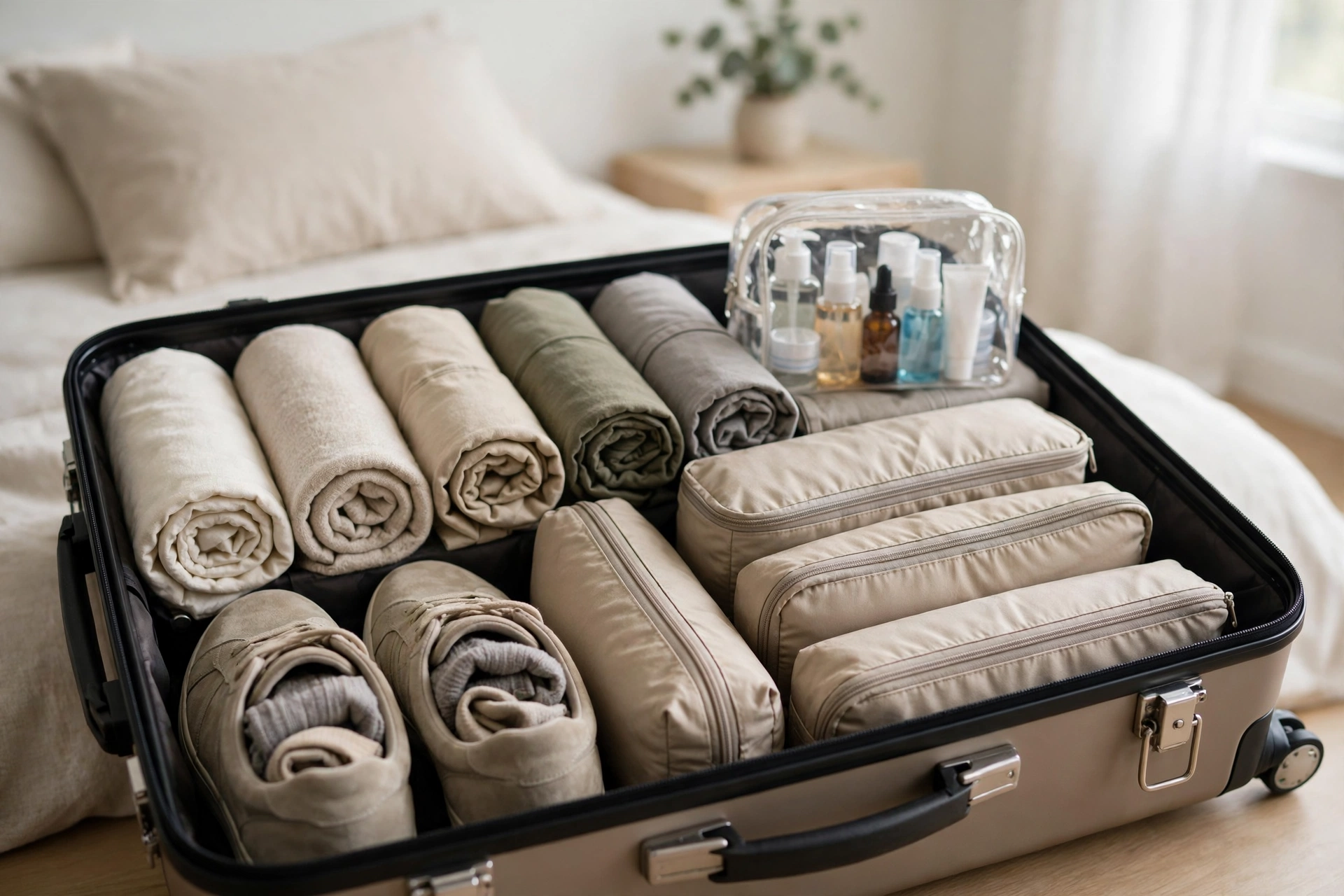
Packing a suitcase is simple once you know the sequence: make a packing list, lay everything out, and remove at least a third of it. Then roll casual clothes, fold structured ones, put shoes and heavy items at the bottom near the wheels, fill every empty space (socks inside shoes), keep liquids in one quart-size bag with containers of 3.4 oz (100 ml) or less, and wear your bulkiest items on travel day. This is how to pack a suitcase that closes easily, stays organised, and avoids overweight baggage fees.
This guide covers the full process in journey order: planning your travel packing list, the rolling-vs-folding question, the 5-4-3-2-1 method, a step-by-step layering system, packing for long trips, liquids and toiletries, what to keep in your personal item, and the most common packing mistakes. For a second take on efficient packing habits, see this practical suitcase packing guide from KAYAK.
Key Takeaways
- Start with a list, then cut a third. Lay everything out before it goes into the bag — most travellers pack for imaginary “just in case” scenarios that never happen.
- Roll casual clothes, fold structured ones. Rolling saves space and reduces wrinkles for everyday items; folding protects shirts, trousers, and jackets that need structure.
- Heavy at the bottom near the wheels. Shoes, toiletries, and dense items go in first for balance, with lighter clothes layered on top.
- Use every dead space. Socks and underwear go inside shoes, belts snake around the perimeter, chargers fill crevices.
- Respect the liquids rule. In carry-on, liquids, gels, and aerosols go in one quart-size clear bag, each container 3.4 oz (100 ml) or less.
What Should You Do Before Packing a Suitcase?
The packing itself is the easy part — the planning is where space is won or lost. Before anything goes into the bag, do three quick checks that determine your whole travel packing list.
Make a travel checklist first
A written list stops the two classic failure modes: forgetting something essential and overpacking “just in case.” Write your list a few days before you leave so you can add things as you think of them, then group it into categories: clothes, shoes, toiletries, electronics, documents, and medications. This is the practical answer to how to make a travel checklist that actually works — plan the trip you have booked, not the one you imagine.
Check your airline’s baggage rules
Size and weight limits differ by carrier, and budget airlines are the strictest. Confirm the maximum dimensions and weight for your cabin bag or checked suitcase on the airline’s own site, then weigh your packed bag on a home scale before you leave. Overweight fees are the most expensive packing mistake there is.
Check the weather and laundry access
Look up the forecast for your destination — not the season’s averages — and decide whether you need layers, rain gear, or sun protection. If you are heading somewhere wintry, browse seasonal guides early; for example, our Places to Visit in December in USA guide shows how much warm clothing cold-destination trips really require. And if your hotel or rental has laundry access, you can pack for half the trip length and wash midway — the single biggest space saver for long trips.
Rolling vs Folding: Which Is the Best Way to Pack Clothes?
Ask any traveller for the best way to pack a suitcase and the roll-vs-fold debate comes up first. The honest answer: both are right, for different garments.
| Method | Best for | Space saving | Wrinkle control |
|---|---|---|---|
| Rolling | T-shirts, jeans, casual trousers, knitwear, underwear | Excellent — compresses soft fabrics tightly | Good for casual items |
| Folding | Dress shirts, blazers, structured jackets, delicate fabrics | Moderate — keeps shape | Excellent for structured garments |
| Bundle wrapping | Dress clothes you must keep wrinkle-free | Good — layers garments around a central core | Best method for formal wear |
Rolling wins for everyday clothes because rolled cylinders fill gaps better than flat stacks, and it keeps wrinkles out of fabrics that do not crease easily. Folding wins for anything with structure — a rolled blazer loses its shape. For a true formal outfit, use bundle wrapping: lay garments flat, stack them with sleeves aligned, place a soft core (a pouch of underwear works) in the centre, and fold each layer in around it. The clothes cushion each other and arrive nearly wrinkle-free.
The 5-4-3-2-1 Packing Method
If you want one structured formula for how to pack a suitcase for a week-long trip, the 5-4-3-2-1 method is the most popular: pack 5 tops, 4 bottoms, 3 pairs of shoes, 2 accessories, and 1 jacket or dressy outfit. The logic is simple — more tops than bottoms, since bottoms can be repeated, and every piece should mix and match with the others.
Build it around a colour palette of two neutrals plus one accent so almost any combination looks like a deliberate outfit. Packing cubes make the method even easier: one cube per category keeps the system intact from the first hotel to the last.
How to Layer a Suitcase, Step by Step
Order matters as much as method. Follow this layering sequence and you will learn how to pack a suitcase efficiently in minutes:
- Shoes first, at the bottom near the wheels. Heavy items here keep the bag balanced and easy to roll. Stuff socks, belts, or underwear inside each shoe to use the dead space.
- Dense and heavy items next. Toiletry bags, books, and electronics sit on top of the shoes. This is also where packing cubes full of rolled clothes work well — their weight anchors the base.
- Fill the gaps. Tuck chargers, rolled underwear, and small soft items into every crevice around the cubes. Snake belts around the perimeter of the bag so they do not crease.
- Lighter and larger items on top. Jackets, hoodies, and anything you will want at arrival go in last, where they are easy to reach.
- Toiletries in a clear, sealed pouch near the top. If you are flying with only a carry-on, the liquids bag must come out at security, so keep it accessible.
- Wear your bulkiest items. The heavy coat, the boots, the thickest jeans — wear them on travel day. They count against your baggage allowance only if you pack them.
How to Pack a Suitcase for a Long Trip
Longer trips do not require a longer packing list — they require a smarter one. For a two-week journey, pack for about seven to ten days and plan one laundry stop. Most hotels offer same-day service, and many rentals include a washer; confirm before you fly and cut your clothing volume nearly in half.
Choose versatile fabrics that dry quickly and resist wrinkles: merino tops, travel trousers, and wrinkle-free shirts. Plan outfits, not items — a neutral bottom worn three times with three different tops is three outfits from four pieces. Leave about 15 percent of the bag empty; long trips end with souvenirs, gifts, and shopping you did not plan for. Bringing one compressible spare tote for the return journey is cheap insurance.
For toiletries on long stays, it is often simpler to bring travel sizes for the first few days and buy full-size essentials at your destination rather than hauling two weeks of liquids through security.
What to Pack for a Trip: Choosing Clothes That Earn Their Place
Every item should justify its weight. Apply the capsule wardrobe idea: a small set of versatile pieces, mostly neutral, that all work together. The 5-4-3-2-1 numbers above are one recipe, but the principle is the filter:
- Three pairs of shoes is the ceiling. One you wear, two you pack — walking shoes, one dressier pair, and sandals or flip-flops. Shoes are the heaviest items most people pack.
- Limit “just in case” items to one. One extra warm layer, not three. If you truly need something unexpected, most destinations have shops.
- Dress for the coldest hour of the day. Mornings and evenings run colder than the forecast high, especially on winter trips. If you are heading to a frosty festival or market, London Winter Wonderland is a good reminder of how much warm gear a December city trip really demands.
- Check the dress code. Fine restaurants, religious sites, and some clubs require covered shoulders or closed shoes — one versatile smart outfit covers all of them.
How to Pack Liquids and Toiletries
Liquids are where carry-on travellers get stopped at security, and the rule is worth memorising. The TSA’s 3-1-1 rule for carry-on luggage means: containers of 3.4 ounces (100 ml) or less (the “3”), all fitting in one quart-size clear resealable bag (the “1”), one bag per passenger (the final “1”). The limit applies to the container size, not what is inside — a half-empty 6 oz bottle is still prohibited. For the full breakdown of what counts as a liquid, see this detailed TSA liquid rules guide.
Practical tips that make the rule painless:
- Swap liquids for solids. Solid deodorant sticks, bar soap, shampoo bars, powder makeup, and solid perfume need no bag at all and have no size limit.
- Decant, do not haul. Fill small travel bottles from your full-size products at home instead of packing the whole bottle.
- Keep the bag at the top of your carry-on. You will need to take it out at the checkpoint, so burying it costs you time and stress.
- Double-bag it. One sealed inner pouch inside the quart bag protects your clothes from leaks — shampoo explosions are a rite of passage nobody needs twice.
What to Bring on a Trip in Your Personal Item
Your personal item — the bag under the seat — is your insurance policy. Checked bags can be delayed; cabin bins can be full. Keep these within reach:
- Travel documents: passport or ID, boarding passes, hotel confirmations, travel insurance details.
- Medications and anything you cannot easily replace: prescription drugs, glasses, contact lenses.
- Valuables: laptop, camera, jewellery, and anything fragile.
- A change of clothes and basic toiletries: if your checked bag goes missing for a night, you will be comfortable anyway.
- Chargers and a power bank, plus snacks and an empty water bottle to fill after security.
7 Packing Mistakes That Waste Space
- Packing for imaginary scenarios. If you have not worn it at home in the last month, you will not wear it on holiday. Cut a third of what you laid out.
- Bringing full-size toiletries. Decant or buy at the destination — a full shampoo bottle can weigh more than two outfits.
- Folding everything. Roll the casual stuff, fold only what needs structure.
- Leaving shoes empty. Every shoe is a storage container; fill it.
- Forgetting to weigh the bag. Guesswork ends in overweight fees at the counter.
- Packing single-outfit items. If a piece only works with one specific top, leave it home.
- No dirty-laundry plan. A small bag or spare cube keeps clean and dirty clothes separated and makes repacking for the return trip effortless.
Your Travel Packing Checklist
Use this as a starting template for your own travel packing list, and adjust for trip length, weather, and activities:
- Clothes: 5 tops, 4 bottoms, underwear and socks for the trip, 1 warm layer, sleepwear, 1 dressy outfit if needed
- Shoes: 3 pairs maximum — wear the bulkiest
- Toiletries: 3-1-1 quart bag with travel-size liquids, solid alternatives where possible, any prescription medication
- Electronics: phone, charger, power bank, adapters for the destination’s outlets, headphones
- Documents: passport/ID, boarding passes, hotel confirmations, travel insurance, credit cards
- Extras: packing cubes, laundry bag, reusable water bottle, snacks, small first-aid items
Frequently Asked Questions
How do you pack a suitcase so clothes don’t wrinkle?
Roll casual clothes tightly — the cylinder shape resists creasing. Fold structured garments like dress shirts along their seams, and use bundle wrapping for formal wear: wrap each garment around a soft central core so the layers cushion each other. Unpack hanging items as soon as you arrive.
Can you fit a week’s clothes in a carry-on?
Yes, with the 5-4-3-2-1 method, packing cubes, and a strict three-pair shoe limit, a week of clothes fits in a standard carry-on. Choose quick-dry, wrinkle-resistant fabrics and wear your bulkiest items on travel day.
Is it better to roll or fold jeans?
Roll them. Jeans roll into compact, wrinkle-resistant cylinders and slide easily into gaps between packing cubes. Fold only structured trousers with creases you want to preserve.
What is the 3-1-1 rule for liquids?
Containers of 3.4 oz (100 ml) or less, all inside one quart-size clear resealable bag, one bag per passenger — the rule for liquids, gels, aerosols, creams, and pastes in carry-on luggage at US airport security.
Conclusion
Knowing how to pack a suitcase comes down to a repeatable system: plan with a checklist, cut ruthlessly, roll the casual and fold the structured, layer heavy items near the wheels, fill every gap, and keep liquids in one compliant bag. The 5-4-3-2-1 method gives you a ready-made formula, and wearing your bulkiest items on travel day saves more space than any gadget. Pack once with this system and it becomes second nature — and the next trip starts with an empty bag, not a stressful one.
Flying with just a carry-on? Our complete guide to the TSA 3-1-1 rule explains exactly which toiletries make it through security.
Once you are home, storing suitcases in a small apartment is easier when they nest inside each other — see our guide to best storage solutions for small apartments for under-bed, closet and above-wardrobe ideas.
For a room-by-room system that keeps the rest of a small home tidy, see our guide on how to organize small spaces.
For a slower, more comfortable trip, see our travel tips for senior citizens.
For toiletries on a sunny trip, see our guide to bringing sunscreen on a plane.
If you are still choosing a destination, see our guide to the best places for vacation to pick the right trip for your budget, season and travel style before you pack.
If you are heading to a pricey US city, see Budget Travel Tips for Expensive Cities in the USA for ways to save on stays, transit and food without missing the best parts.
For a short trip, use our weekend trip packing list to turn these techniques into a 2–3 day carry-on.
Before you start packing, also check the current travel warning for your destination before packing.